


Pad Thai
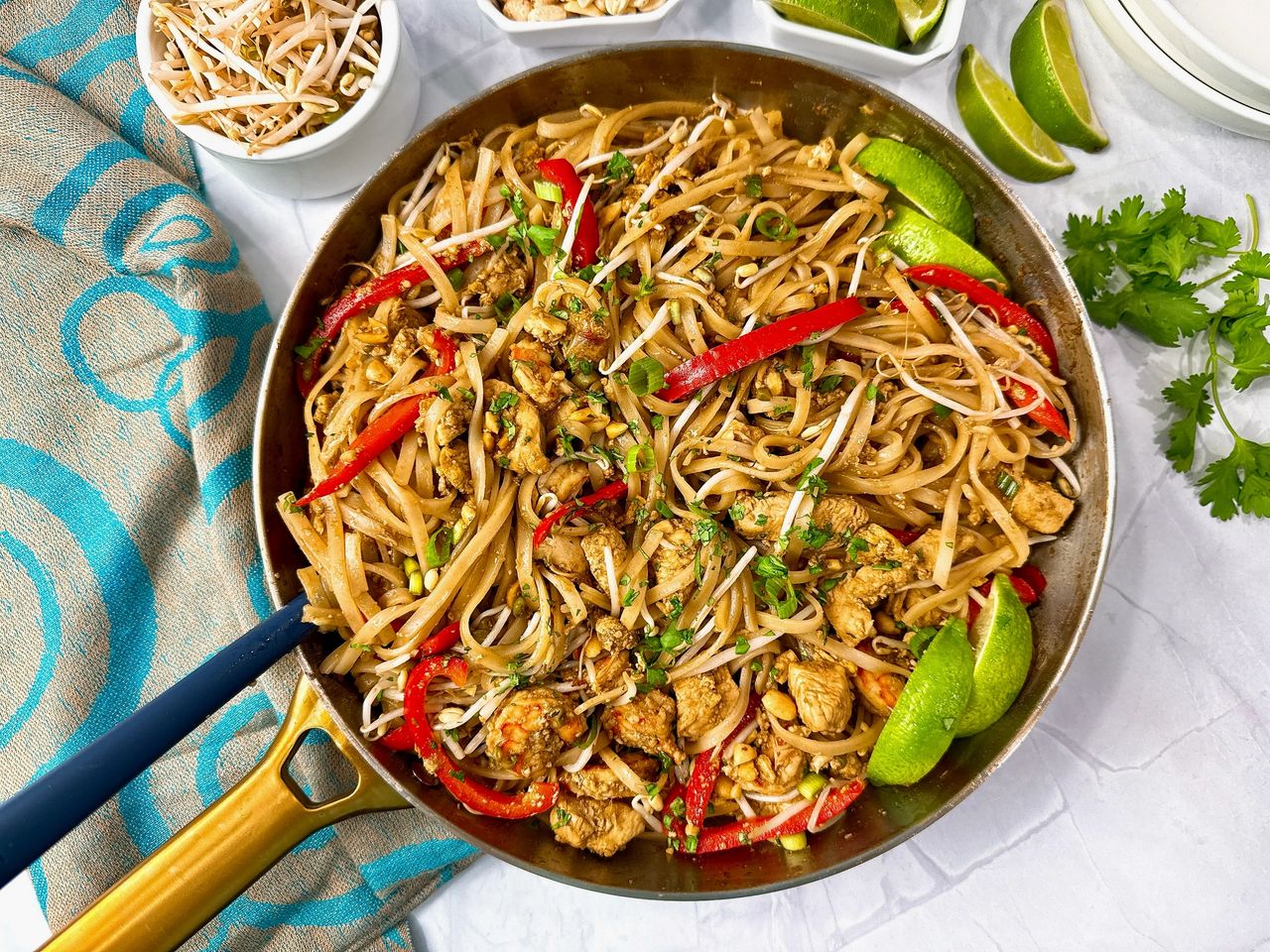
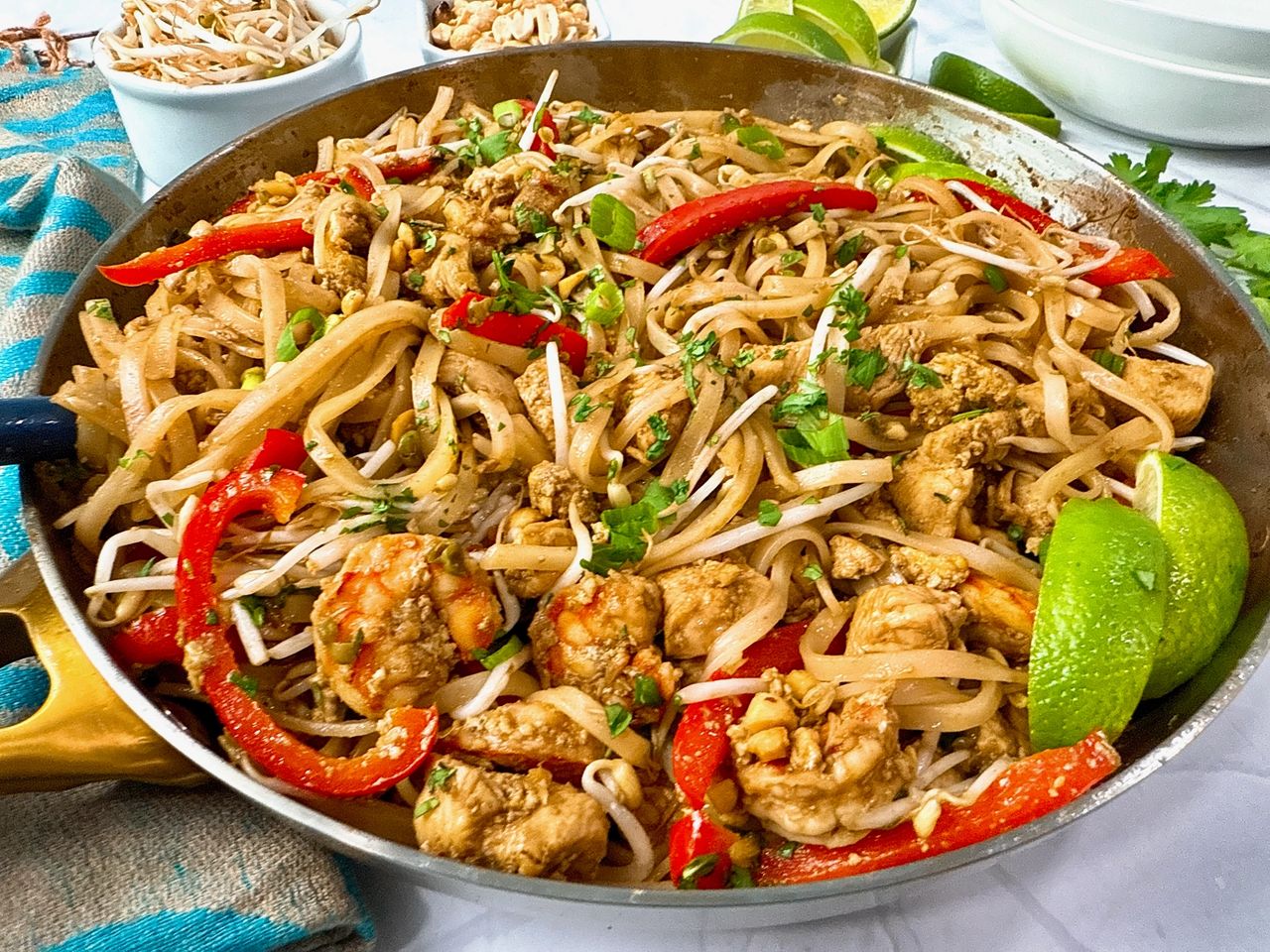
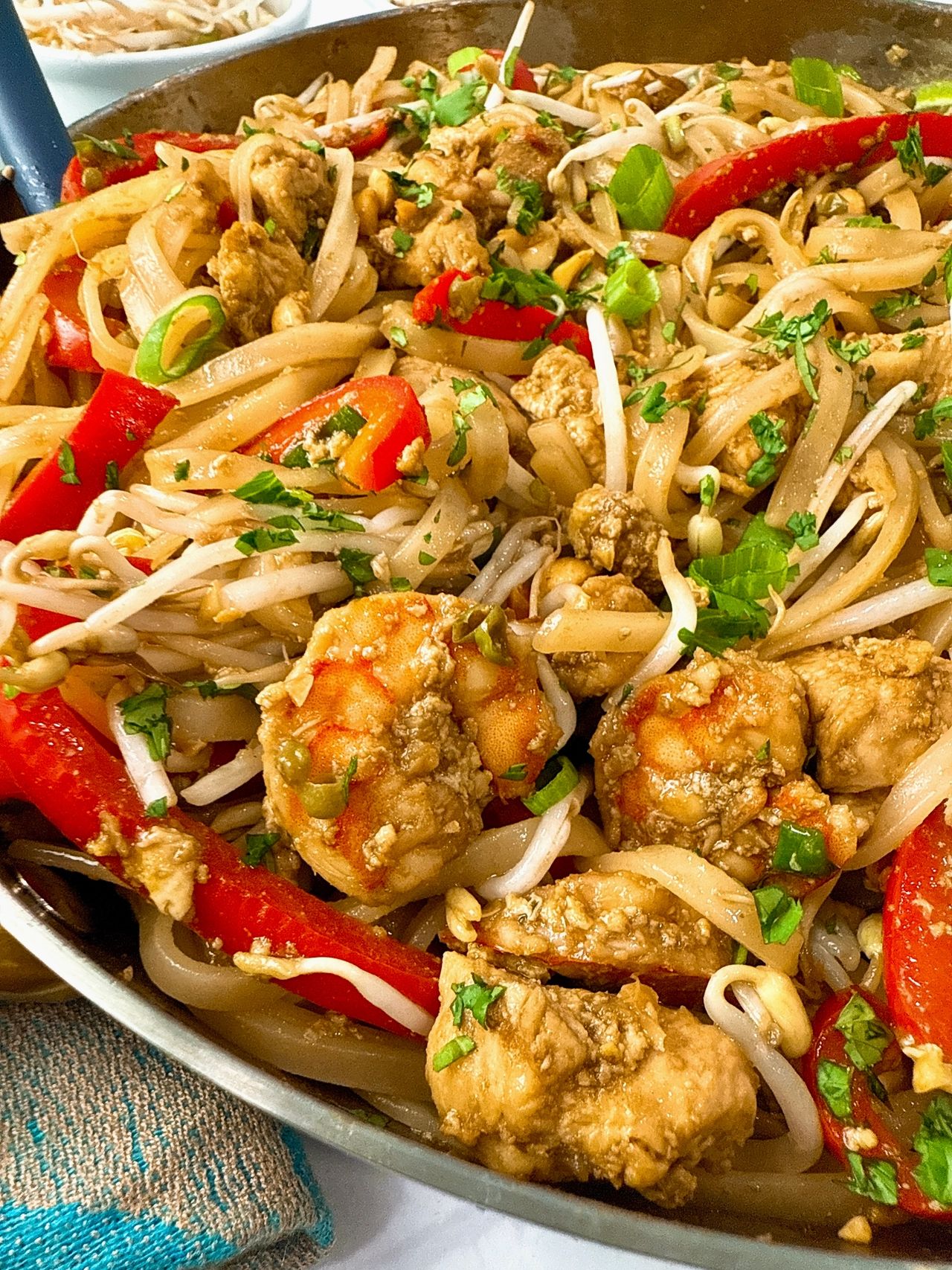
An abundance of tastes and textures in every bite! If you’re a fan of pad Thai, this recipe delivers everything you crave – springy rice noodles, a sublime sweet/savory sauce, and a variety of flavorful, colorful additions.
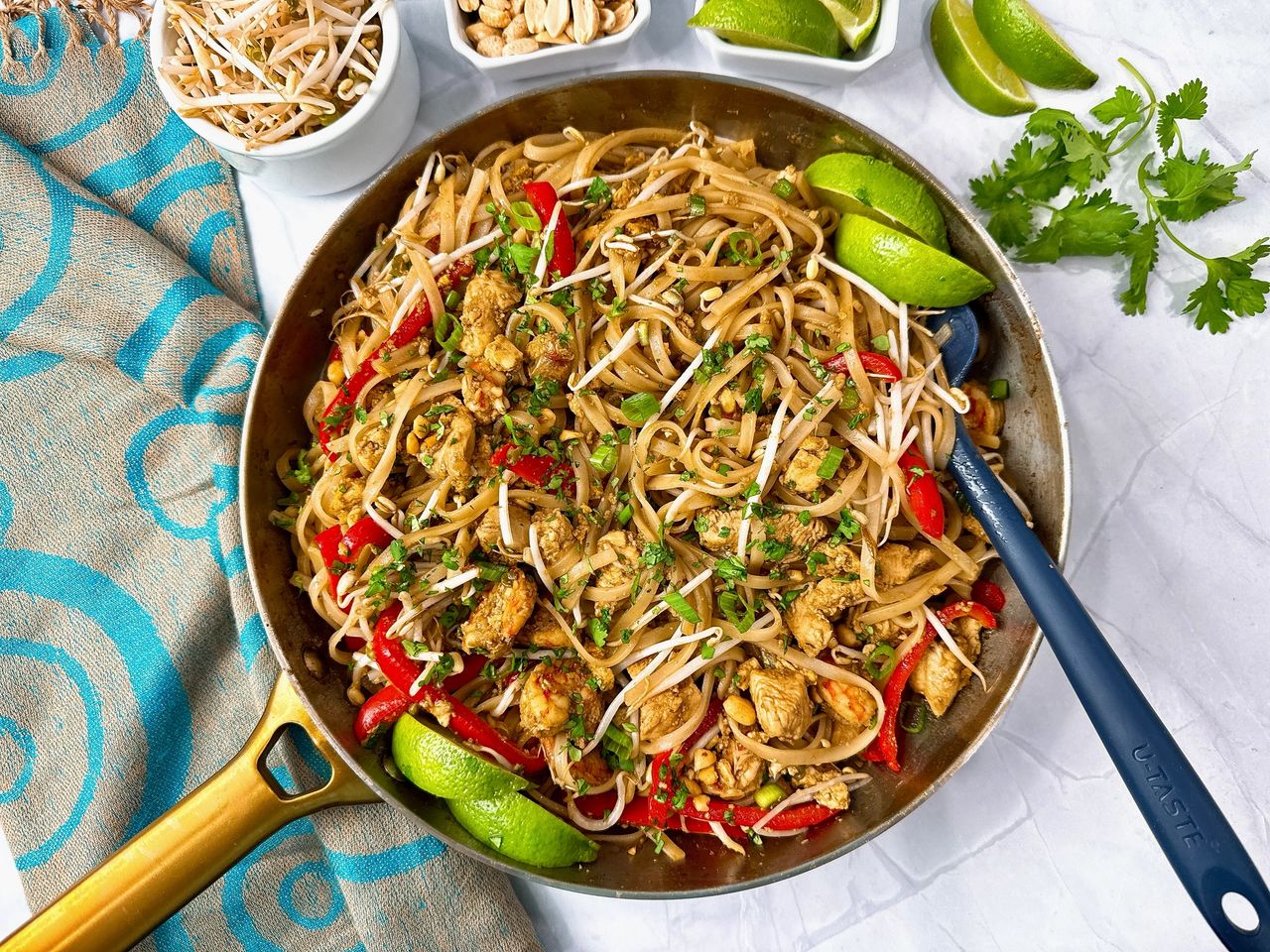
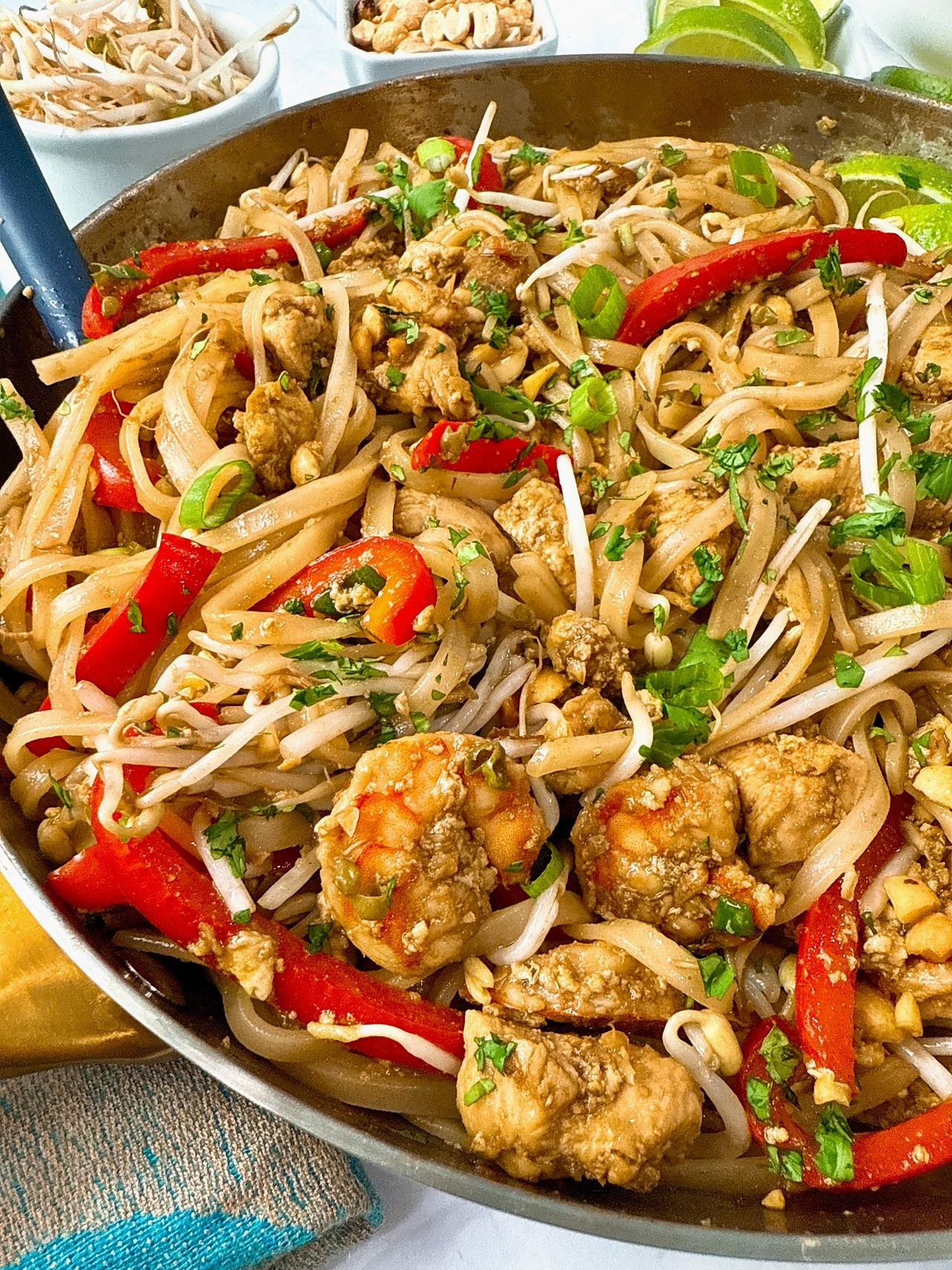
My recreation of the classic dish features a bounty of protein (chicken, shrimp, tofu, and eggs), sweet bell pepper, crunchy bean sprouts, and roasted peanuts – all glazed with a shimmering pad Thai sauce.
The dish has depth and complexity, and you can fiddle with the ingredients as much as you want; it’s entirely customizable. Behold restaurant-worthy pad Thai, without the excessive grease.
This recipe was written for the Arizona Republic.
What is pad Thai? Authentic pad Thai typically features thin, flat rice noodles that are stir-fried with protein (chicken, shrimp and/or tofu), eggs, bean sprouts, green onions, and peanuts (not peanut butter!). Tossed in a sweet/savory pad Thai sauce and garnished with cilantro and lime, the dish is colorful, full-bodied, and a fan favorite – both at Thai restaurants and on the street (pad Thai is a common street food in Thailand). The best news? You can purchase everything you need for this pad Thai at your local grocery store, and have it on the table in about 30 minutes.
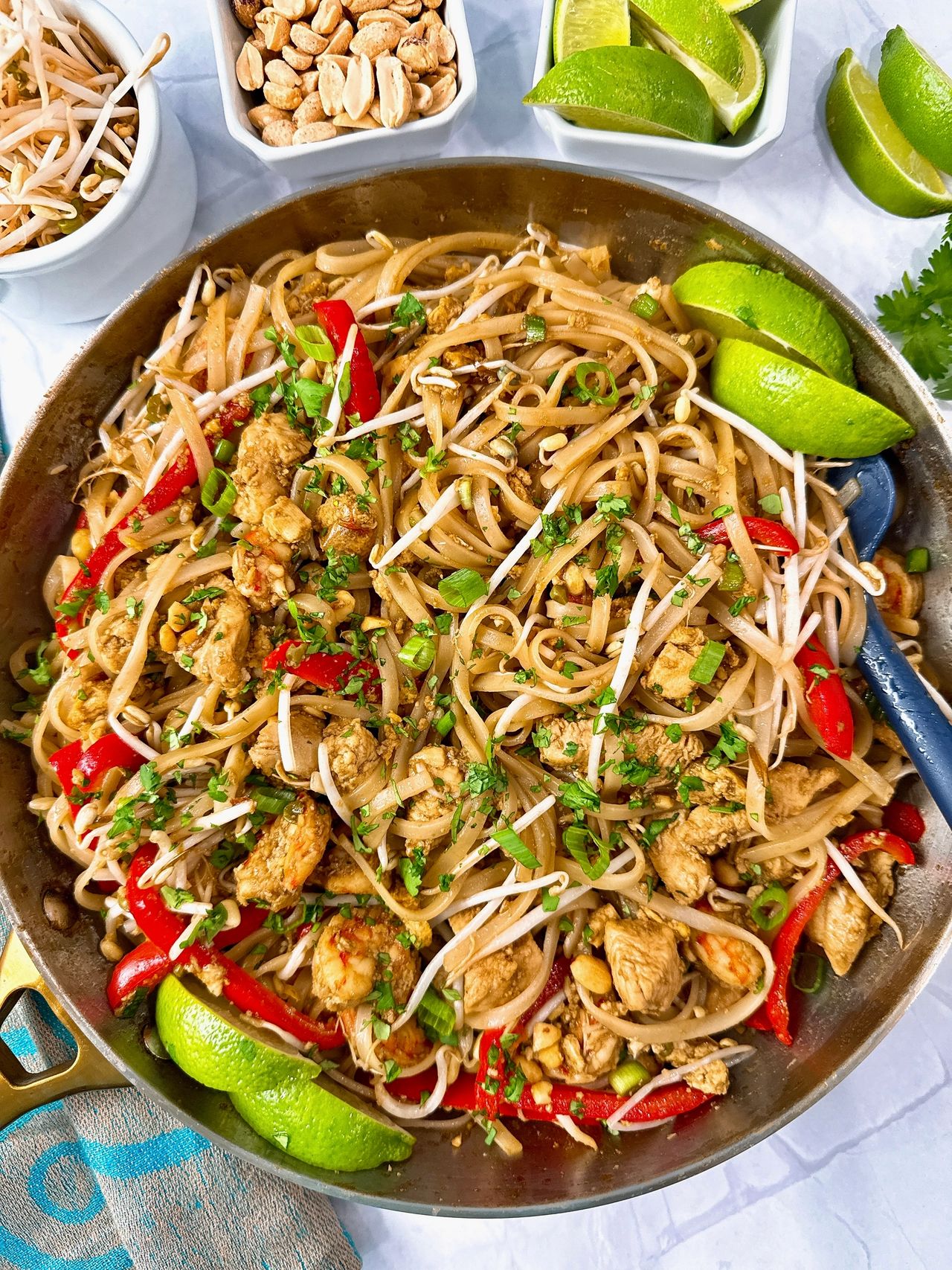
Ingredients for this pad Thai
- Rice noodles. Thin, flat rice noodles make the base of this dish. Sometimes called pad Thai noodles, you can find them in the Asian food section of your favorite grocery store. Both white and brown rice noodles work in this recipe.
- Brown sugar. Brown sugar adds sweetness to the sauce and balances the saltiness and acidity of the other ingredients.
- Fish sauce. Made with fermented fish (often anchovies) and salt, fish sauce adds unrivaled complexity to the sauce. It’s a classic addition to pad Thai so I encourage you to pick up a bottle. If you’d rather use a substitute, use equal parts soy sauce and rice vinegar; 1 ½ tablespoons of each.
- Tamarind. Tamarind is the heart and soul of pad Thai. It’s both sweet and sour and delivers a variety of complex flavors. Imagine a marriage of dates, lemon, apricots, caramel, and molasses. For this recipe, you can use tamarind puree, paste, or concentrate, but I find the concentrate is easier to find in everyday grocery stores. When using the concentrate, use 1/3 the amount as directed below.
- Soy sauce. Soy sauce adds salty, umami flavors to the sauce. You may use regular or low sodium. For a gluten-free option, use liquid aminos, coconut aminos, or tamari.
- Vegetable oil. Vegetable oil is neutral in flavor, making it the preferred choice for stir-frying the protein and vegetables in this dish.
- Protein. I chose a combination of shrimp, chicken, and tofu for this pad Thai. You can do the same or choose one or two of the three. When using shrimp, choose seafood that is peeled and deveined (shrimp of any size works, but I prefer extra-large or jumbo for presentation purposes). For the chicken, you may use boneless breast, tender, or thigh meat. For the tofu, choose the firmest plain variety available. I used extra-firm. Soft tofu will disintegrate in the pan, so steer clear of that.
- Bell pepper. One bell pepper adds sweetness and color to the stir-fry. I used red, but any color bell pepper will suffice.
- Garlic. Fresh garlic adds delicious aromatic notes. I used 3 cloves, but you can use more/less to taste.
- Eggs. Eggs are a classic addition to pad Thai, and we scramble them in the pan next to the other ingredients.
- Bean sprouts. Fresh bean sprouts are another classic pad Thai ingredient. Look for fresh bean sprouts in the produce section of the grocery store. I like to add 1 cup of bean sprouts to the stir-fry, and then I serve extra on the side as garnish. The sprouts are nutty and crunchy and make a delightful garnish.
- Green onions. Fresh green onions add great color and a grassy, mild onion flavor.
- Peanuts. Chopped, dry roasted peanuts add nuttiness and crunch. Use ¼ cup in the dish and ¼ cup as garnish. You may use salted, lightly salted, or unsalted.
- Cilantro. Fresh cilantro is used as a garnish to add flavor and color before serving. You may leave it out if it’s not preferred.
- Lime. A pop of fresh lime elevates the sweet and savory elements of the dish so it’s a crucial garnish for pad Thai.
Tips for flawless pad Thai
- Prep ingredients in advance. This dish comes together fast once everything is prepped, chopped, and ready. As is true of all stir-fries, it’s important to have all ingredients ready to use before pre-heating the pan.
- Use a large pan. Use a very large skillet or wok to ensure all ingredients have frequent contact with the bottom and sides of the hot pan.
- Consider prepping ahead. Dicing, slicing, and making the sauce – that’s what takes the most time when preparing this recipe. To prep ahead, cut your protein, chop your vegetables, and make the sauce. Store everything in the refrigerator until ready to cook; prepped ingredients will last up to 2 days in the refrigerator.
How to store this pad Thai
Once cool, transfer your pad Thai to an airtight container and refrigerate for up to 3 days or freeze up to 3 months. Thaw overnight in the refrigerator before reheating. Reheat leftover pad Thai in a large skillet or wok over medium heat, adding water if needed to separate the noodles. Note, freezing and thawing pad Thai may change the texture of the peanuts and vegetables. The flavor will remain fabulous, but the texture may be compromised. To enliven leftovers, add fresh bean sprouts, green onions, and chopped peanuts.
Pad Thai
Ingredients
For the pad Thai sauce
- 5 tablespoons light brown sugar
- 3 tablespoons fish sauce
- 3 tablespoons tamarind paste or puree, or 1 tablespoon tamarind concentrate and 2 tablespoons water
- 1 tablespoon soy sauce, regular or low sodium
For the stir fry
- 8 ounces flat rice noodles, often called pad Thai noodles
- 2 tablespoons vegetable oil, plus more if needed
- 8 ounces uncooked shrimp, peeled and deveined
- 8 ounces boneless skinless chicken breasts, cut into bite-size pieces
- 4 ounces extra-firm tofu, cut into 1-inch pieces
- 1 red bell pepper, seeded and sliced into thin strips
- 3 cloves garlic, minced
- 2 large eggs, lightly beaten
- 1 cup fresh bean sprouts, plus more for serving
- 3 green onions, chopped and divided
- 1/2 cup dry roasted peanuts, chopped and divided
- 1/4 cup chopped fresh cilantro
- 2 limes, cut into wedges
Instructions
- In a small bowl, whisk together the sauce ingredients – brown sugar, fish sauce, tamarind, and soy sauce. Set aside.
- Cook the noodles according to the package instructions, just until tender. Rinse the noodles under cold water to prevent further cooking. Set aside.
- Heat the oil in a large skillet or wok over medium-high heat. Add the chicken and cook until no longer pink. Add the shrimp and tofu and cook for 2 to 3 minutes, until the shrimp are starting to turn opaque and bright orange.
- Add the bell pepper and garlic and cook for 1 minute.
- Push everything to one side of the pan to make room for the eggs. If necessary, add a little oil to the empty side of the pan if it’s dry.
- Add the eggs to the pan and cook until cooked and still moist, breaking them into small pieces as they cook.
- Add the noodles, sauce mixture, bean sprouts, most of the green onions (reserving some for garnish), and ¼ cup of the peanuts to the pan and toss to combine.
- Cook for 1 to 2 minutes to heat through, allowing the noodles to absorb the sauce.
- Garnish with more bean sprouts, peanuts, and cilantro and serve with lime wedges on the side.