


Pot Roast
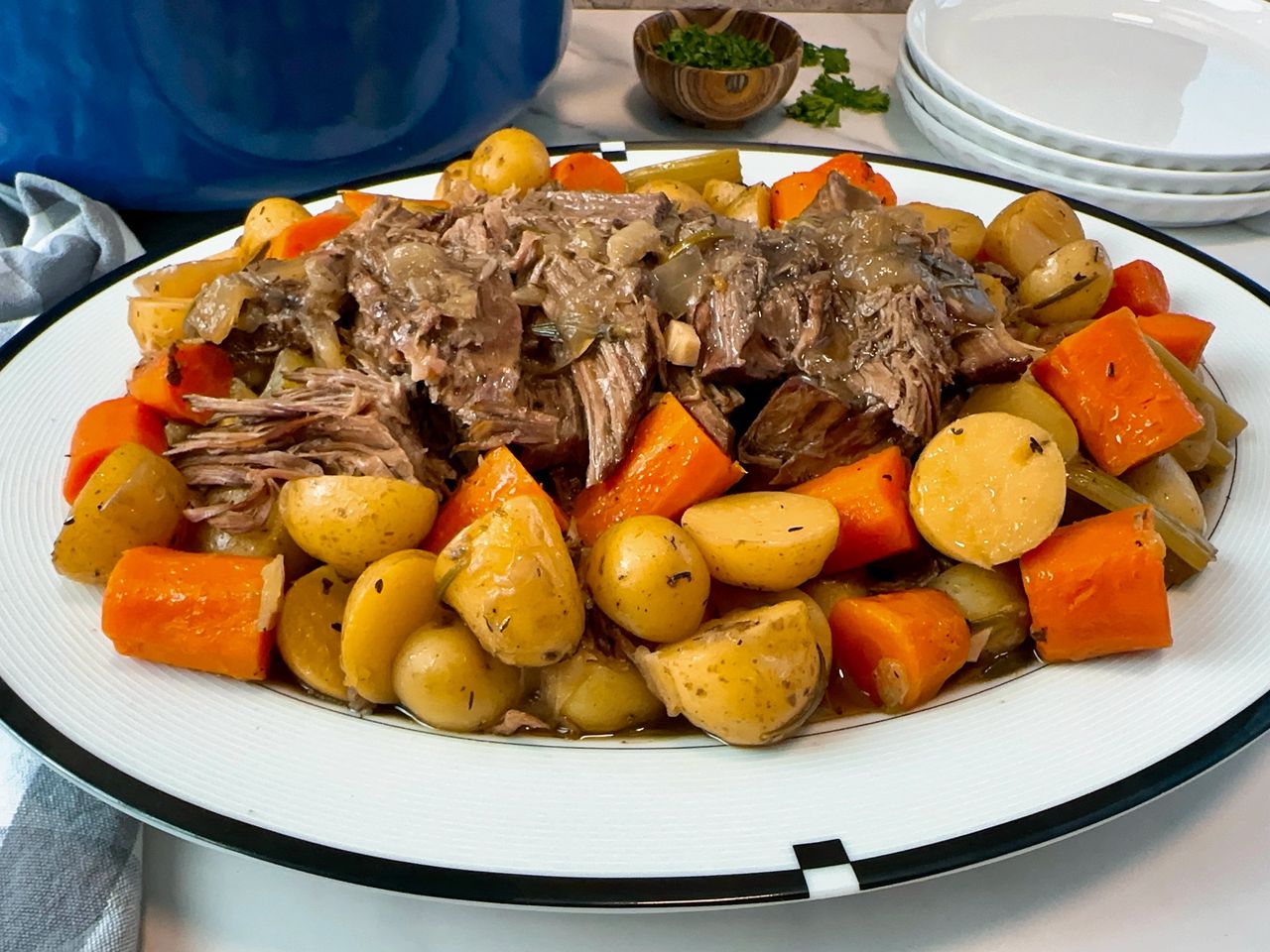
Buttery, fork-tender beef, simmered with sweet and savory vegetables and aromatic herbs, served family-style with the delicious broth drizzled over top. Made in one pot and allowed to simmer for hours, this pot roast is an excellent option for cooks of all levels, and the ideal meal for feeding a hungry crew. Warning: Once that simmering roast perfumes your home, it’ll be tough to keep that crew at bay.
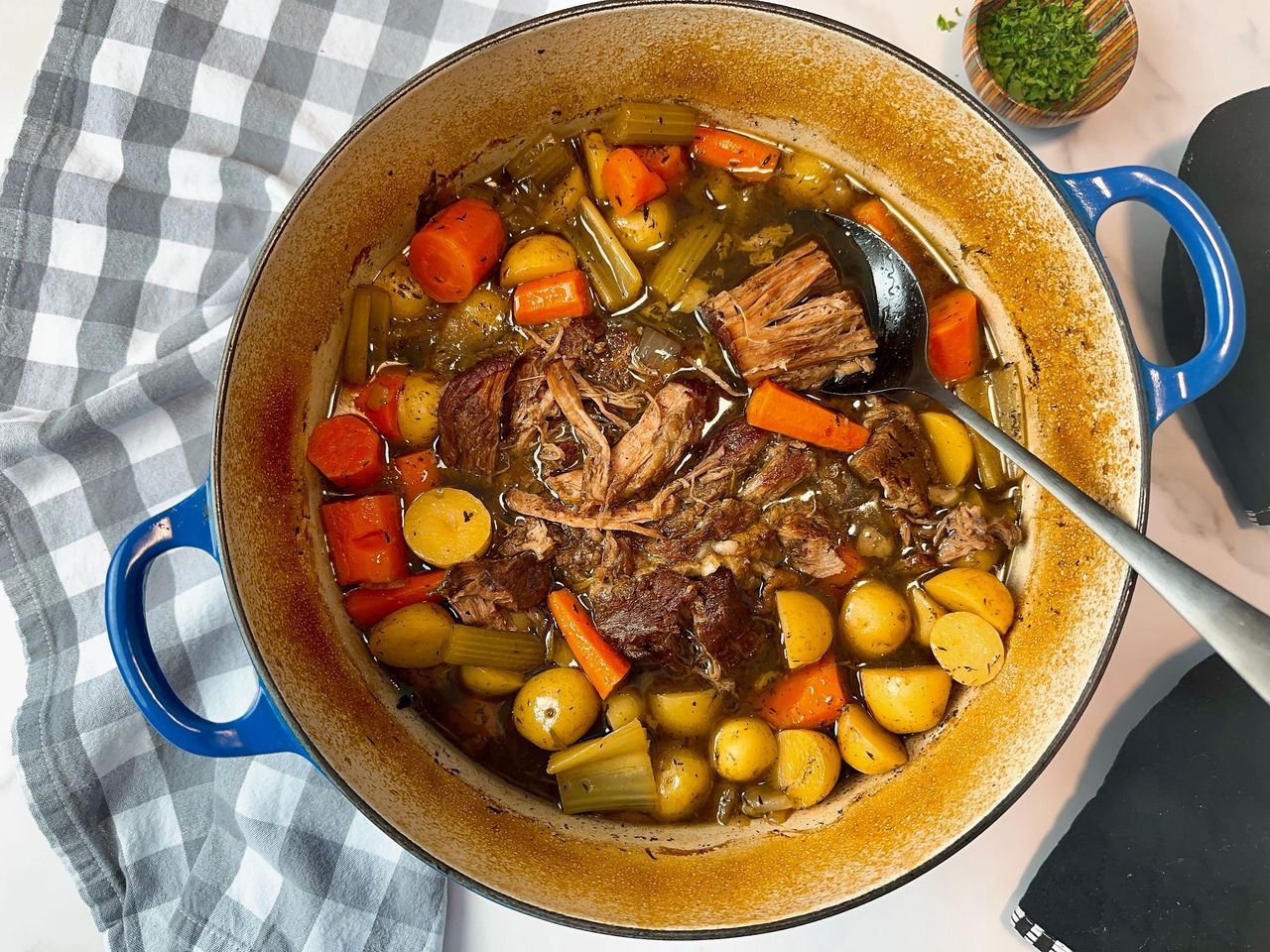
This recipe was written for the Arizona Republic.
This is the only pot roast recipe you need! And every home cook needs one! Pot roast isn’t difficult to make, and there are many ways to modify the dish, so consider this your go-to blueprint from this day forward. The recipe below produces juicy beef, tender vegetables, and a sublime, herby broth for spooning over top. You may never change a single thing, but, once you get the core ingredients and process mastered, you can fiddle with the elements and enjoy pot roast perfection every time, no matter what variations you may choose.
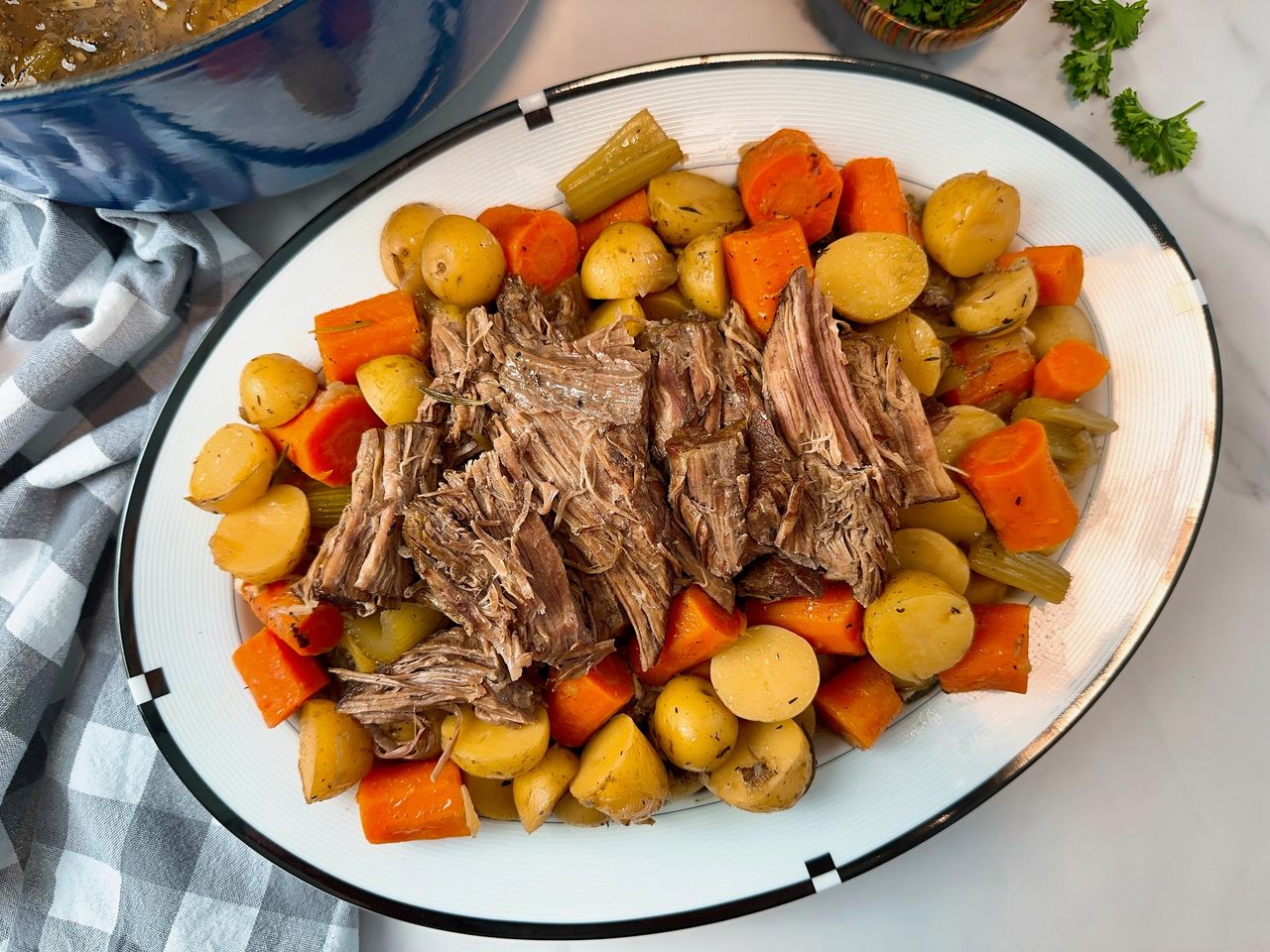
Here’s the simple process for making pot roast
- Sear your beef to create a caramelized exterior.
- Braise the seared roast in a wine-infused, herb-spiked broth that’s loaded with onions, garlic, carrots, celery, and potatoes.
- Cook until the beef is buttery-soft, and the vegetables are tender.
Everything happens in one pot, and the oven does most of the work.
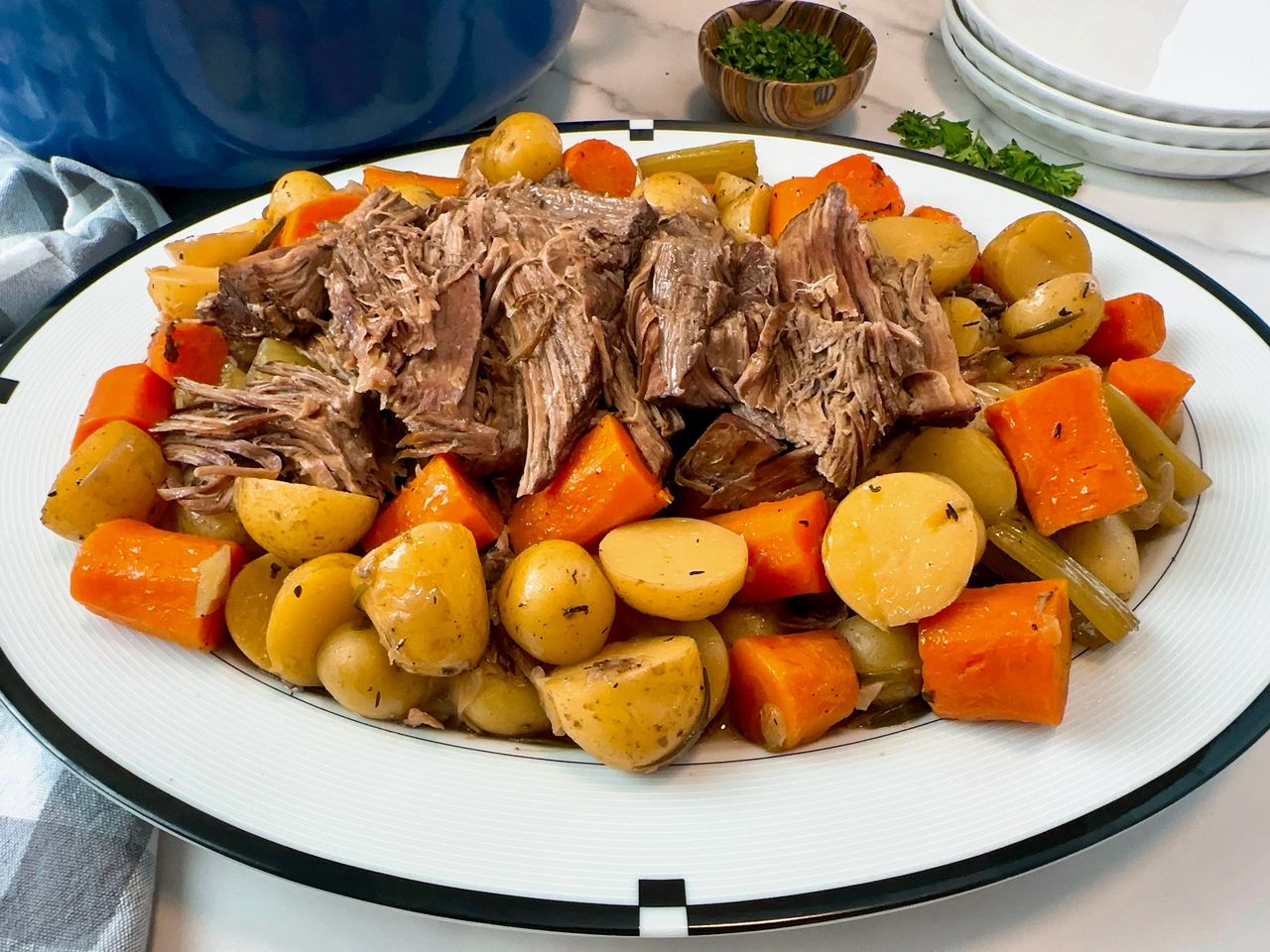
Choose boneless chuck roast if possible. Pot roast typically calls for tougher cuts of beef with lots of marbling, or streaks of fat throughout (marbling carries flavor). Cooking “low and slow”, or at a low temperature for a long time, slowly breaks down the tough connective tissues in the beef and produces deliciously tender meat and a rich, flavorful broth. If you rush your roast, the meat will be tough, not fall-apart tender. If you can’t find chuck roast, use round or rump roast.
Sear the roast before transferring to the oven. Searing your roast adds tremendous flavor and caramelization, so don’t skip this step. Plus, charring the meat leaves little browned bits on the bottom of the pan; tasty tidbits that are eventually incorporated into the broth.
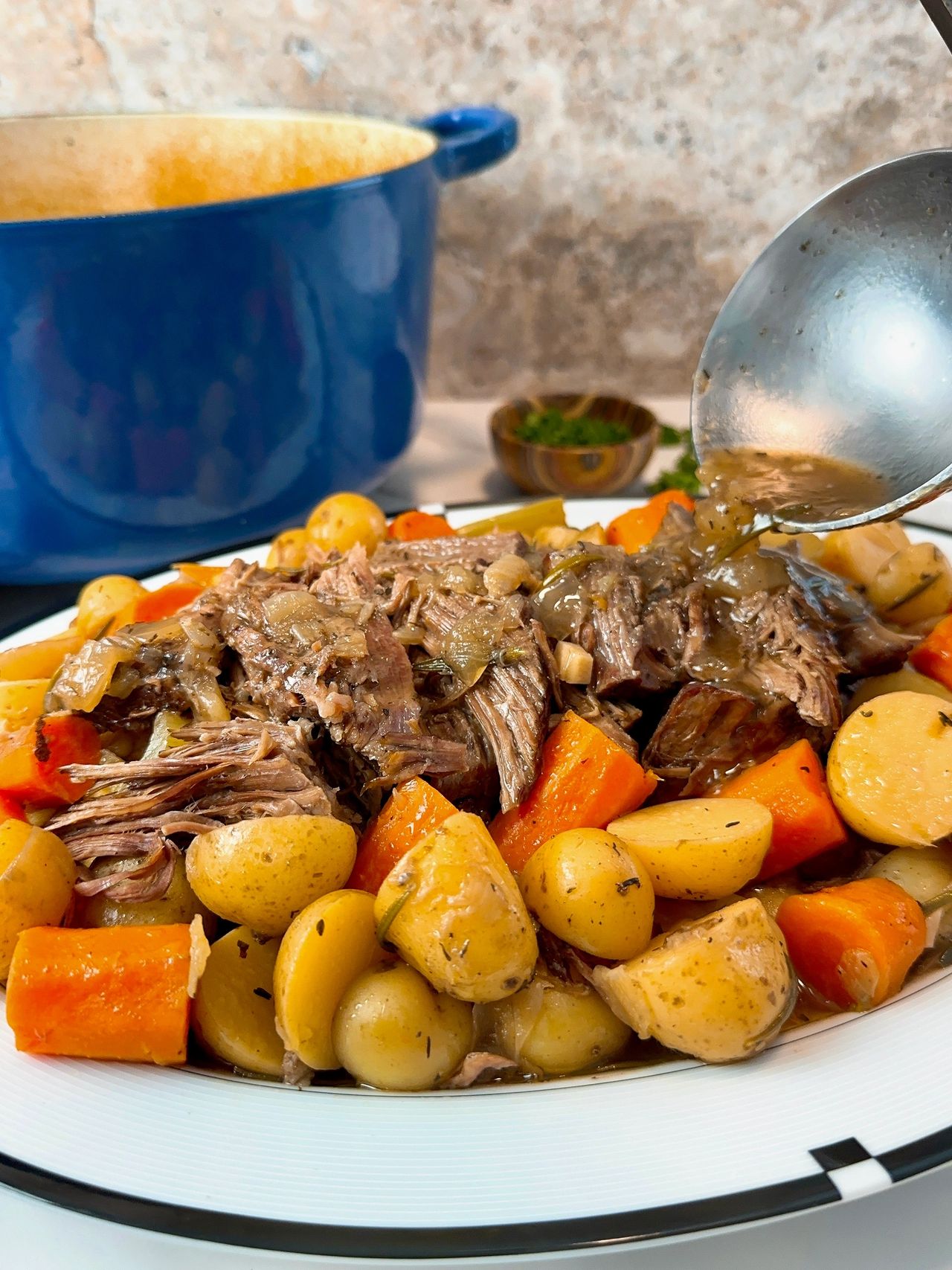
Use baby potatoes. I prefer baby potatoes because they don’t require peeling and they hold their shape well. I halve my potatoes because I find them easier to serve and eat, but you can certainly keep them whole. If desired, you may substitute red potatoes, Yukon gold potatoes, and russet potatoes. Just make sure to cut your potatoes into bigger, 2-inch chunks so they don’t overcook.
Cut your carrots and celery into 1 1/2-inch chunks. Keeping your vegetable pieces on the larger side will guarantee they don’t overcook and turn to mush.
Add vegetables about halfway through cooking (or a minimum of 1 hour before the roast is finished). This will ensure the vegetables tenderize in time, without getting too soft.
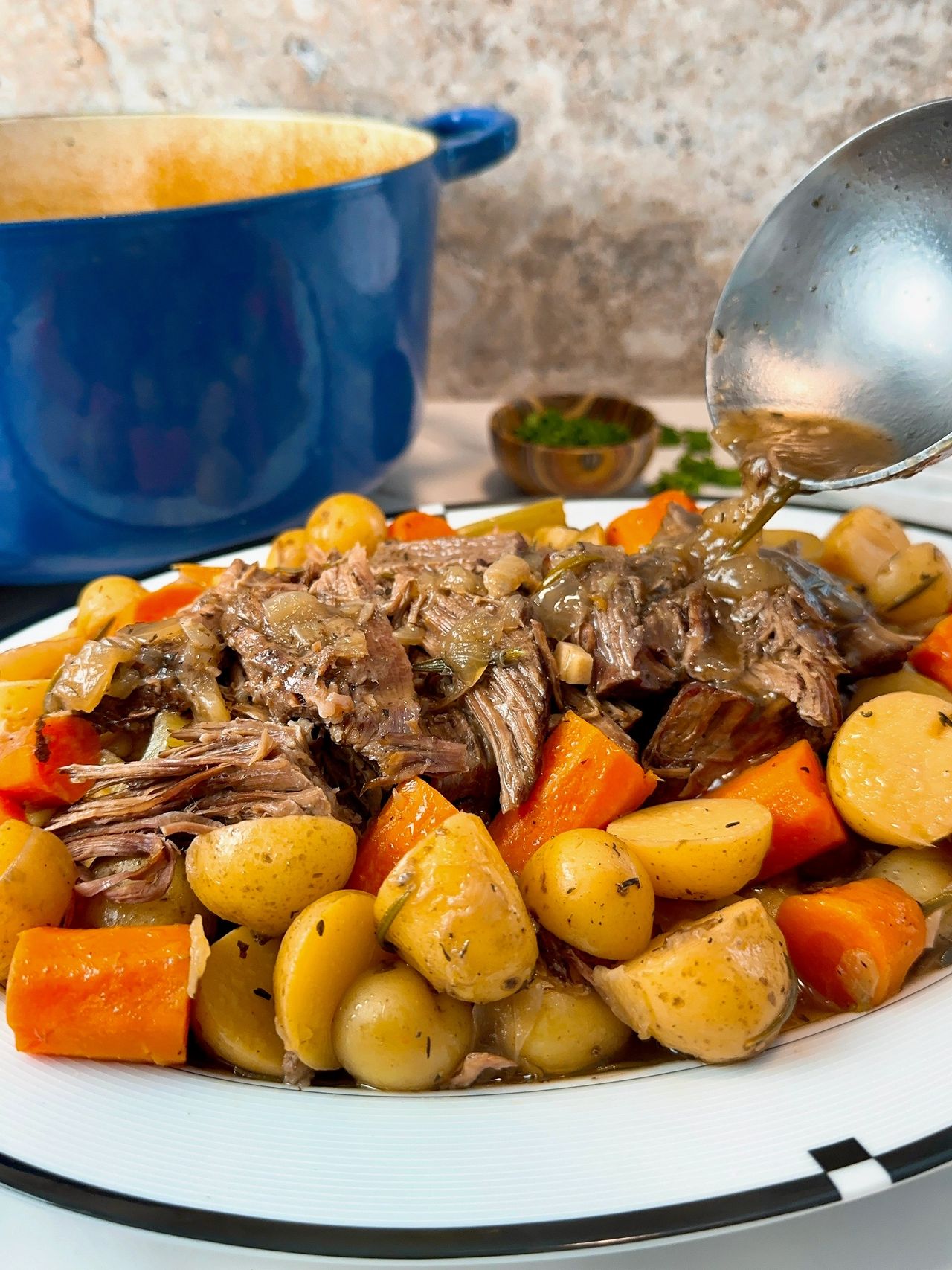
Use both fresh and dried herbs. This recipe calls for rosemary, thyme, and bay leaves. I prefer fresh rosemary here because the sprigs melt into the broth during cooking. I find that dried rosemary (especially rosemary that’s been on the shelf for a while) never fully softens, leaving tough little “needles” in your dish. Dried thyme and bay leaves work quite well in pot roast, and they infuse the dish with aromatics during cooking. Note, bay leaves also never fully soften, but they are easily removed before serving. Pro tip: If you prefer not to have the rosemary leaves in your final dish, place the rosemary sprigs in cheesecloth before adding to the pot. You can also add the bay leaves to the cheesecloth, making it easy to remove and discard them before serving.
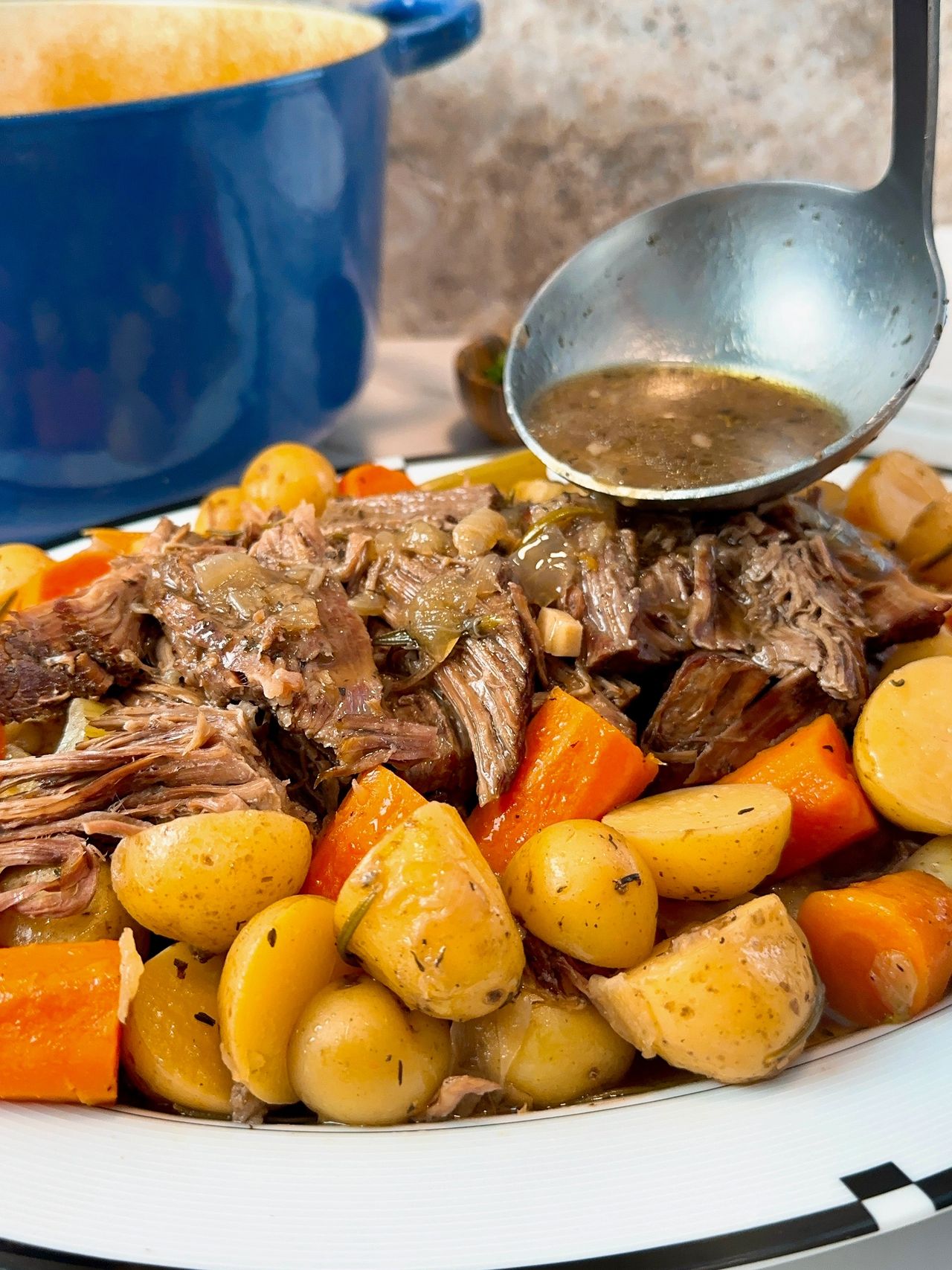
Consider other vegetables! While carrots and potatoes are traditional, feel free to switch things up (especially if you’re looking for lower-carb alternatives). Great additions/substitutions include parsnips, turnips, rutabaga, and butternut squash. You can also swap leeks in for the yellow onion.
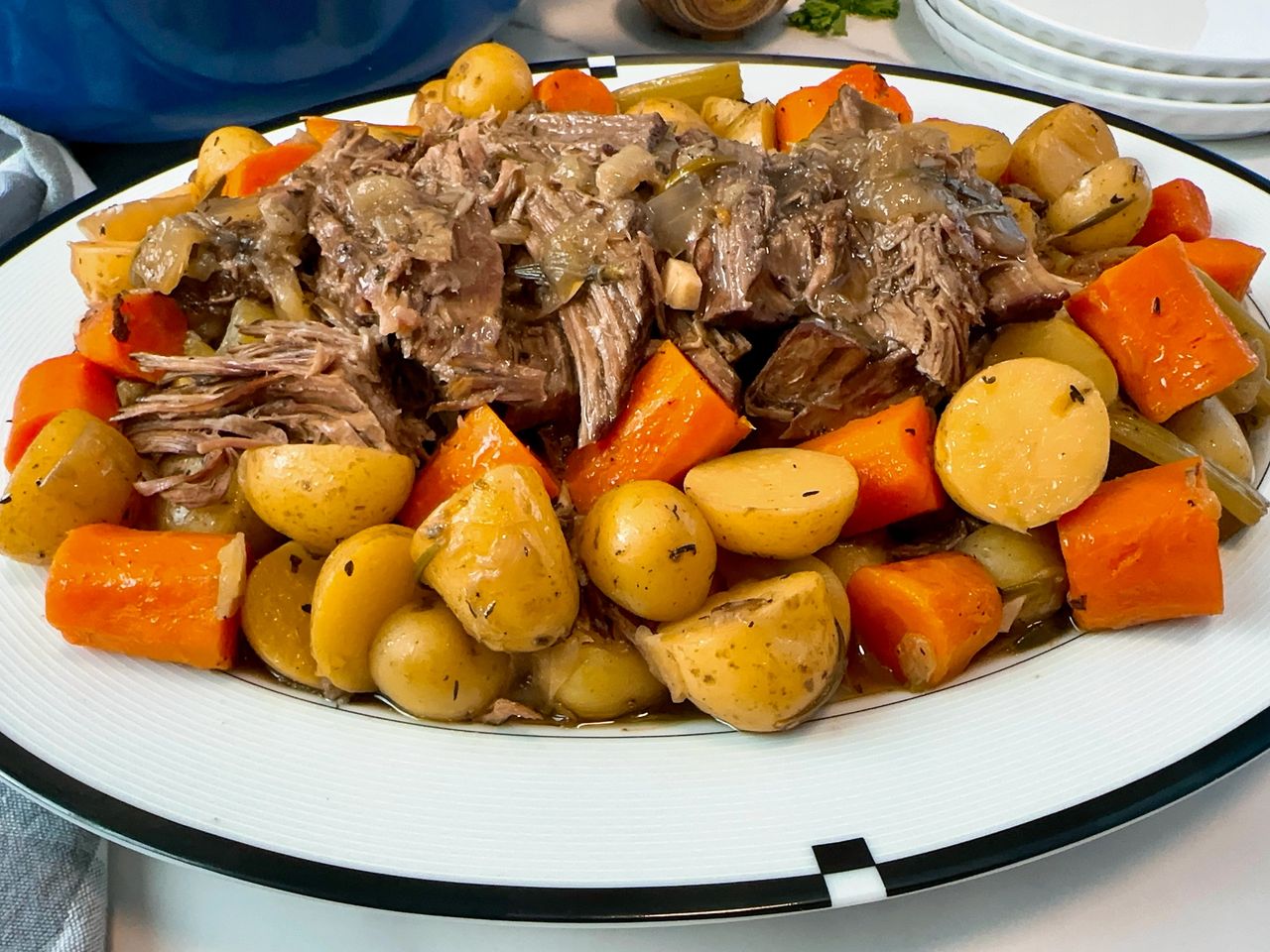
What should you serve with your pot roast? Since this pot roast features meat and vegetables, it’s basically a complete meal. I like to serve bread or dinner rolls on the side, so I have something to soak up the flavorful, beefy broth. If desired, you can serve this pot roast with a crisp green salad, or steamed or sautéed broccoli, asparagus, or green beans.
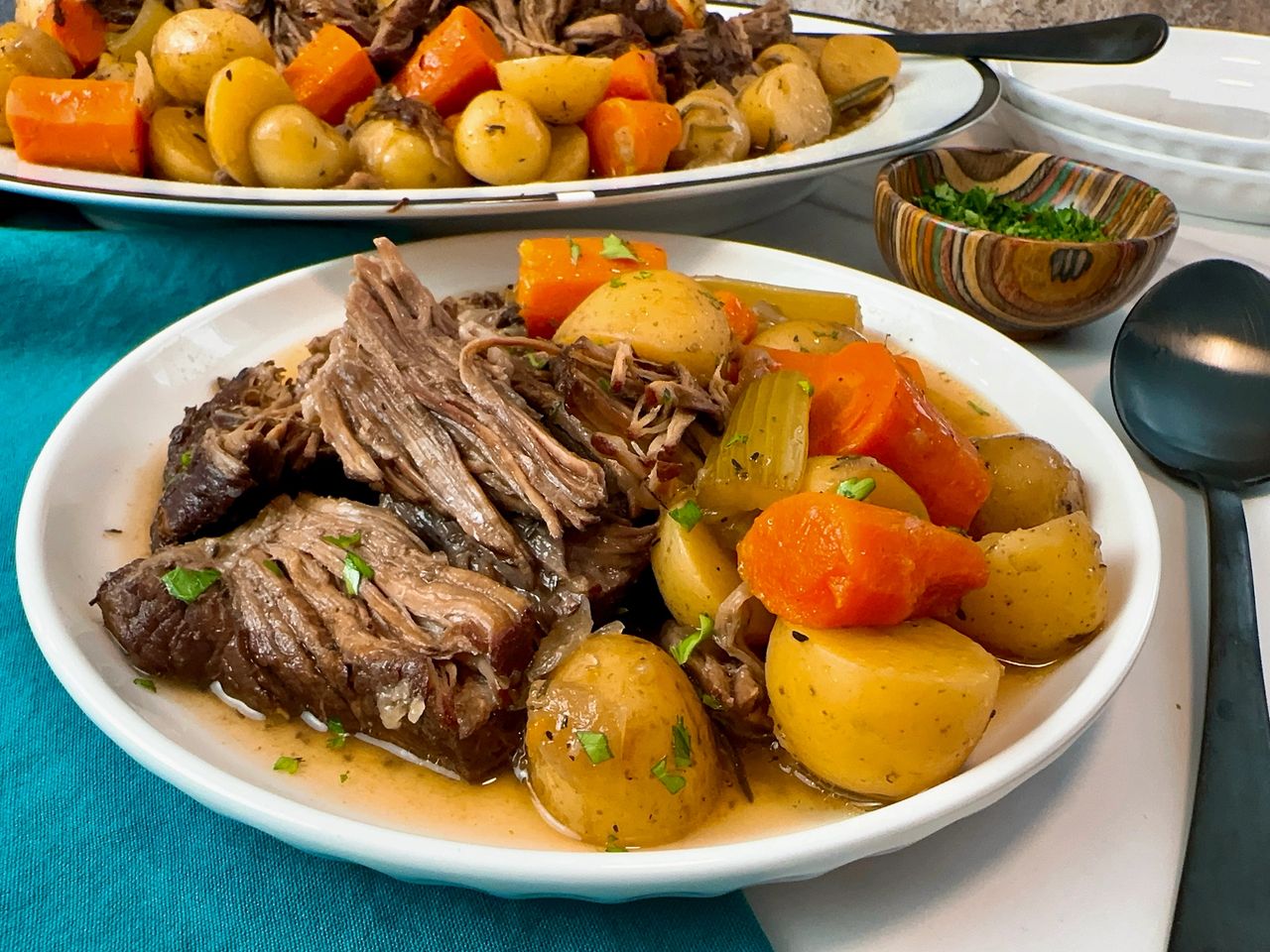
How to store leftover pot roast. Cool leftover pot roast completely before transferring to an airtight container. Store in the refrigerator for up to 3 days, or in the freezer for up to 3 months. Thaw overnight in the refrigerator before reheating in a large pot over medium heat.
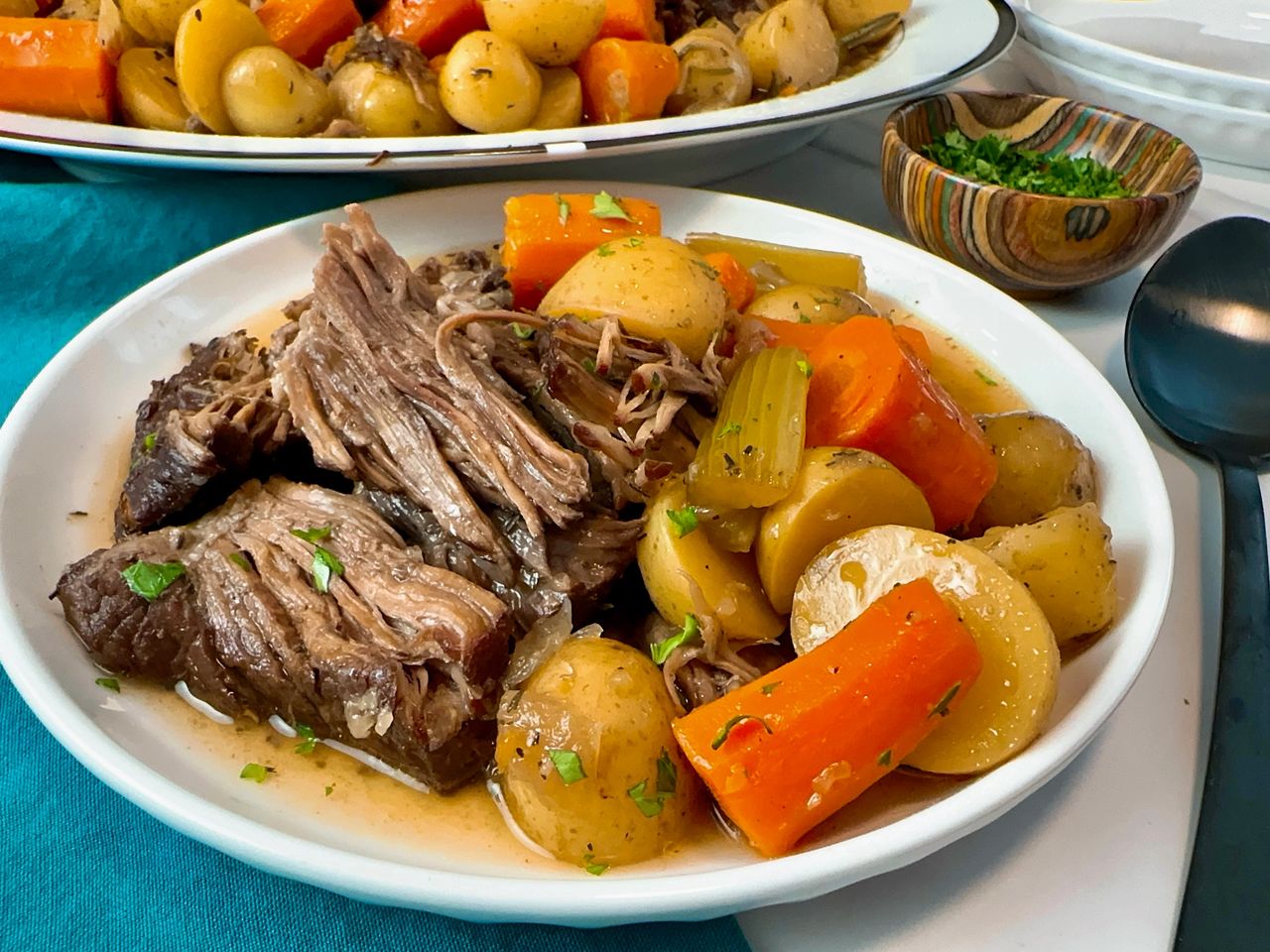
Pot Roast
Ingredients
- 3-4 pound boneless chuck roast, or round or rump roast (remove the string if there is one)
- Salt and freshly ground black pepper
- 2 tablespoons olive oil
- 1 large yellow onion, chopped
- 4 cloves garlic, coarsely chopped
- 2 cups beef broth
- 1 cup red wine
- 2 sprigs fresh rosemary
- 1 teaspoon dried thyme
- 2 bay leaves
- 1 1/2 pounds baby potatoes, gold, red, or white, halved if desired
- 4-6 carrots, peeled and cut into 1 1/2-inch pieces
- 2-3 stalks celery, cut into 1 1/2-inch pieces
- Chopped fresh parsley for serving, optional
Instructions
- Preheat the oven to 300 degrees.
- Season the top, bottom, and sides of the roast with salt and black pepper. Heat the oil in a large Dutch oven (or oven-proof roasting pan with a lid) over medium-high heat. Add the roast to the hot oil and sear until browned on all sides.
- Arrange the chopped onion and garlic around the roast. Add the broth, wine, rosemary, thyme, and bay leaves. If you prefer not to have rosemary leaves in your final dish, wrap the sprigs in cheesecloth before adding them to the pot. And if you’re using cheesecloth, add the bay leaves too; this will make it easier to find and discard them before serving.
- Bring to a simmer. Cover the pan with a lid and transfer to the oven. Bake for 2 hours.
- Add the potatoes, carrots, and celery to the pot (the vegetables do not need to be fully submerged).
- Return the pan to the oven and bake for 1 1/2 to 2 more hours, or until the roast pulls apart easily and the potatoes are fork-tender.
- Discard the rosemary sprigs and bay leaves.
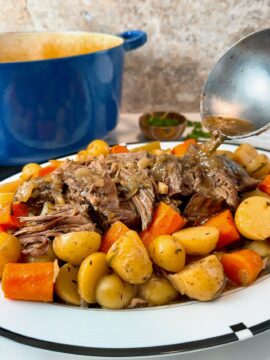
- Using a fork, gently pull the beef apart into large pieces. Transfer the beef and vegetables to a serving platter and drizzle some of the pan juices over top. Serve with extra broth on the side. Top with parsley, if using, and serve.