


Charcuterie Board
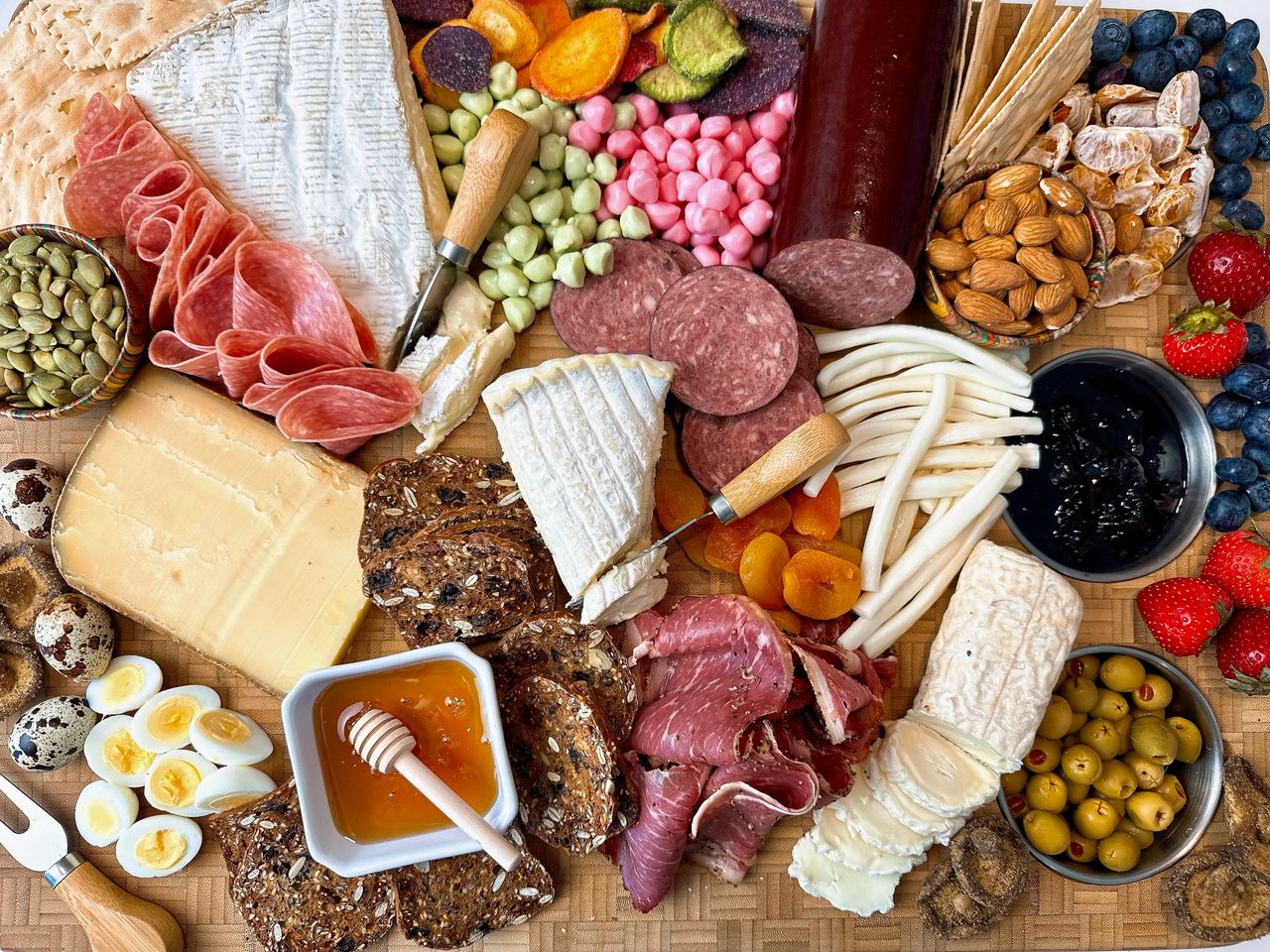
Brimming with color, flavor, and texture, this is the ultimate charcuterie board! This gorgeous spread of meats, cheeses, fruits, crackers, and other savory delights will bring joy to everyone – all year long!
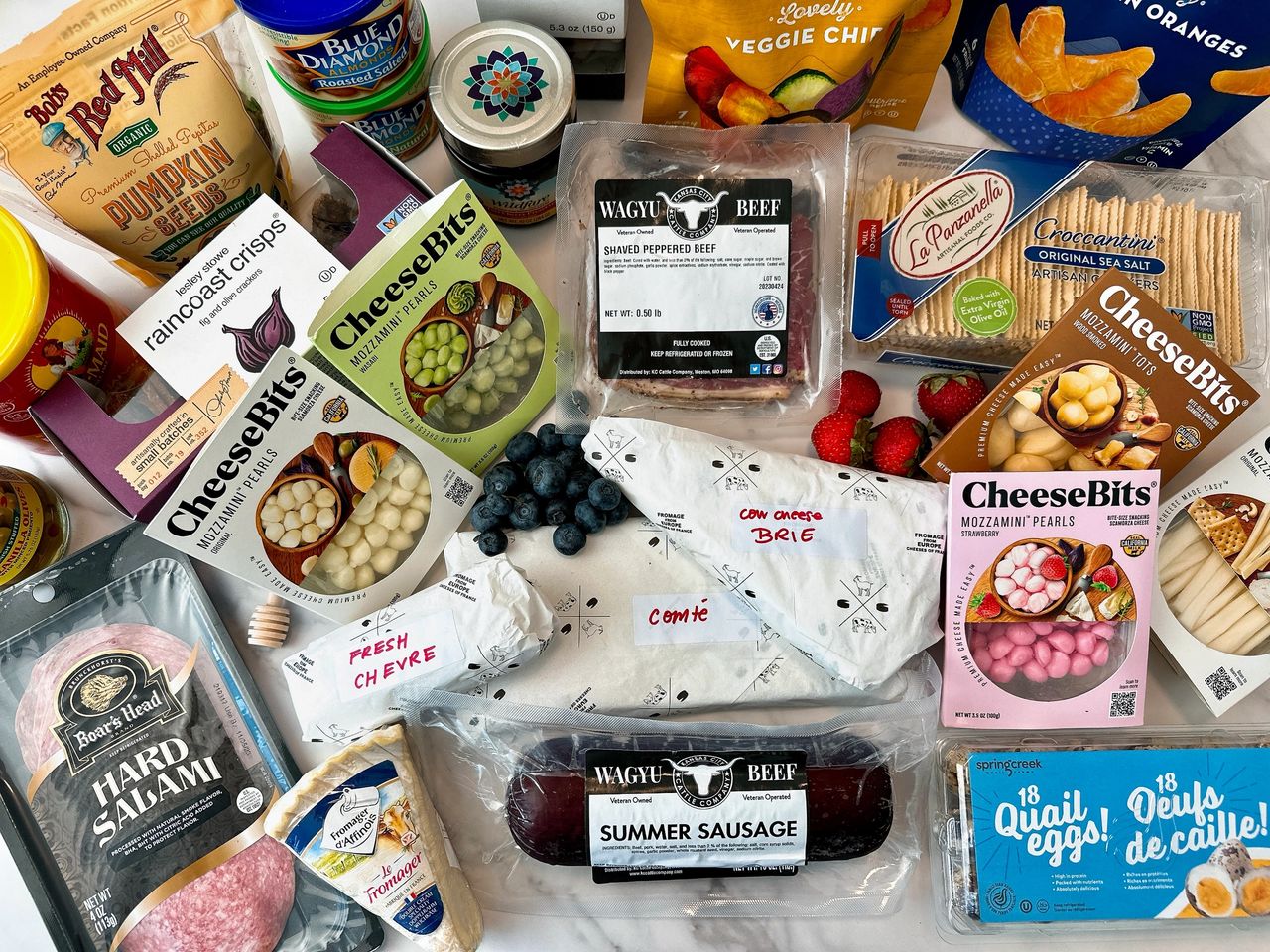
What is a charcuterie board? Pronounced “shar-koo-ter-ee”, the word charcuterie means “pork-butcher’s shop”. The original French term dates to the 15th century and refers to pork that was cured/preserved and sold to villagers to supplement what fresh food was available throughout the year.
That was then, this is now. Modern-day charcuterie boards contain much more than pork, and often feature a variety of meats and cheeses, plus foods that pair well with the two, including, fruit, nuts, pickles, olives, mustards, spreads, and preserves. So, while the original charcuterie featured cured pork products, contemporary boards contain a myriad of deliciously snackable items that work well together.
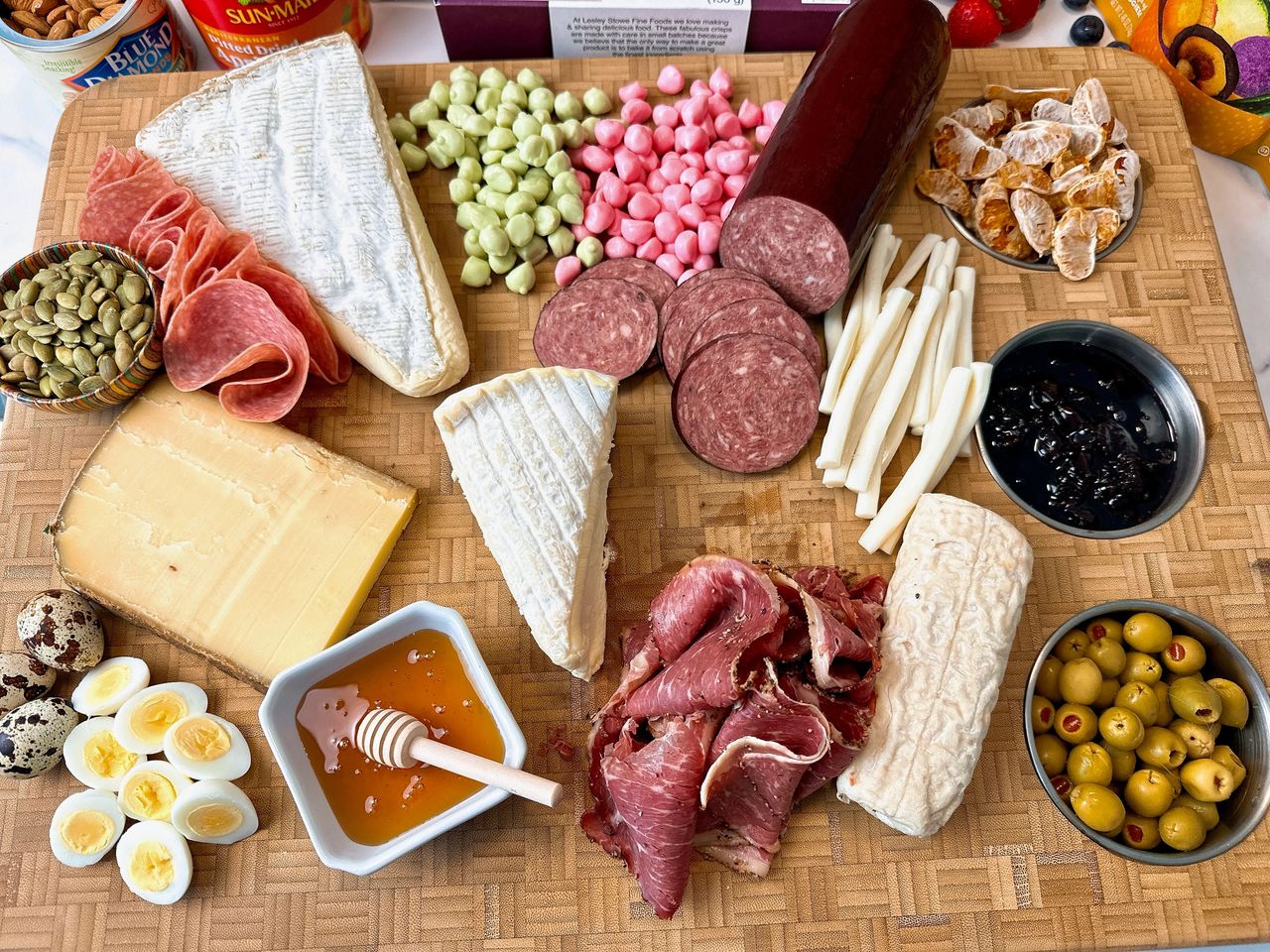
The charcuterie board rulebook. There isn’t one! The only suggestion is that you include a variety of different tastes and textures. For example, partner soft and creamy with crisp and crunchy. And balance the savory and salty items with those that are sweeter. Pro tip: Always include a few familiar items so your family and guests feel comfortable digging in.
What kind of board do you need? You don’t need a fancy board for a show-stopping presentation. In fact, most of the surface area is covered anyway. Any cutting board, rimmed baking sheet, or serving platter will suffice. When using a baking sheet, line the pan with parchment paper before adding food.
Ingredient ideas
Cheese: If possible, offer a combination of cheeses, ranging from creamy and spreadable (like Boursin), to soft (think mozzarella) to hard (like parmesan). Offering cheeses from different animals (cows, goats, sheep) is also fun.
· Spreadable and soft cheeses: Saint Andre, Alouette, Boursin, De Bourgogne, Brie, Camembert, herbed cream cheese, herbed goat cheese, triple cream (such as Brillat Savarin), spreadable cheddar, mozzarella, blue, gorgonzola.
· Semi-soft and hard cheeses: Manchego, white and orange cheddar, Comté, Swiss, Gouda, Gruyere, Parmesan, Asiago, Colby, Havarti, Jack, Pepper Jack.
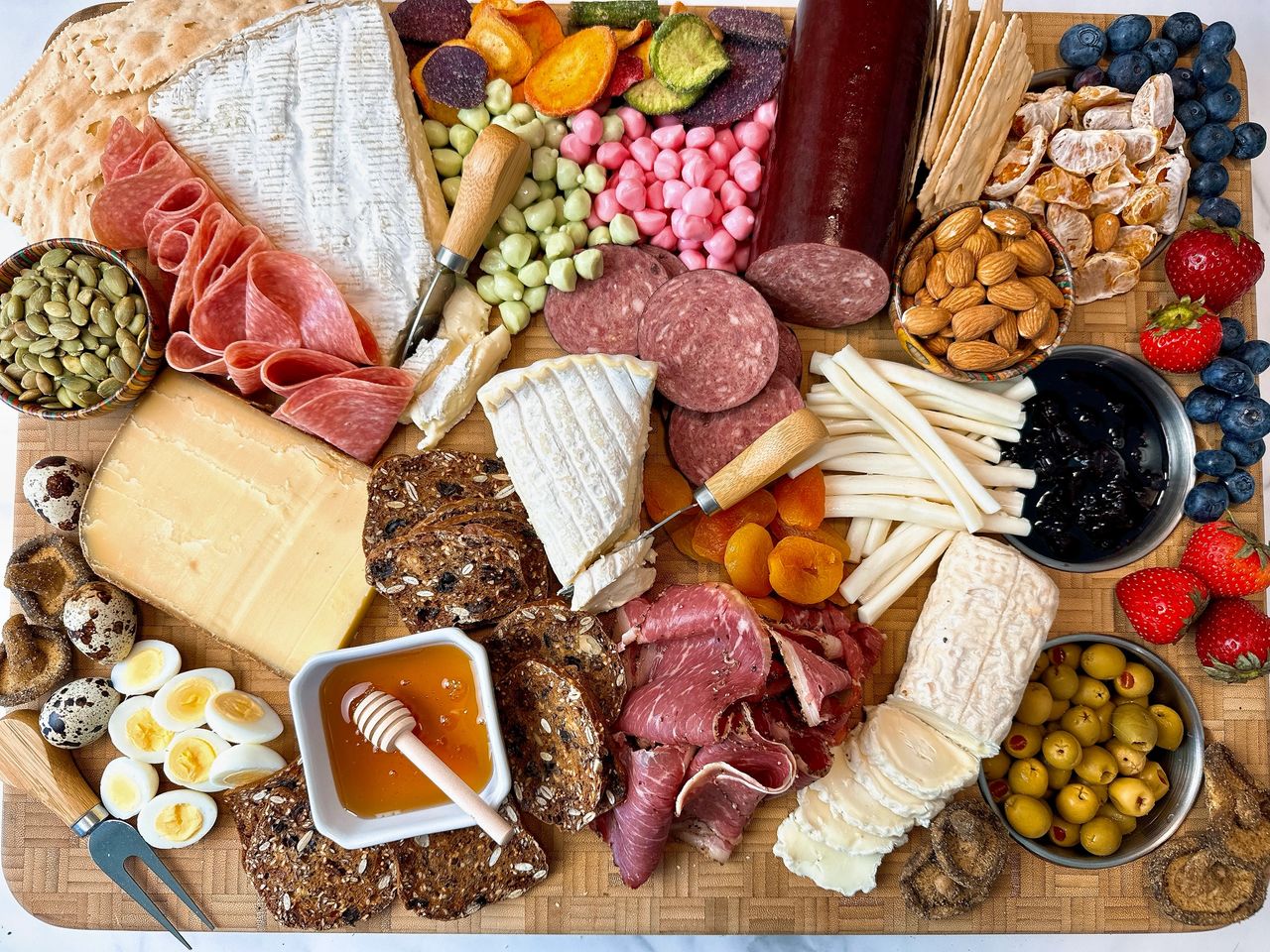
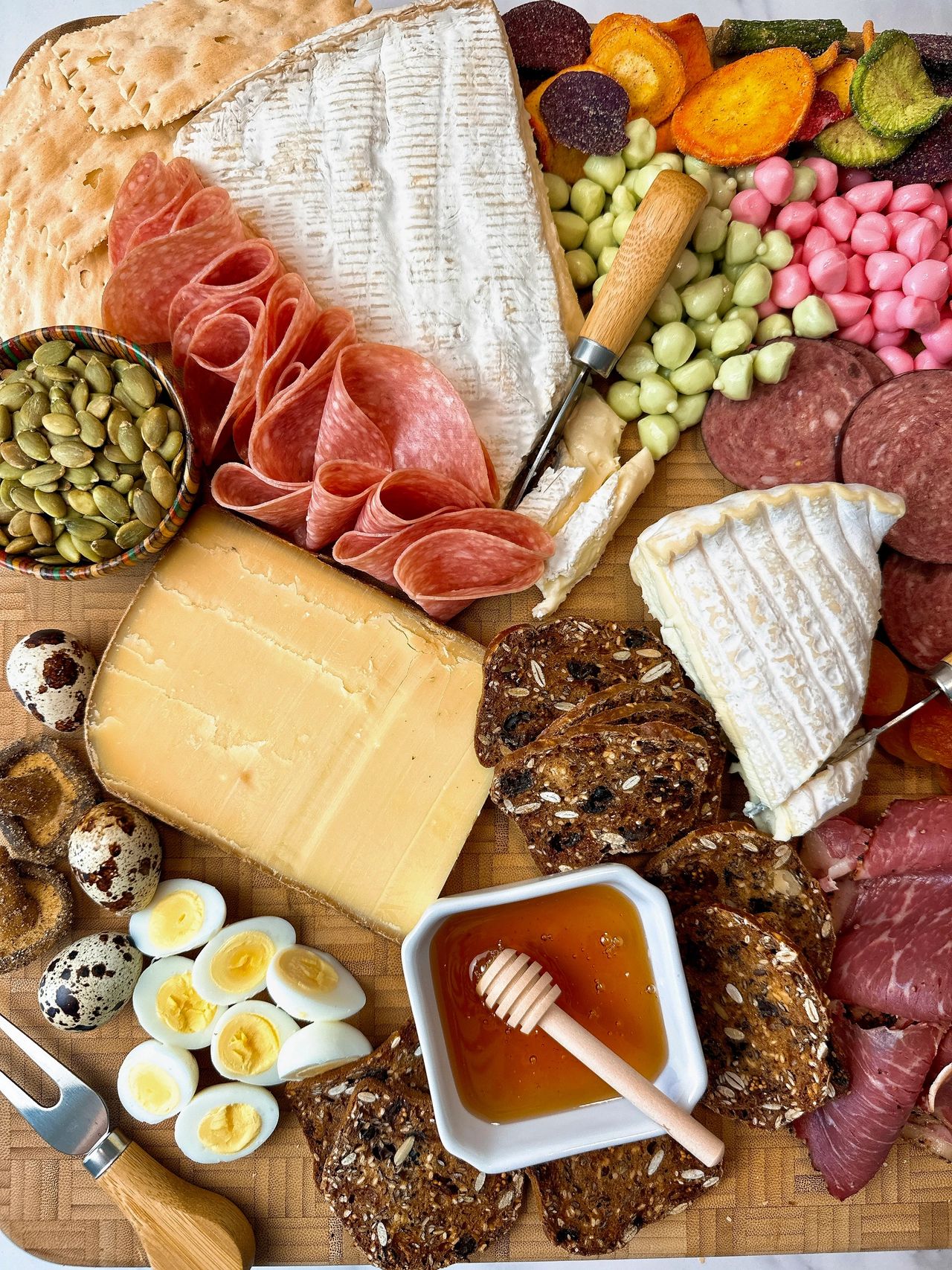
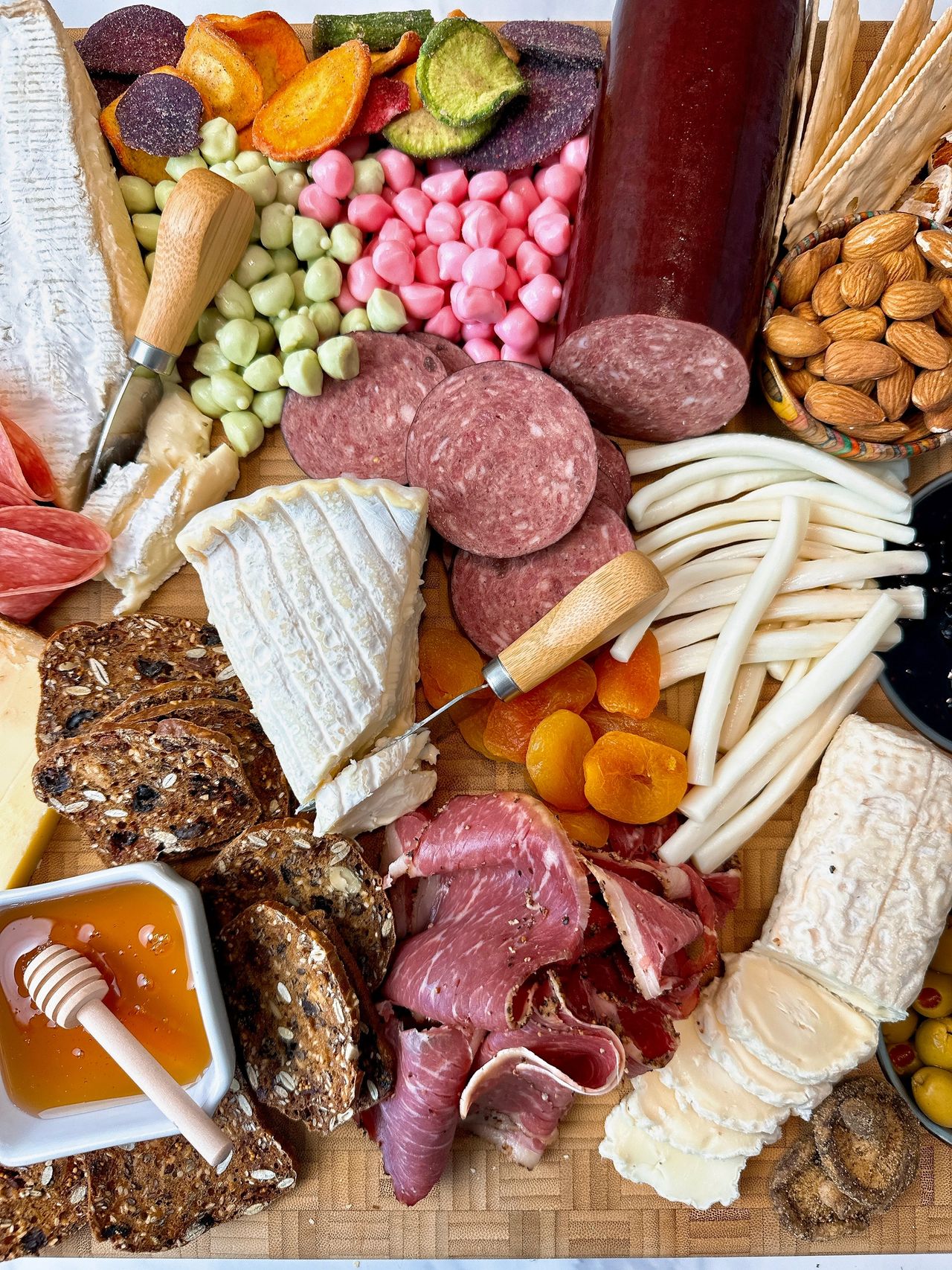
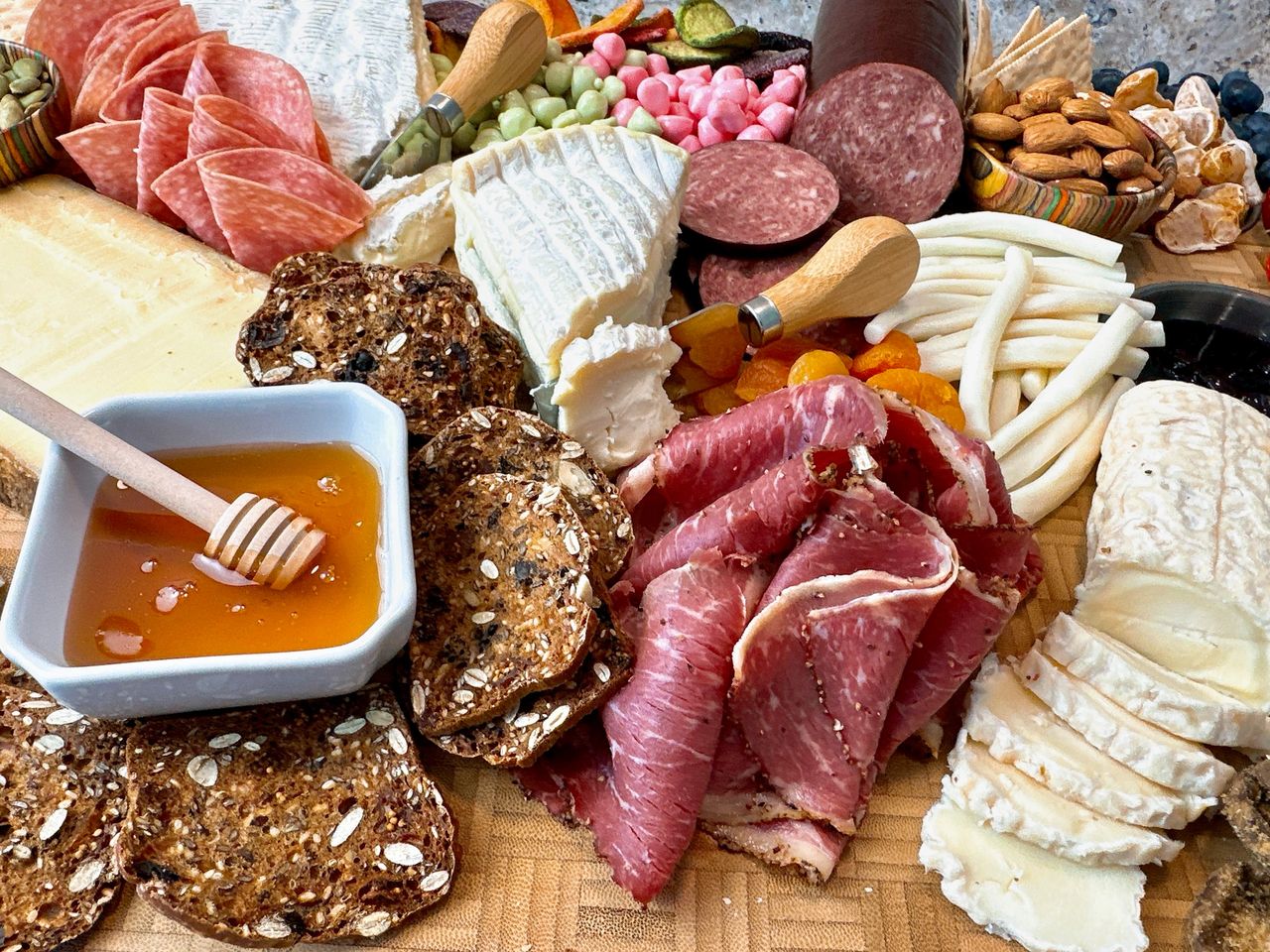
I used Brie, Comté, fresh Chevre (goat cheese), a variety of Mozzamini CheeseBits (smoked, wasabi, strawberry, and strings), and Fromager d’Affinois.
Meats: Prosciutto, salami, ham, chorizo, capicola, Soppressata, summer sausage, pepperoni. Pro tip: Fold thin, round slices into halves or triangles.
I used wagyu summer sausage, shaved peppered wagyu beef, and salami.
Hard boiled eggs: Not traditional, but a fun, affordable addition. For added flair, consider using quail eggs.
I used hard boiled quail eggs. Instructions below.*
Nuts and seeds: Almonds, pistachios, cashews, peanuts, macadamia nuts, candied pecans, pumpkin seeds, pepitas, sunflower seeds.
I used pepitas and almonds.
More ideas
Briny items: Olives, pickles, cocktail onions, pepperoncini peppers.
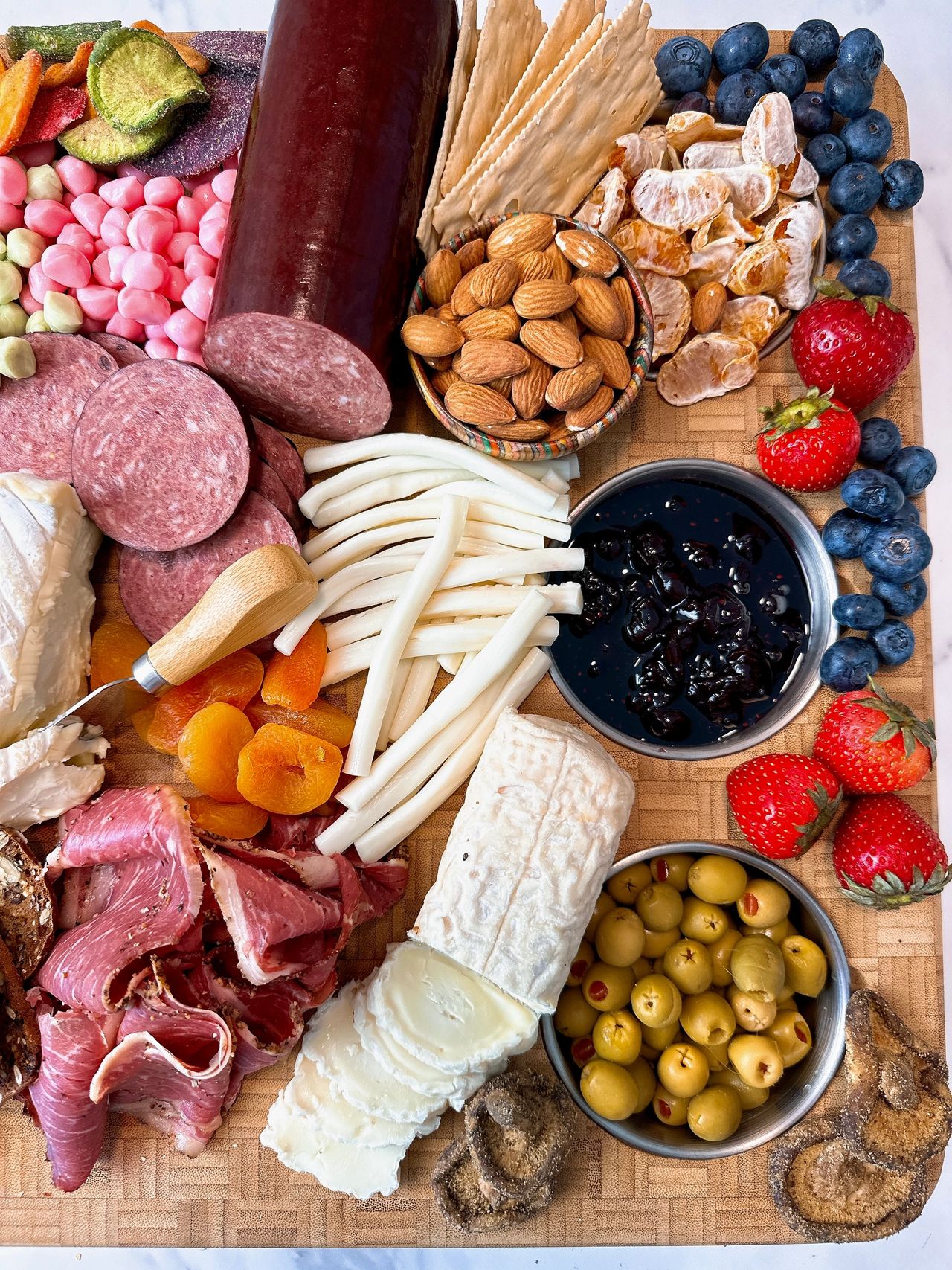
I used stuffed olives.
Sweet and savory dips and spreads: Whole ground mustard, honey mustard, hummus, ranch dressing, chutney, fruit preserves, jam, honey.
I used honey and tart cherry preserves with chia seeds.
Fresh fruit: Grapes, apples, pears, oranges, raspberries, blueberries, blackberries, strawberries.
I used blueberries and strawberries.
Dried fruit: Apricots, cherries, cranberries, figs, pineapple, mango.
I used dried apricots and freeze-dried mandarin oranges.
Crackers: Offer a variety, including traditional, water crackers, those with fruit and nuts, pita chips, pretzel thins, bread sticks, and mini toasts.
I used veggie chips, mushroom chips, Croccantini La Panzanella artisan crackers, and Raincoast Crisps (crackers with fruit, nuts, and olives).
Do you need utensils? The only utensils you really need are knives for cutting cheese, and meats like sausage. Some folks like to add cheese forks, but they’re not necessary. If you have specialty cutlery, great, just note that your everyday salad forks and butter knives will work just fine.
Use ramekins and/or little bowls. I highly recommend you place your “messy” or wet items (like jam, preserves, honey, olives, and pickles) in small bowls or ramekins to prevent them from adding moisture to the other items on the board. Nobody wants a soggy cracker.
How to set up your charcuterie board
- Arrange items so they are easy to grab.
- Pre-slice hard cheeses and cut a few wedges of softer cheeses.
- Fold meats into a variety of patterns.
- Arrange ingredients so there’s a pop of color in multiple places on the board.
- Keep messy condiments and spreads in jars, ramekins, or little bowls.
Make-Ahead: A charcuterie board can be assembled in advance (without the crackers), covered loosely with plastic wrap, and refrigerated for up to 8 hours. Pull the board from the refrigerator 30 minutes before serving; it’s best to serve the meat and cheese at room temperature.
*How to boil quail eggs
Bring a medium pot of water to a boil. Once the water is boiling, gently lower your quail eggs into the water with a spoon, preferably not more than 4 eggs at a time. Boil for 4 minutes. Remove the eggs with a slotted spoon and immediately transfer them to an ice water bath to cool. If desired, add 1 teaspoon of baking soda to the ice water bath; baking soda softens the shells and makes the eggs easier to peel. Peel and serve.