

Strawberry Pavlova
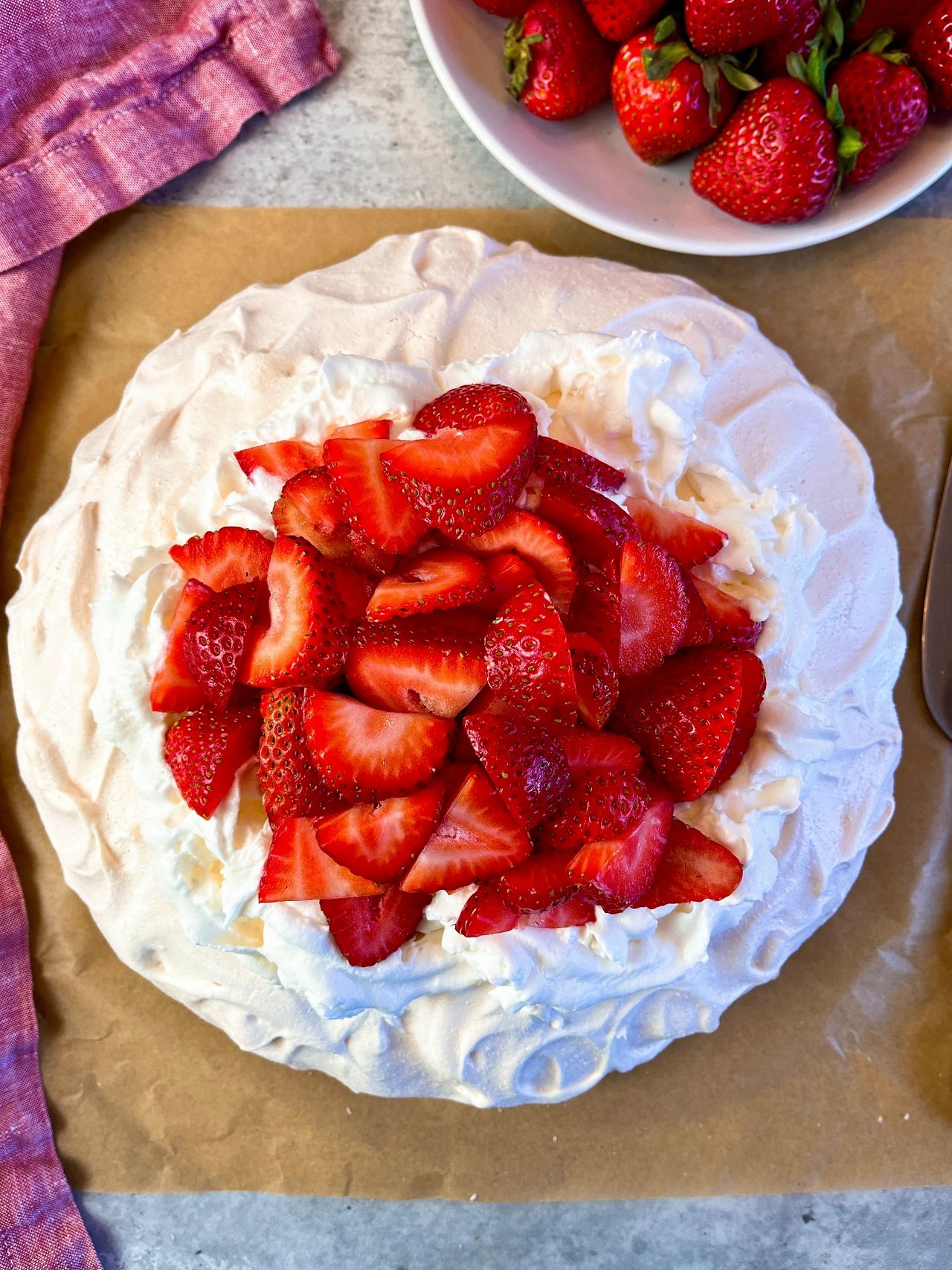
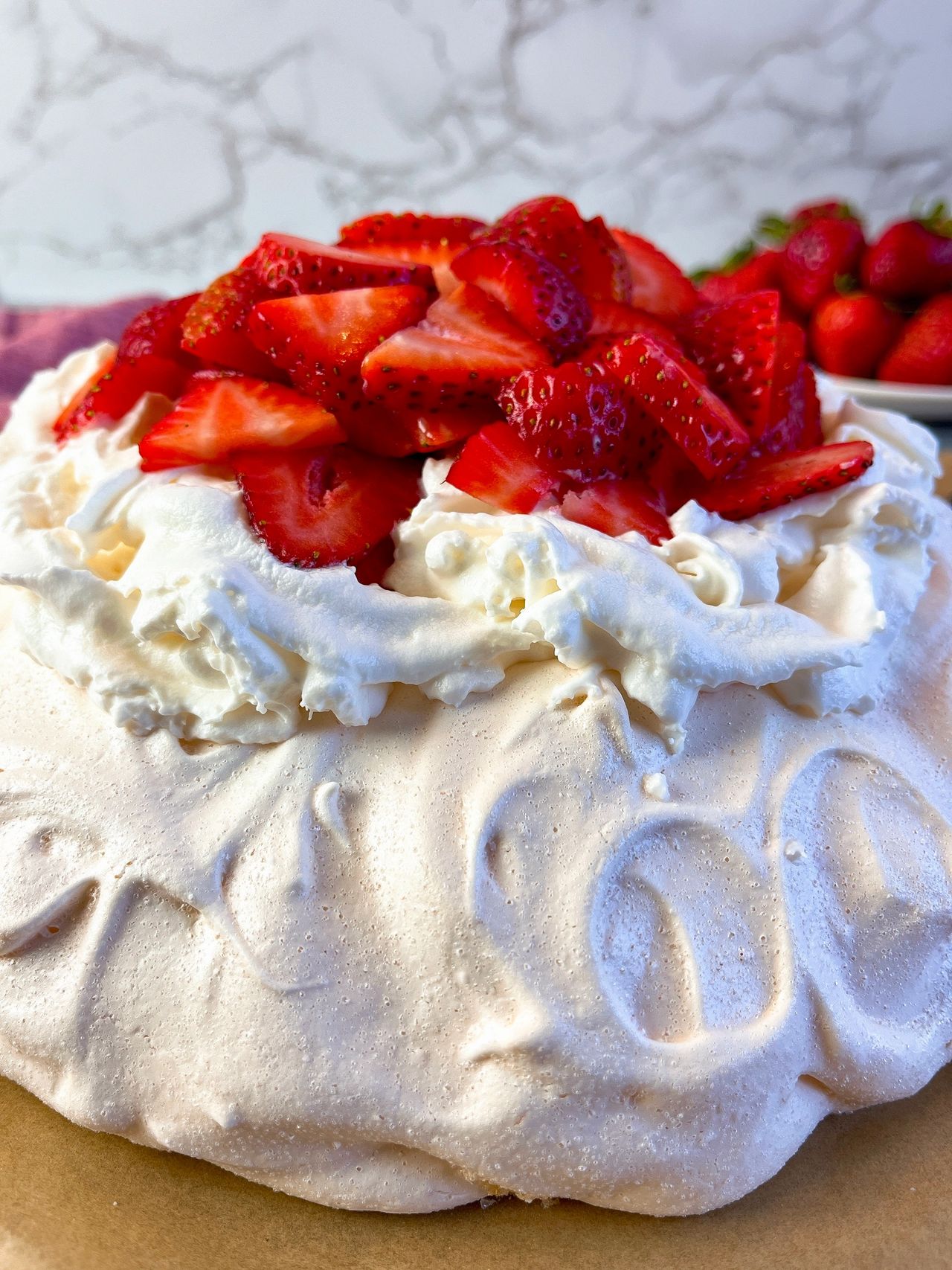
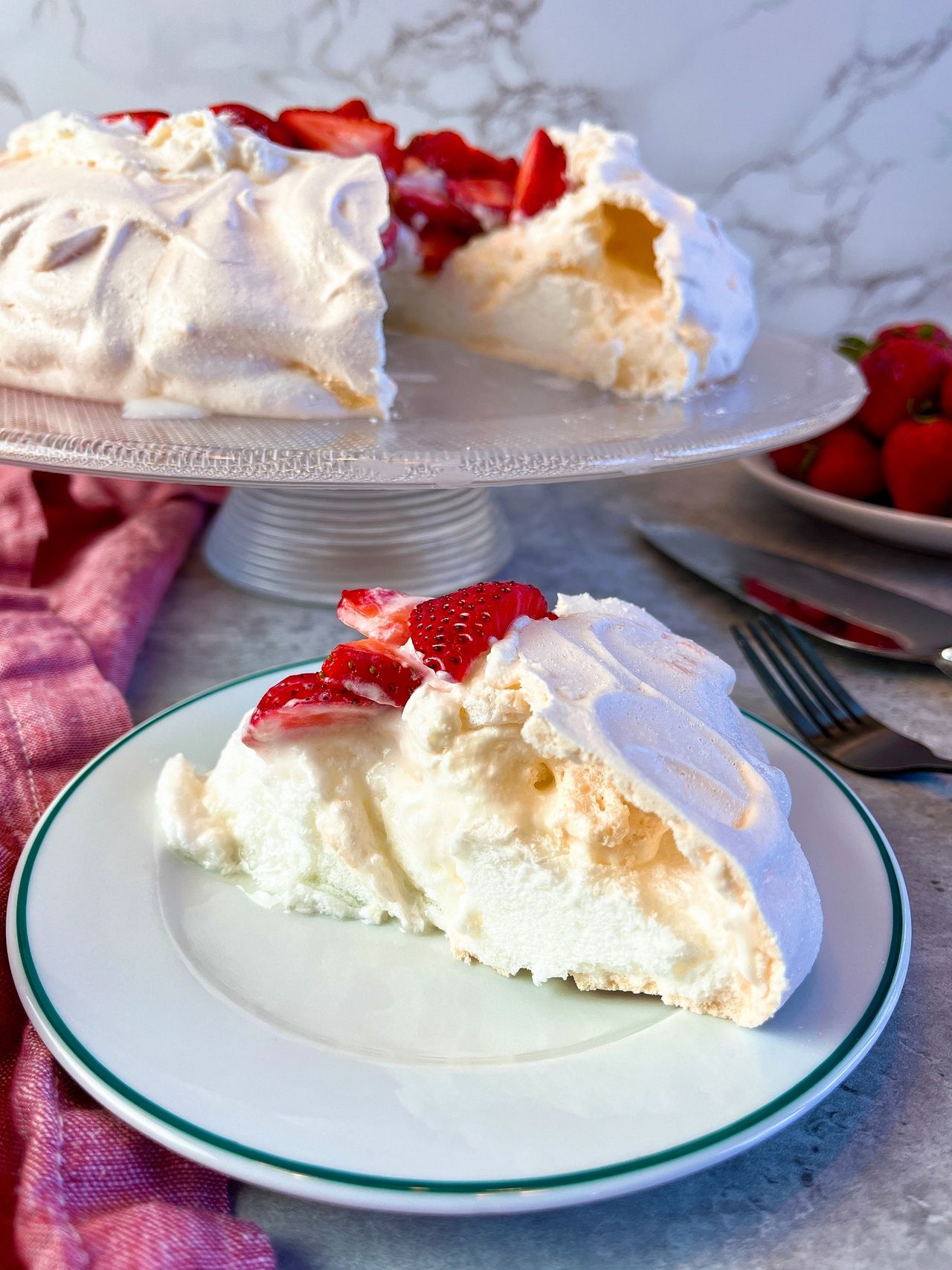
Under a cloud of whipped cream and heap of fresh berries lies a pillowy, sweet treat – a crisp meringue shell embracing a marshmallow-like middle. Each supreme bite of pavlova delivers a variety of tastes and textures – sweet, soft, creamy, and crisp. It’s dessert perfection.
Recognized as one of the national desserts of both New Zealand and Australia, it’s the kiwis who claim ownership to pavlova’s origin. The recipe is said to have been named after Anna Pavlova, a Russian ballerina who frequently toured in both countries. Just like the celebrated dessert, her dance performances were light and airy.
If you’ve debated making pavlova but were afraid to fail, I’ve got you covered. Many home cooks avoid pavlova recipes because they involve making a meringue, a sweet, glossy blend of whipped egg whites and sugar. Yes, meringues can be tricky, but if you follow a few simple rules (and dodge the common pitfalls), you will craft a flawless pavlova every time.
Note that pavlova is not a classic meringue. Both pavlova and traditional meringue involve egg whites and sugar, whipped until firm, shiny, and smooth. The mixture is then shaped, baked, and cooled before serving. That said, meringue is traditionally dry inside and out, whereas pavlova is soft and fluffy in the middle and dry/crisp on the outside.
Tips for the perfect pavlova
- Make sure all your equipment is clean and dry. Use clean and dry, glass or metal bowls for separating the eggs and whipping the whites. Plastic bowls may contain leftover grease from a previous use, and the moisture from fat (and/or water) will prevent your egg whites from becoming light and fluffy.
- Keep humidity in check and don’t make pavlova on high-humidity days. Rainy day? Save pavlova for another time. Pavlova is basically a blend of egg whites and sugar. Sugar is hydrophilic, meaning it absorbs water from the environment. When the sugar molecules contain water, the egg whites can’t hold onto them. The result? Your pavlova will collapse in the middle or weep (separate). Also, don’t boil pasta water, do dishes, or start a tea kettle until your pavlova has completely cooled. Yes, the meringue can be that finicky before, during, and after baking. Once the meringue has cooled completely, you’re free to do as you please.
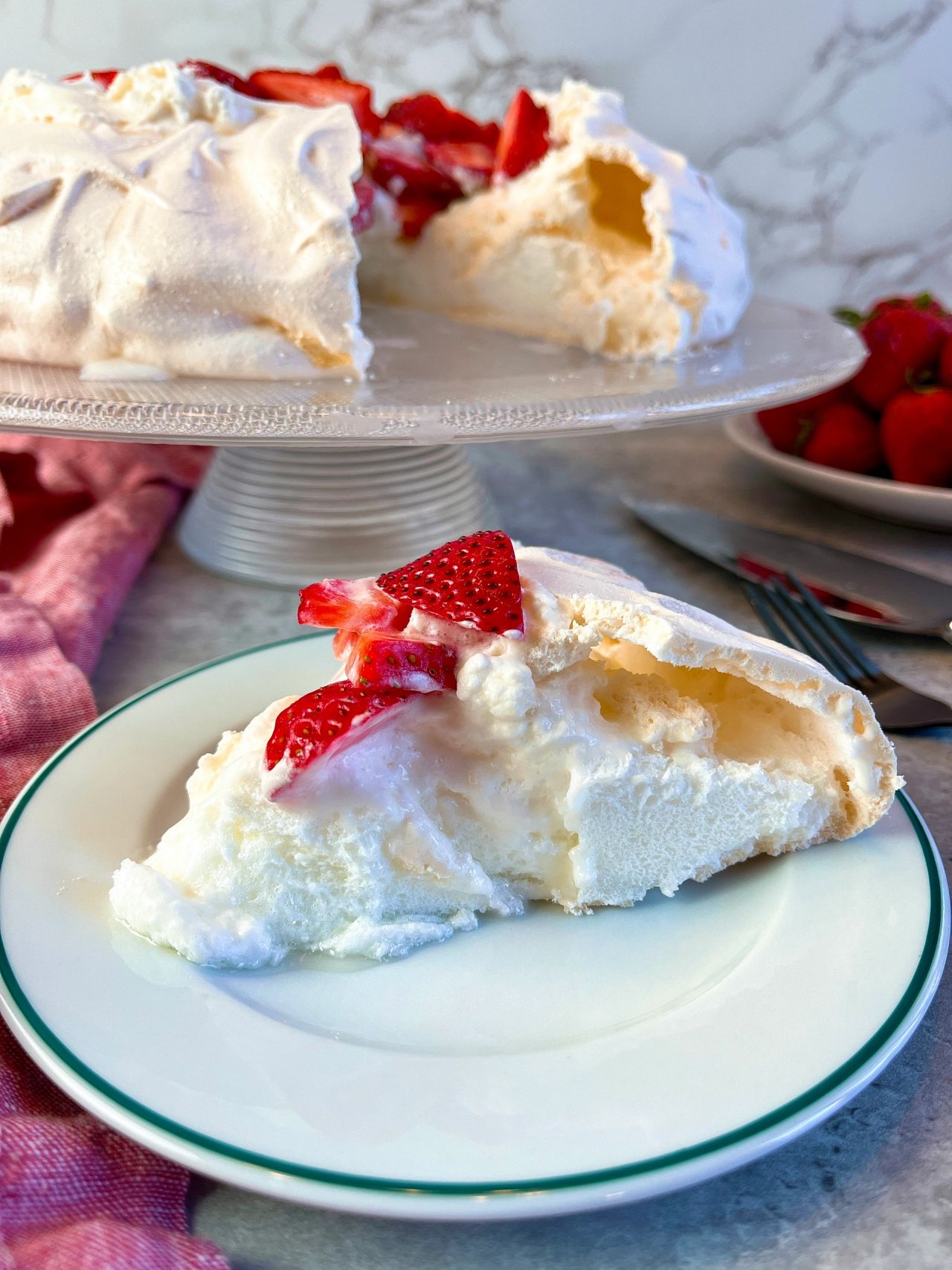
- Use room temperature egg whites. Room temperature egg whites whip up better and faster than cold eggs, ensuring maximum volume. It’s easier to separate eggs when they’re cold, so separate them first, then let the whites sit at room temperature for about 30 minutes. Reserve the yolks for another use if desired.
- Whip your egg whites on low to medium speed. Yes, you read that right. Never whip above medium-high. When you whip egg whites on high speed, air is added quickly. That same air ultimately escapes quickly because the foam isn’t stable enough to hold onto it. Low and slow is the best way to ensure a successful meringue.
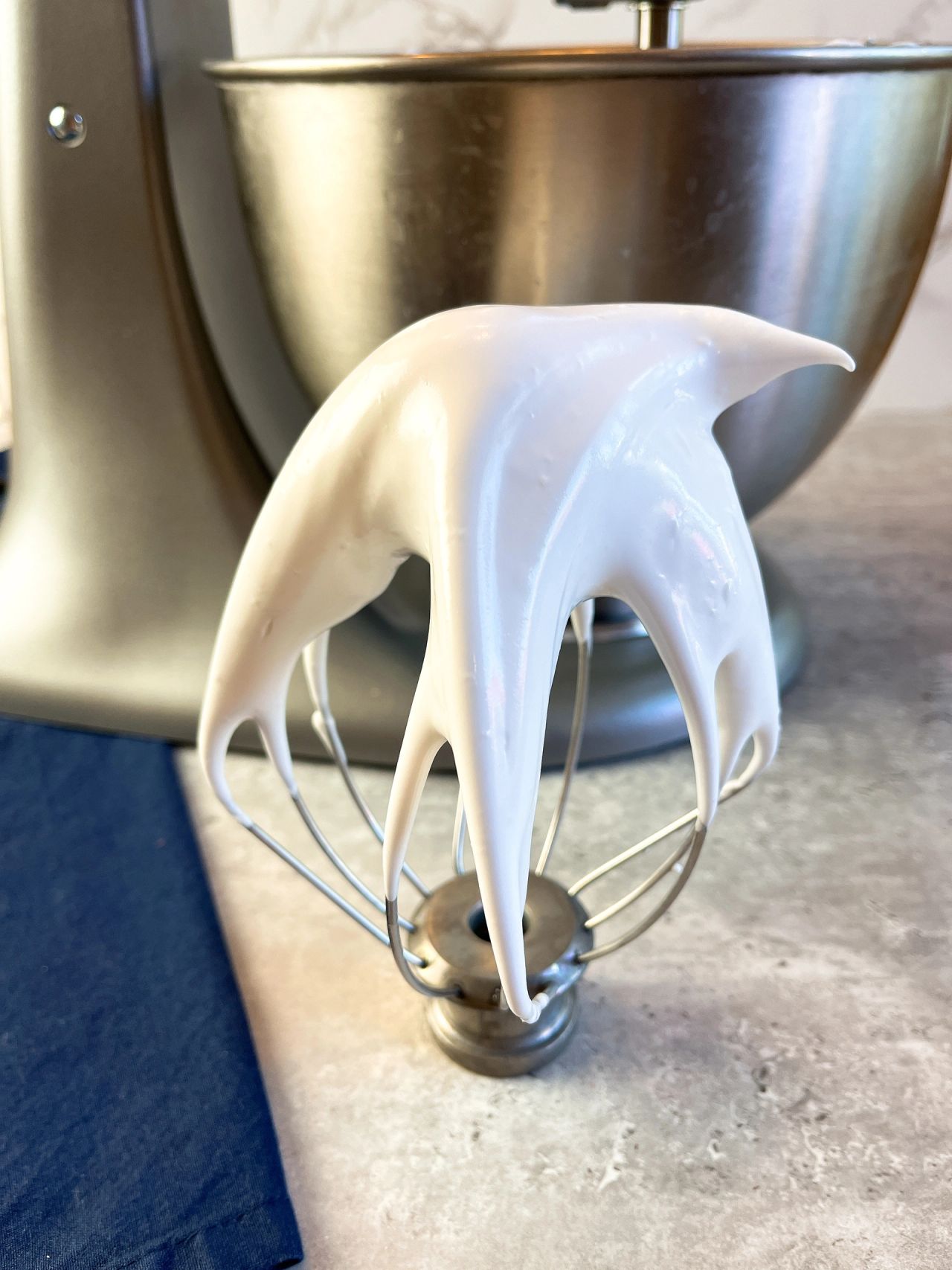
- Use finely ground sugar. Use caster sugar (fine in texture), or process granulated sugar in a blender or food processor until fine. Finer sugar dissolves more easily.
- Add the sugar slowly. When adding the sugar to the foamy egg whites, add 1 tablespoon at a time. Make sure each tablespoon has fully dissolved before adding the next tablespoon. Any undissolved sugar will absorb water and your meringue may collapse and/or weep.
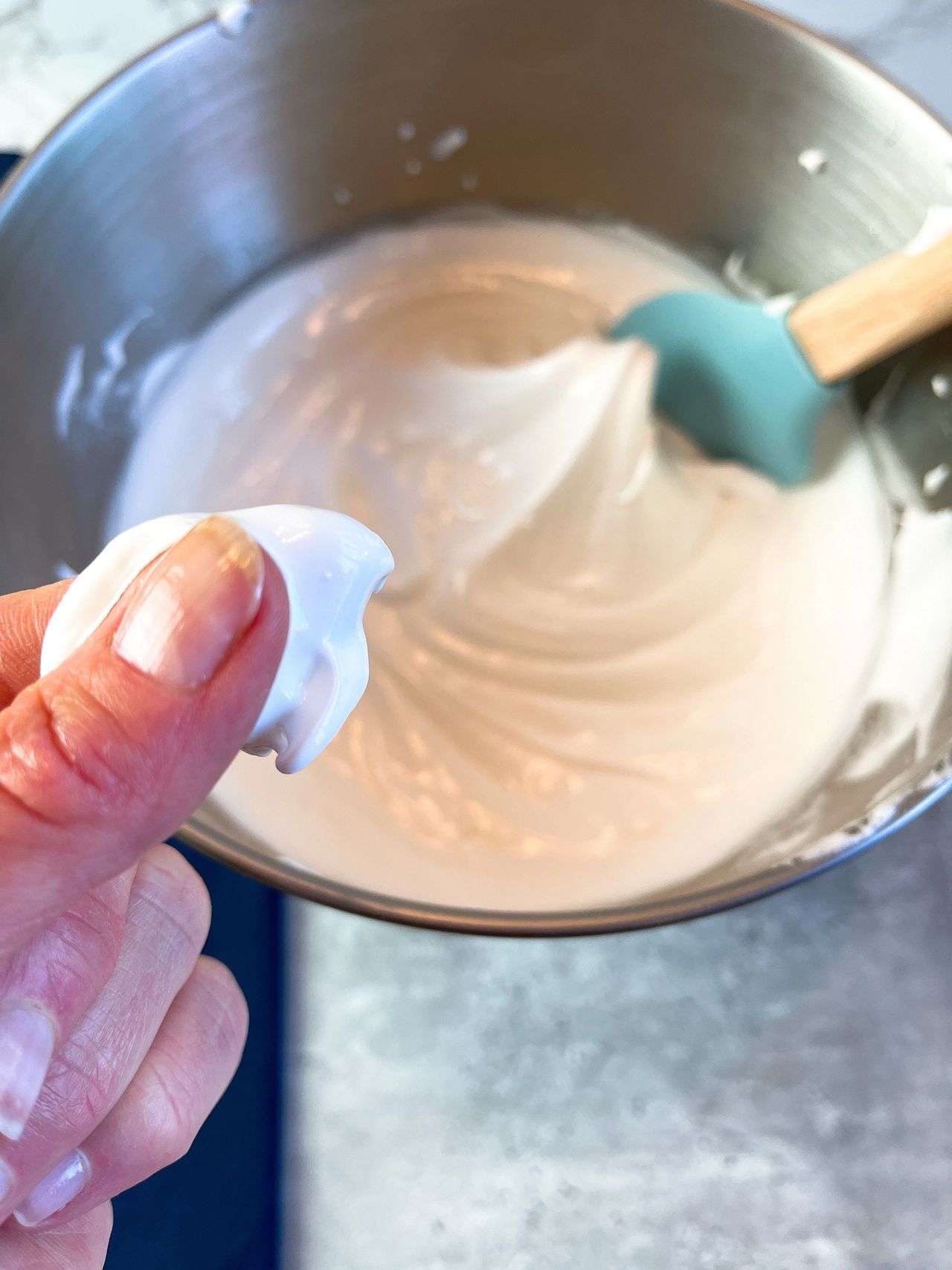
- Test to see if the sugar has completely dissolved. When your meringue is seemingly ready to bake, test to make sure all the sugar has dissolved. To do this, rub a small amount of the meringue between your fingers. If the meringue feels grainy, you need to whip the mixture more. Also check for sugar under the whisk and bottom of the bowl.
- Bake your pavlova at a low oven temperature, and don’t peek. We want the meringue to expand slowly so the inside stays marshmallow-like while the outside crisps up. When the oven is too hot, the meringue will expand quickly and then deflate quickly upon cooling. Opening the oven door can cause rapid temperature changes, which will inhibit proper baking.
- Cool your pavlova gradually. Even when cooked at a low temperature, your pavlova needs to cool gradually. Rapid changes in temperature can cause the meringue to crack and/or collapse. Cool the pavlova in the oven (once the oven is turned off) for a minimum of 6 hours. Pro tip: Make the pavlova in the evening and let it cool overnight in the oven. I left my pavlova in the oven for 12 hours!
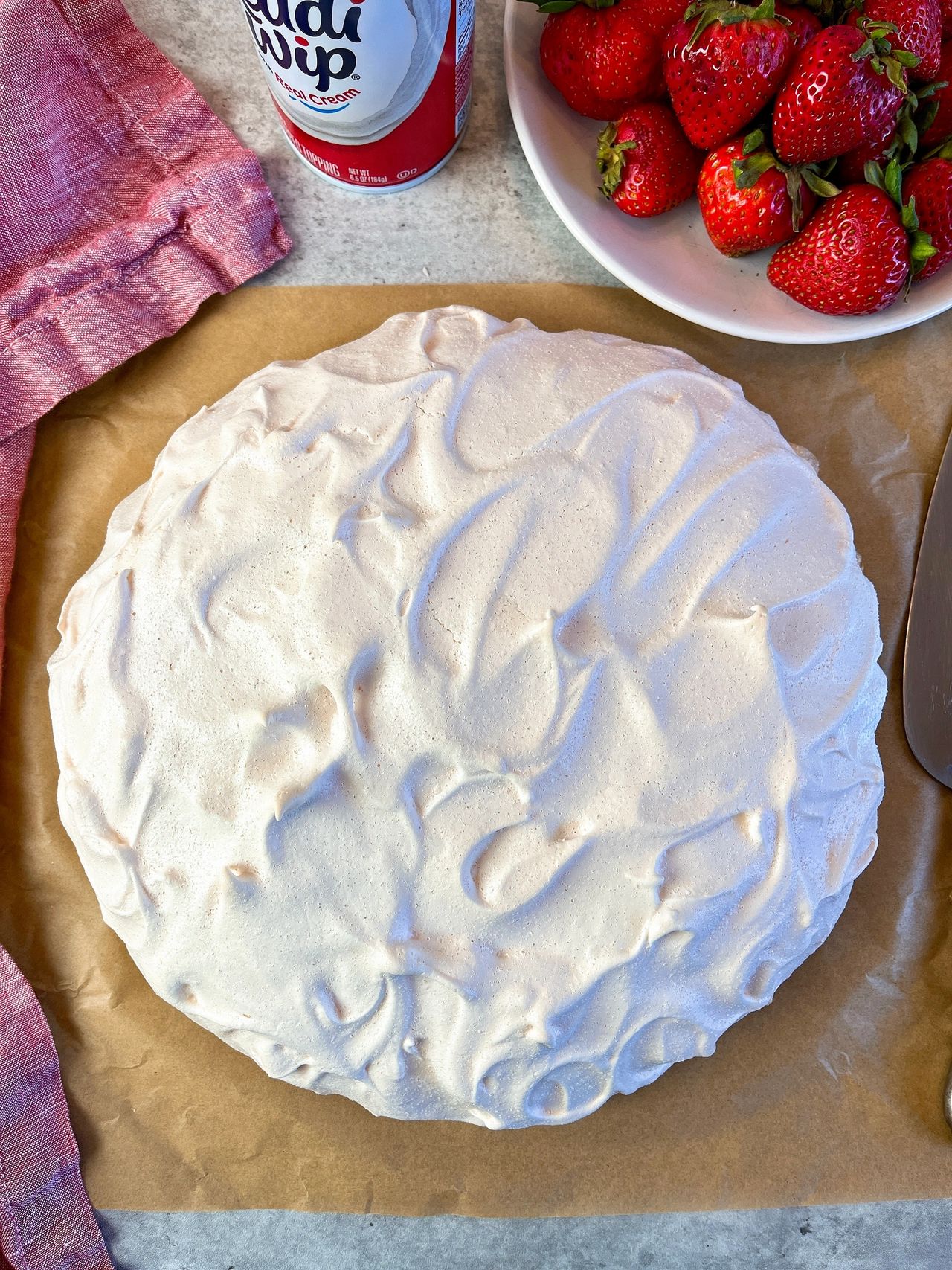
You can make your pavlova in advance, but just the meringue part
The meringue portion of your pavlova can be made up to 24 hours in advance (no longer), and stored in an airtight container, away from any humidity (not in the fridge). Add the whipped cream and strawberries just before serving.
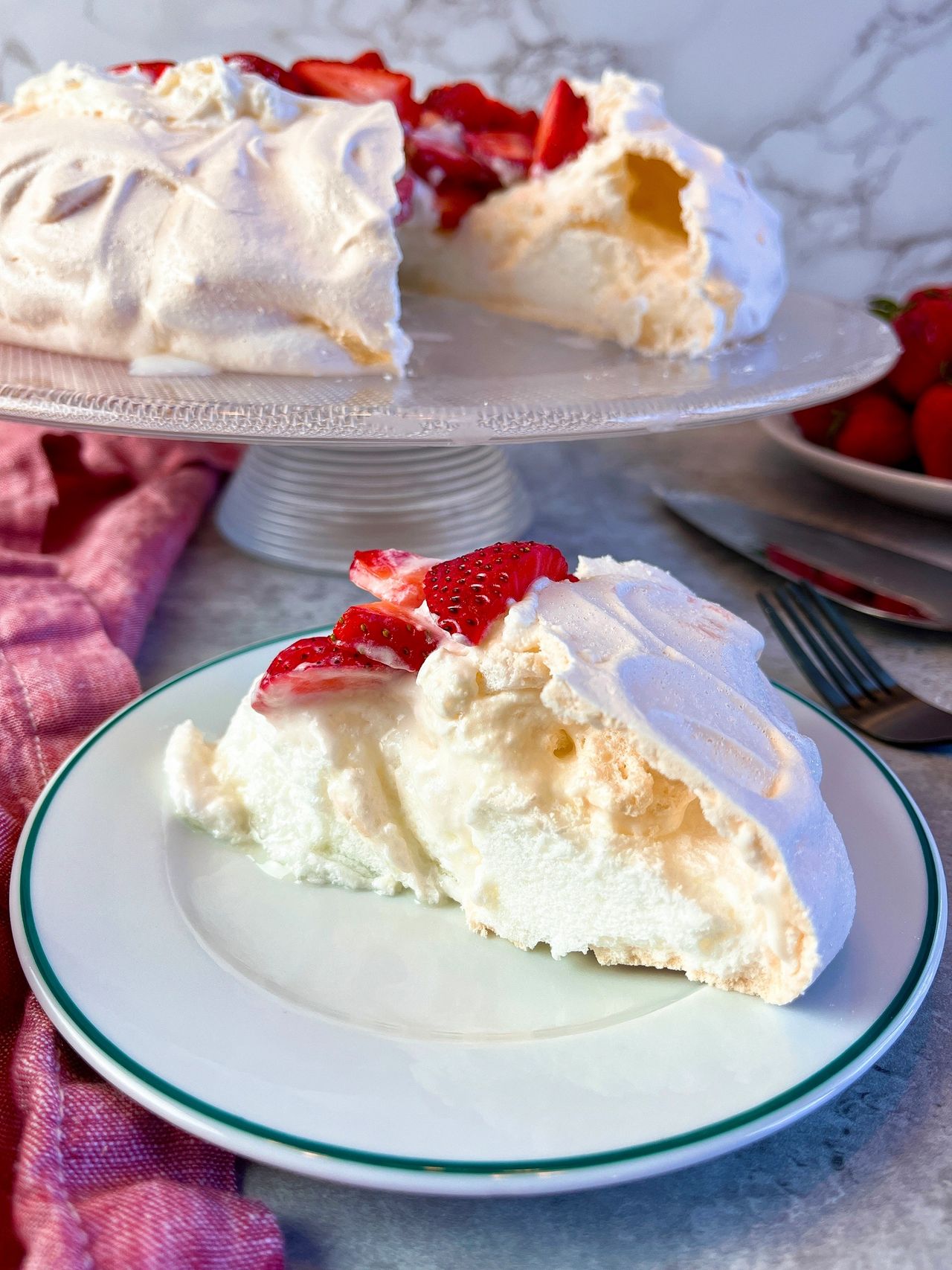
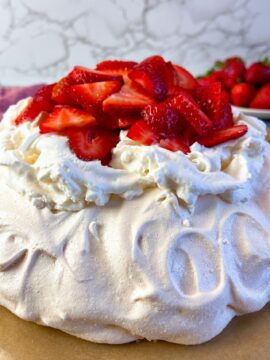
Strawberry Pavlova
Ingredients
- 7 large egg whites, room temperature
- 1 1/2 cups caster sugar or granulated sugar that’s been processed in a food processor or blender until fine
- 1 tablespoon cornstarch
- 2 teaspoons white vinegar
For Serving
- 1 1/2 cups whipped cream of choice
- 1 cup sliced fresh strawberries
Instructions
- Preheat the oven to 300 degrees (convection mode is preferable but not mandatory). Trace a 9-inch round cake pan or plate on a large piece of parchment paper. Flip the paper over and transfer it to a large baking sheet.
- Place the egg whites in the (clean/dry) bowl of a stand mixer fitted with the whisk attachment. Beat on medium-low (speed 4 on a 10-speed mixer) until soft peaks form (peaks will be foamy and won’t hold their shape yet). Note: This can take a few minutes, depending on your mixer.
- Reduce the mixer speed to low (speed 3 on a 10-speed mixer) and gradually add the sugar, 1 tablespoon at a time. Ensure that each tablespoon of sugar has dissolved before adding the next tablespoon. Scrape down the sides of the bowl as needed.
- Once all the sugar is added, increase the speed to 4 and beat until the egg whites are thick and glossy and hold their shape when the whisk attachment is lifted. This can take several minutes.
- Meanwhile, in a small bowl, combine the cornstarch and vinegar and stir until the cornstarch has dissolved.
- When the meringue is glossy and thick, increase the mixer speed to 5 or 6, add the cornstarch mixture, and beat for 30 seconds.
- Use a clean, dry spatula to transfer the mixture to the center of the circle on the parchment paper (if there’s any undissolved sugar in the bottom of the bowl, do not transfer it to the parchment paper).
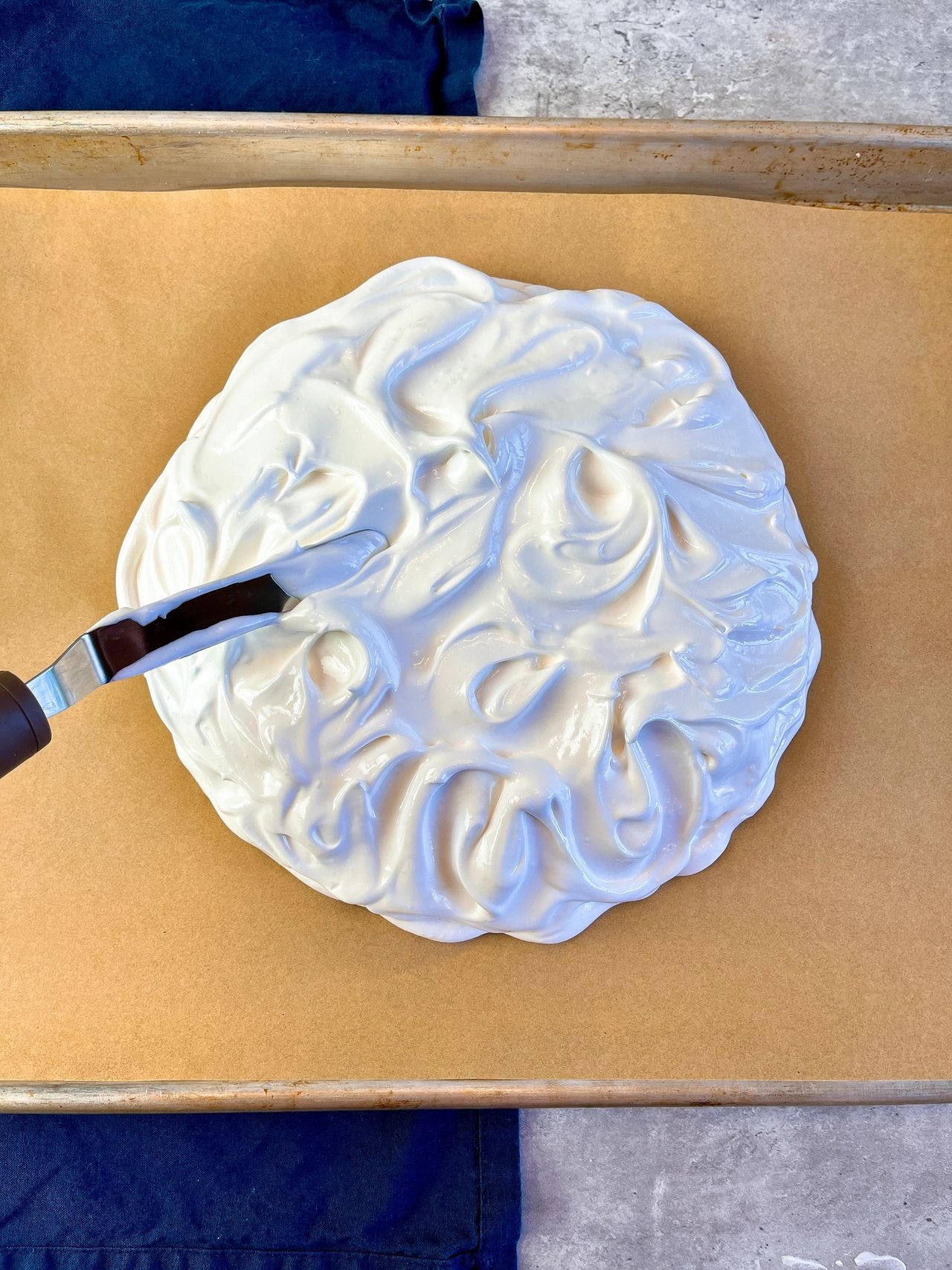
- Spread the meringue out to fill the circle, and then smooth the surface. If desired, use an offset spatula to make decorative swirls on the top and sides.
- Place the baking sheet in the oven and immediately reduce the temperature to 225 degrees.
- Bake for 90 minutes (do not open the oven door during baking).
- Turn off the oven and allow the pavlova to cool for a minimum of 6 hours.
- When ready to serve, top the pavlova with the whipped cream and berries.