


Beef Stew
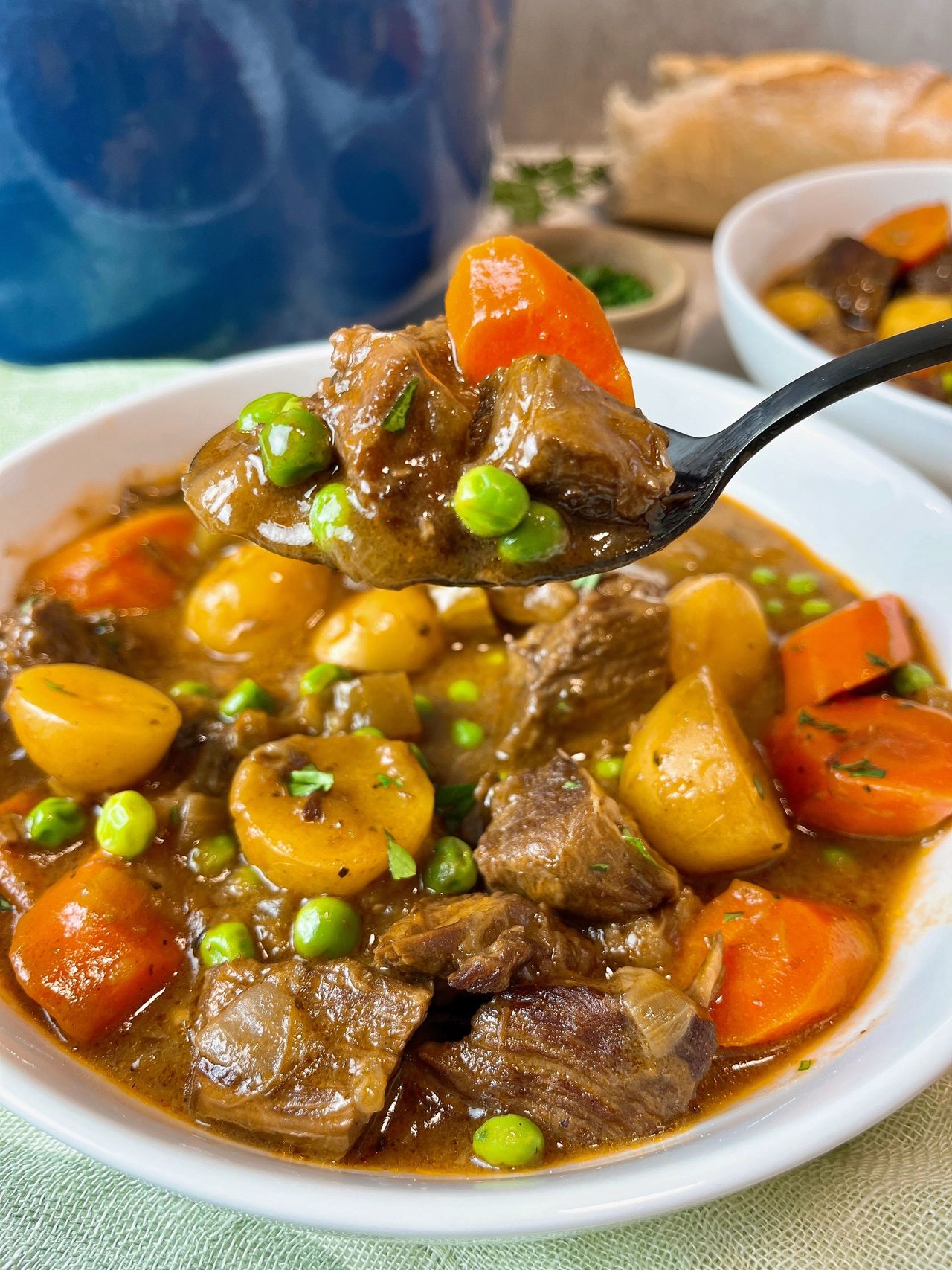
Fork-tender beef, aromatic vegetables, and an herb-scented, wine-infused broth, this is the ultimate beef stew. Each bowl is pure comfort and will transport you straight back to childhood.
The beauty of beef stew lies in the fact that it’s easy to make. No need to hunt down obscure ingredients or buy fancy cookware. Your sturdiest pot will do. As will your local grocery store. You don’t even need a well-stocked spice rack. Just follow a few simple tips and suggestions and you can create this time-honored, one-pot meal with ease.
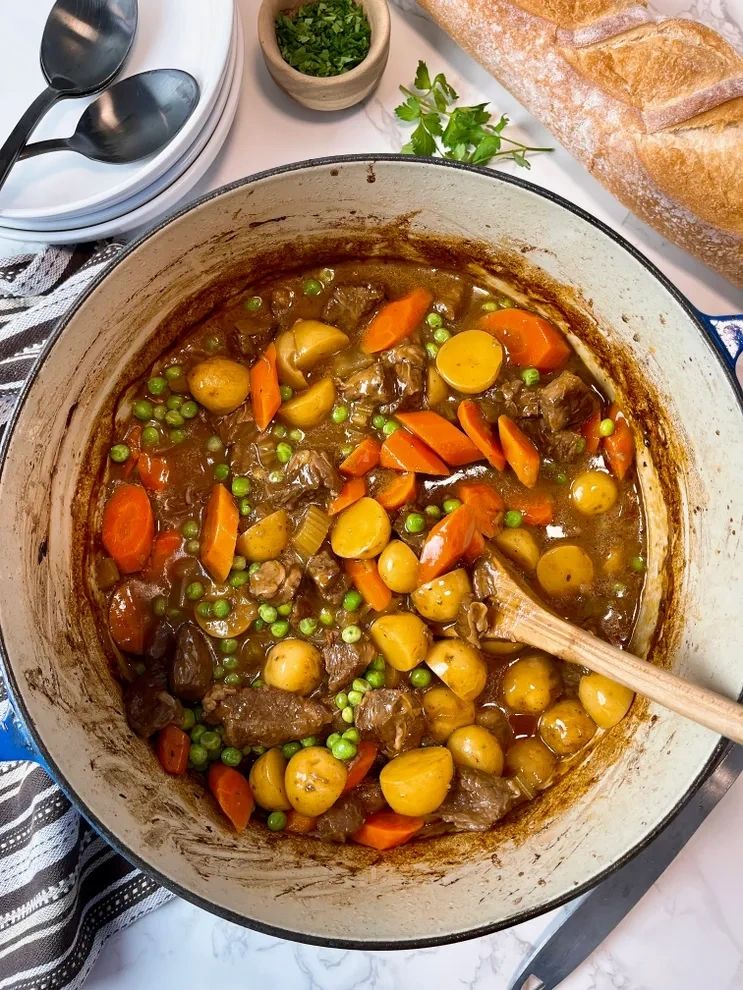
This recipe was written for the Arizona Republic.
Buy the right cut of meat, and that’s not “stew meat”. Despite what the label says, stew meat is not typically good for stew. It’s often lean, which means it will never get tender, no matter how long you cook it. Use well-marbled chuck roast instead. “Well-marbled” means plenty of white fat streaks running throughout the meat. It’s the fat that melts during cooking, tenderizing the meat and adding tremendous flavor to the stew. Fattier cuts also contain collagen-rich connective tissue, which melts into gelatin, which, in turn, thickens and enriches the stew while creating a satiny broth.
Brown the beef first. You must sear the beef before adding the rest of the ingredients to the pot. Why? Browning the beef over medium-high heat caramelizes the exterior and gives the meat a deep, rich flavor. Plus, after searing, tender bits of beef can be found clinging to the bottom of the pan, tasty morsels that are then incorporated into the wine-spiked broth.
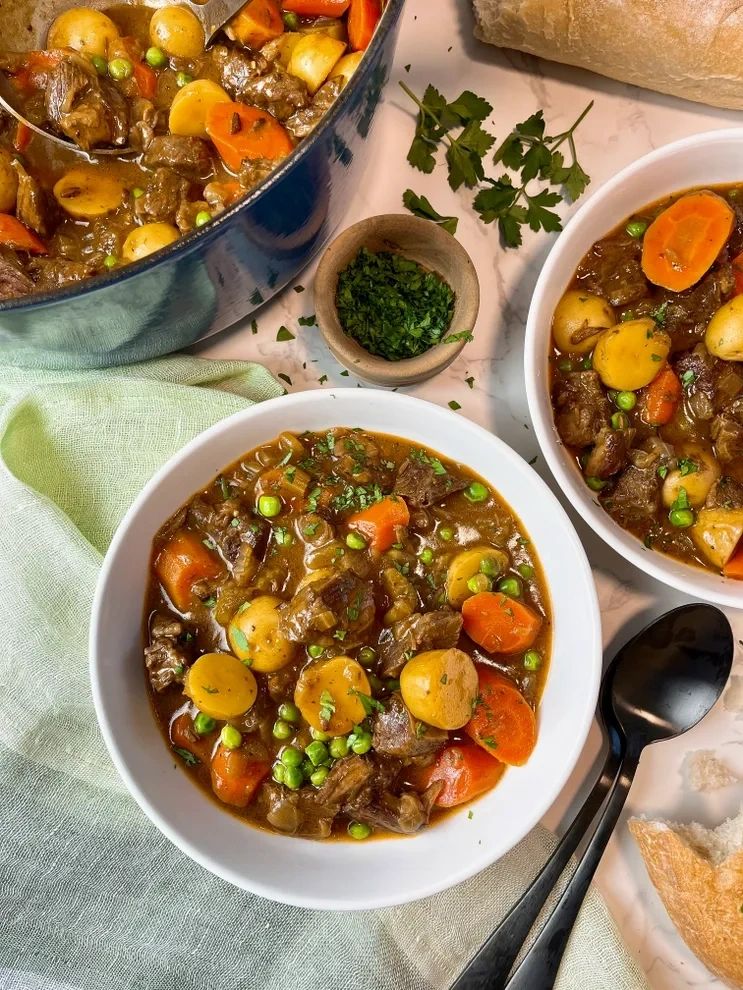
Don’t crowd your pan when searing the beef. As mentioned above, browning the beef is critical for creating a stew with unparalleled depth of flavor. If you’re like me, you probably don’t have a pot big enough to sear two pounds of beef in a single layer. That means you need to work in batches to ensure that every cube of beef hits the bottom of the pan and caramelizes. A crowded pan also creates a lot of juice, so your beef will steam instead of sear.
Don’t rush things! Beef stew requires time, and lots of it. You need more than three hours before you can feast. Thankfully most of the cooking time happens in the oven, while you tend to other things. The long cooking time gives the collagen-rich meat a chance to break down and tenderize, and it allows the rest of the ingredients to evolve and develop great flavor. You can’t cheat either – if you try to speed things along by boiling the meat instead of slow-braising in the oven, the meat’s muscle fibers with seize up and toughen.
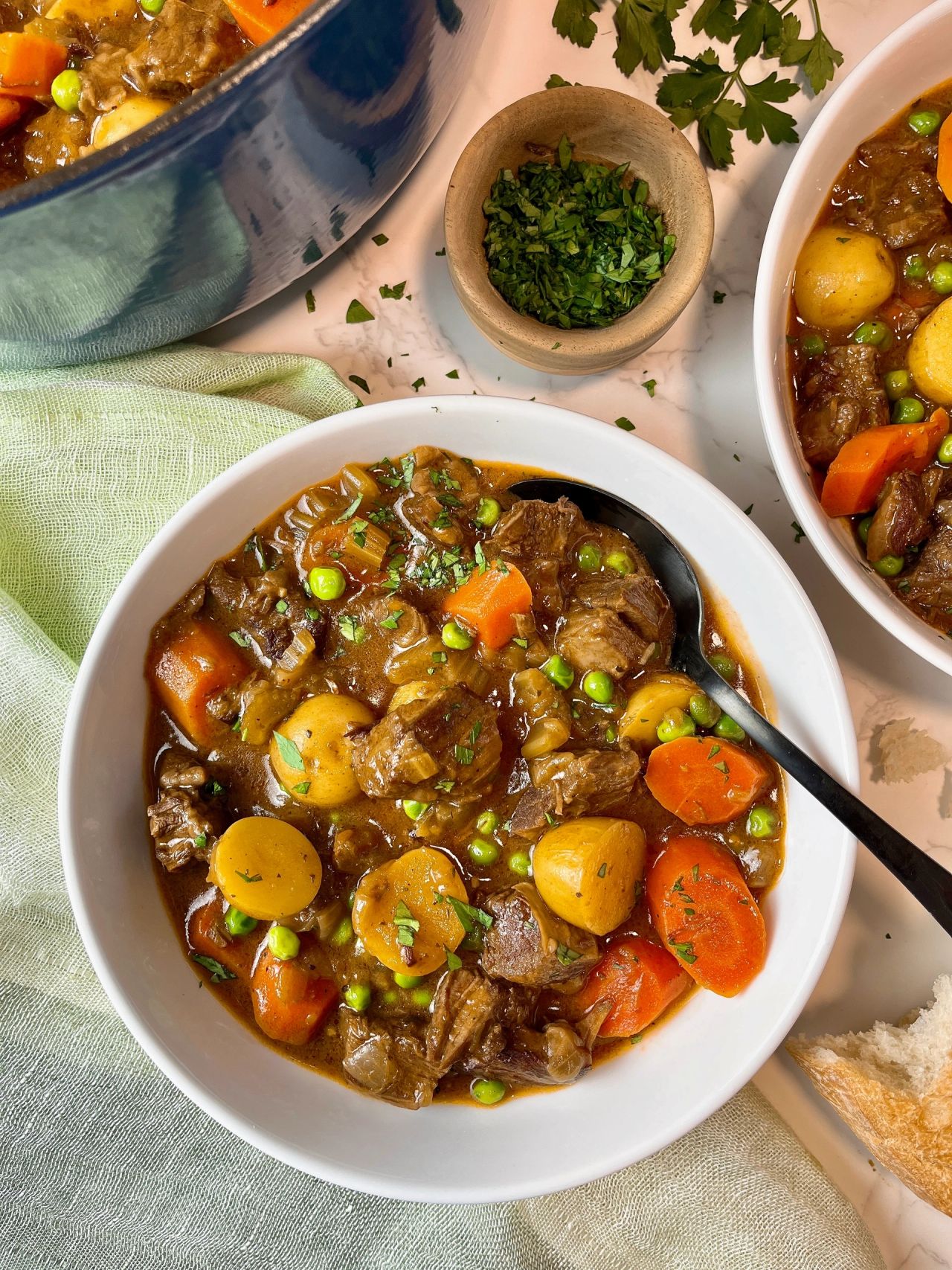
Use wine, or not. Wine adds great flavor and complexity to the broth. When choosing the wine, use any dry red variety, such as Pinot Noir, Merlot, or Cabernet Sauvignon. There’s no need for a pricy bottle; inexpensive, good-tasting vino is perfect. If you’d rather not use wine, you can deglaze the pan with beef broth. To mimic the acidity wine adds to the broth, add about 1 tablespoon of red wine vinegar or balsamic vinegar when you add the broth for deglazing.
Add quicker-cooking vegetables later, not in the beginning. In this recipe, the onion, celery, and garlic hit the oven with the beef because these aromatic vegetables will lend their essence to the broth and enrich the stew. If you add the carrots and potatoes in the beginning, they will turn to mush after 3 hours in the oven. Give the beef a 2-hour head start, then add your veggies.
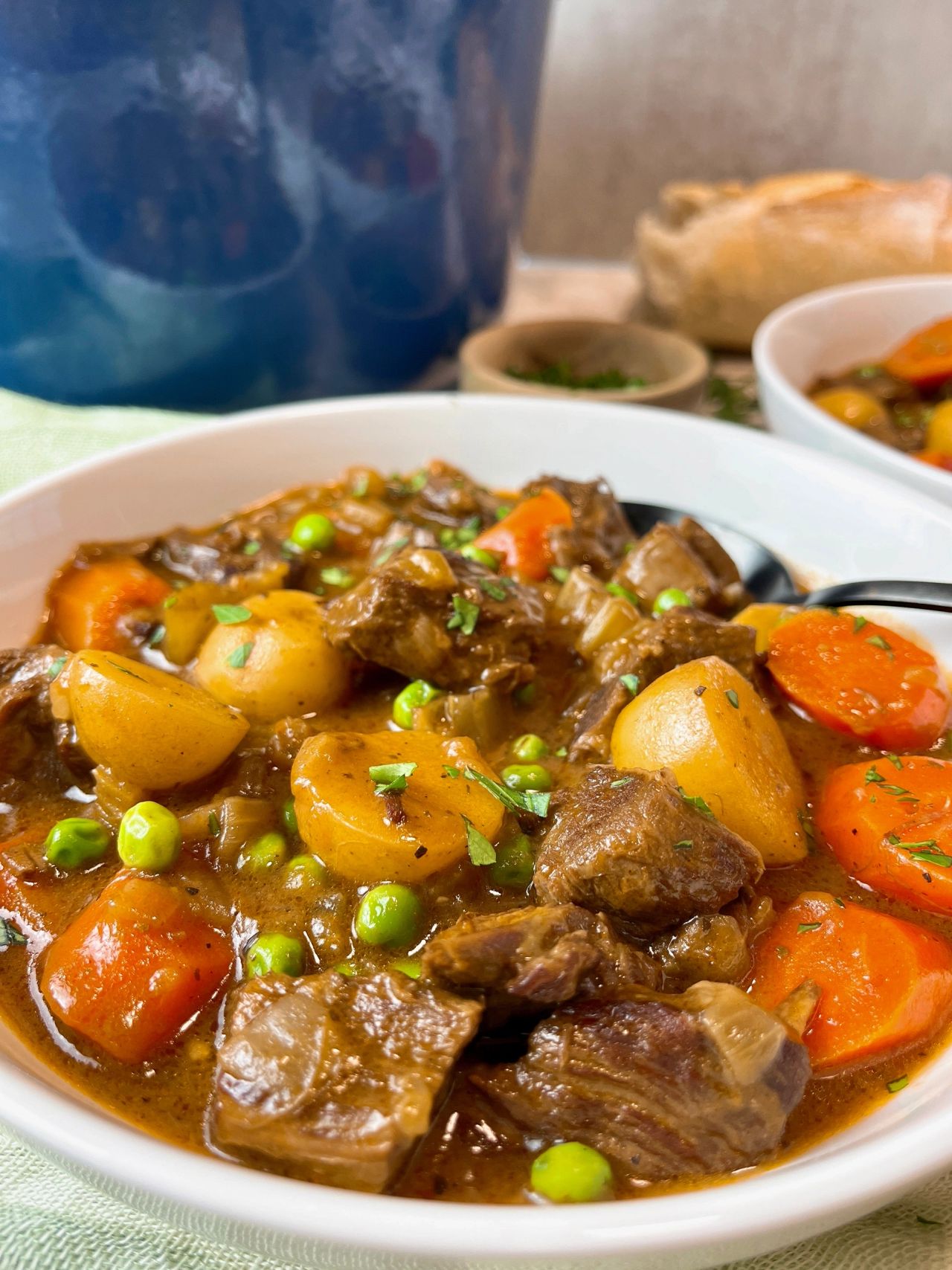
Don’t have an oven-friendly pot? No problem. If you don’t have a Dutch oven or oven-safe pot with a lid, the stew can be cooked on the stovetop. Take note, this is not my first choice. When cooking on the stovetop, the liquid often reduces significantly. Check your stew every 30 minutes when cooking on the stove and add more broth if needed. The timing will be the same – 2 hours without the carrots and potatoes and then 1 hour with them. Use the LOW setting and make sure the stew is barely simmering, not boiling.
Taste before serving. When something cooks for three hours, it’s always a good idea to taste before plating. Salt and black pepper are the obvious first choice, but there are other hacks as well. If your stew seems “flat”, add a splash of Worcestershire sauce, lemon juice, or balsamic vinegar; this simple trick elevates every element in the stew. If your stew seems overly tangy, add a bit of honey, molasses, or brown sugar.
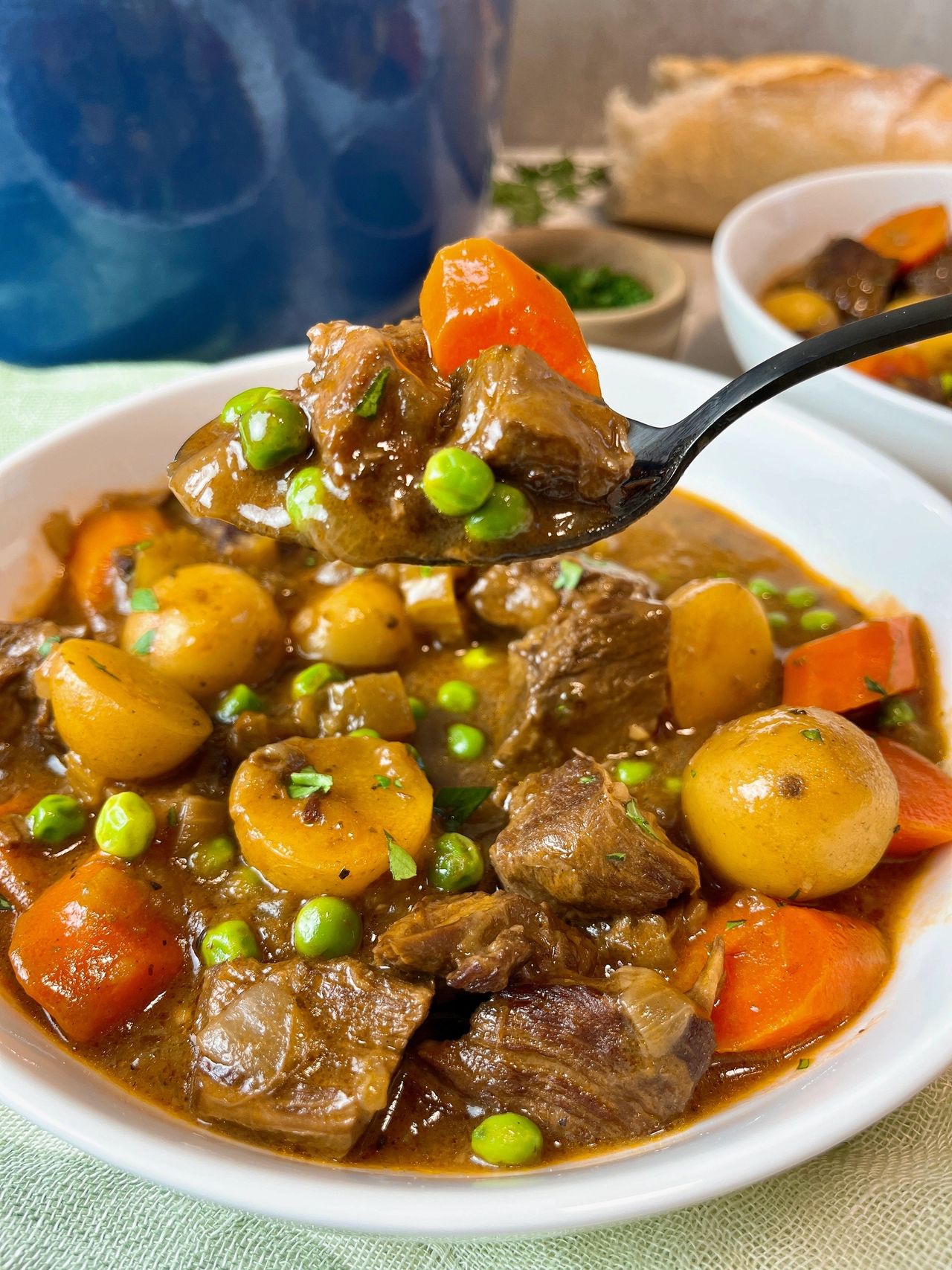
Adjust the amount of broth if desired. This stew is thick. After all, we’re not making soup. If you like your stew on the thinner side, add more broth before you fold in the peas. Wait to decide on whether to add broth until after the vegetables have finished cooking.
Consider making this stew in advance. Beef stew is often better the next day, after ingredients have mingled all night. Let the stew come to room temperature and then refrigerate overnight, or up to 3 days, until ready to serve. Reheat the stew on the stovetop over medium-low heat, or in a 350-degree oven until the stew is hot all the way through.
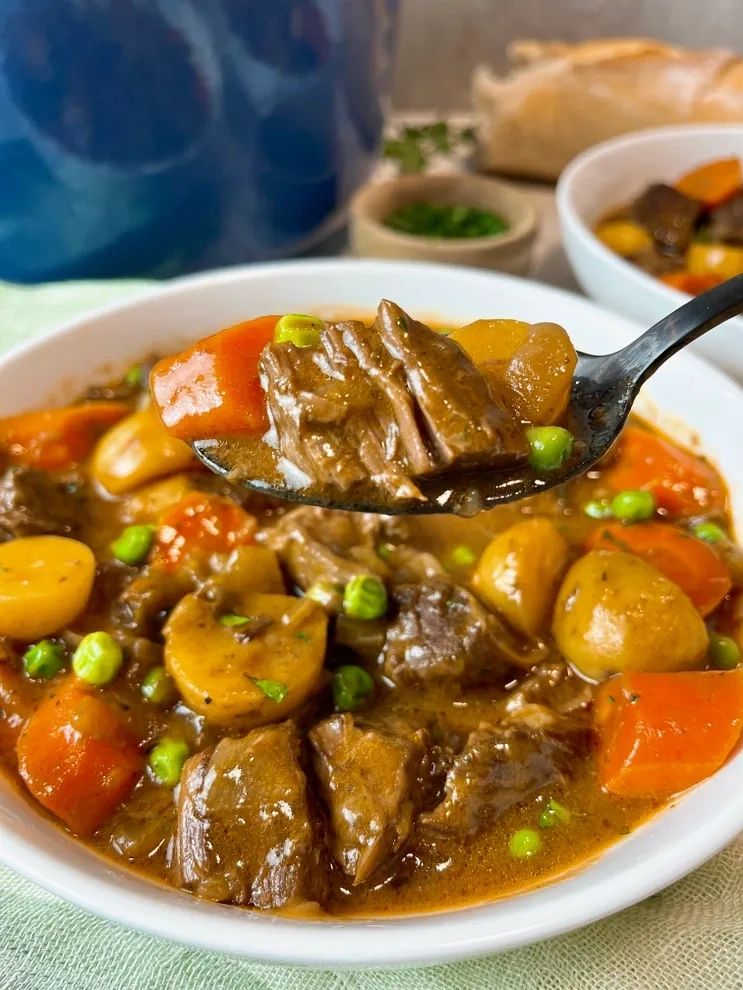
Beef Stew
Ingredients
- 2 pounds boneless beef chuck, larger pieces of fat trimmed and discarded, beef cut into 1 1/2-inch pieces (don’t remove too much of the fat; it keeps the beef tender and moist)
- Salt and freshly ground black pepper
- 4 tablespoons olive oil, divided
- 1 yellow onion, chopped
- 4 stalks celery, chopped
- 2-3 cloves garlic, minced, or 1 teaspoon pre-minced garlic
- 1/2 cup red wine, or more beef broth
- 1/4 cup all-purpose flour
- 4 cups beef broth
- 3 tablespoons tomato paste
- 1 teaspoon Italian herb seasoning
- 1 pound small gold or white potatoes, cleaned and halved
- 4 carrots, cut into bite-size pieces, cut on a bias for a nice presentation
- 3/4 cup frozen peas, kept frozen until ready to use
- Chopped fresh parsley for serving
Equipment
Instructions
- Preheat the oven to 325 degrees. Set an oven rack in the lower middle position.
- Pat the beef dry and season generously with salt and black pepper.
- Heat 1 tablespoon of the olive oil in a large Dutch oven or ovenproof stock pot (with lid) over medium-high heat. To prevent crowding the pan, cook the beef in three batches. Add one third of the beef cubes to the hot oil and cook, turning with tongs, until all sides are dark brown and well-seared. Transfer the browned beef to a large plate and repeat 2 more times, using 1 tablespoon of oil for each batch of beef.
- Heat the remaining tablespoon of oil in the same pot over medium-high heat. Add the onion, celery, and garlic and cook for 3 to 5 minutes, until soft. Add the wine and bring to a simmer, scraping up any browned bits from the bottom of the pan. Simmer until the liquid is almost completely reduced. Return the beef to the pot with any accumulated juices from the plate. Add the flour and stir to coat. Stir with a wooden spoon until the flour is dissolved.
- Add the beef broth, tomato paste, and Italian seasoning and bring to a boil. Cover the pot with a lid, transfer to the oven, and braise for 2 hours.
- Remove the pot from the oven and stir in the potatoes and carrots. Cover and return the pot to the oven for one hour, until the vegetables are tender, the broth is thickened, and the meat is tender. Stir in the peas and heat them through.
- Ladle the stew into bowls, top with parsley and serve.