


Easy Baked Salmon
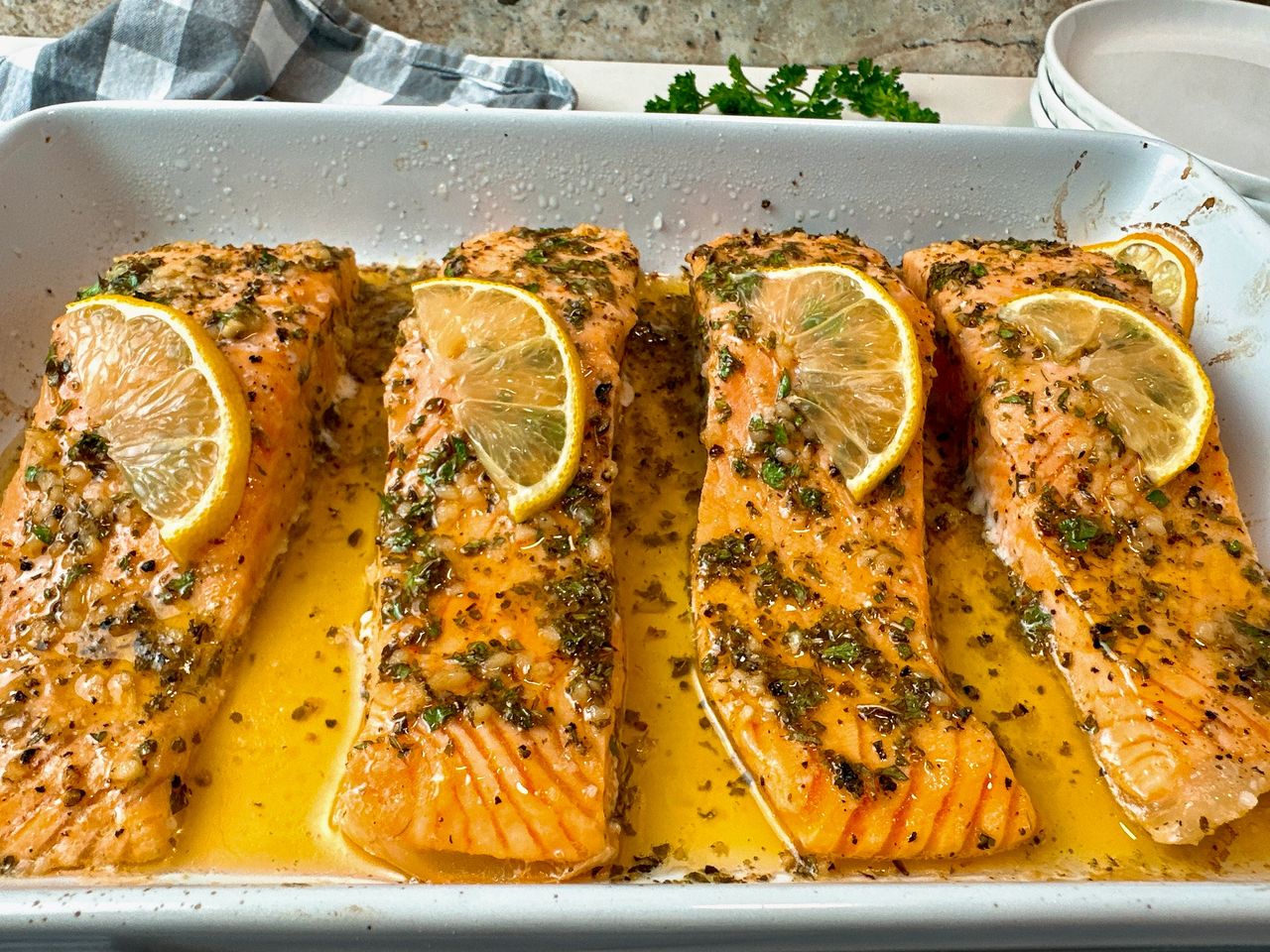
Infused with lemon, garlic and herbs, this succulent salmon is incredibly flavorful and undeniably moist. It’s also made with a handful of ingredients and ready in about 20 minutes.
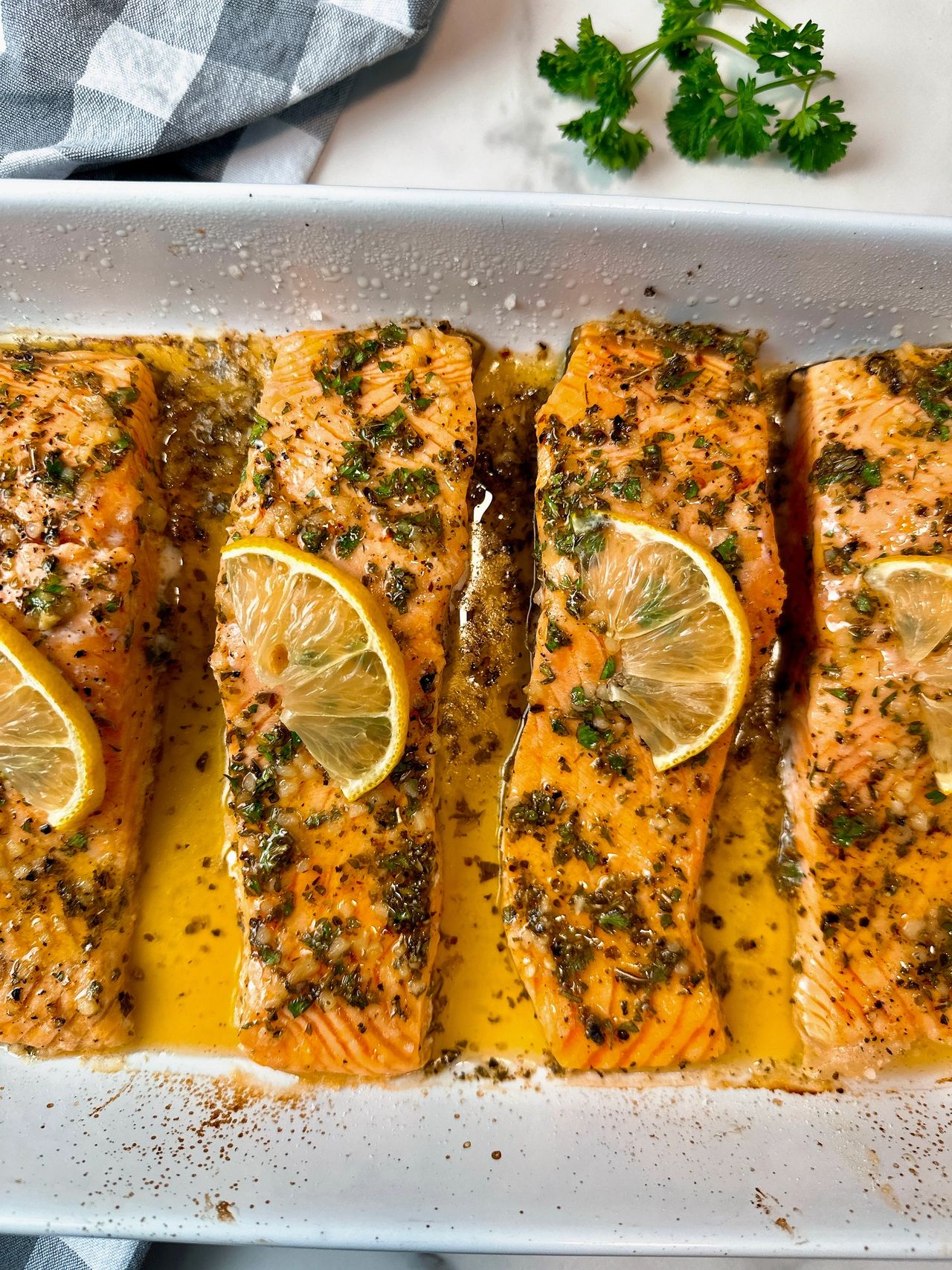
This recipe was written for the Arizona Republic.
This is your answer for a quick-and-easy, weeknight meal! This nutrient-dense, tender salmon is as easy as it is delectable. It comes together in just minutes, and the presentation is stunning. So, while it’s an ideal, foolproof dish for a busy weeknight, it’s also elegant enough for any special occasion.
What kind of salmon should you buy? You can make this baked salmon with individual fillets or one large piece of salmon (half of a salmon). For this dish, I recommend Sockeye, Coho, or King/Chinook. I used Coho.
If possible, choose wild salmon. While the protein content is similar for farm-raised and wild-caught salmon, wild salmon is generally lower in calories and contains more nutrients, including iron, potassium, vitamin B12, zinc, and calcium. Wild-caught salmon is also superior in terms of texture, color, and flavor.
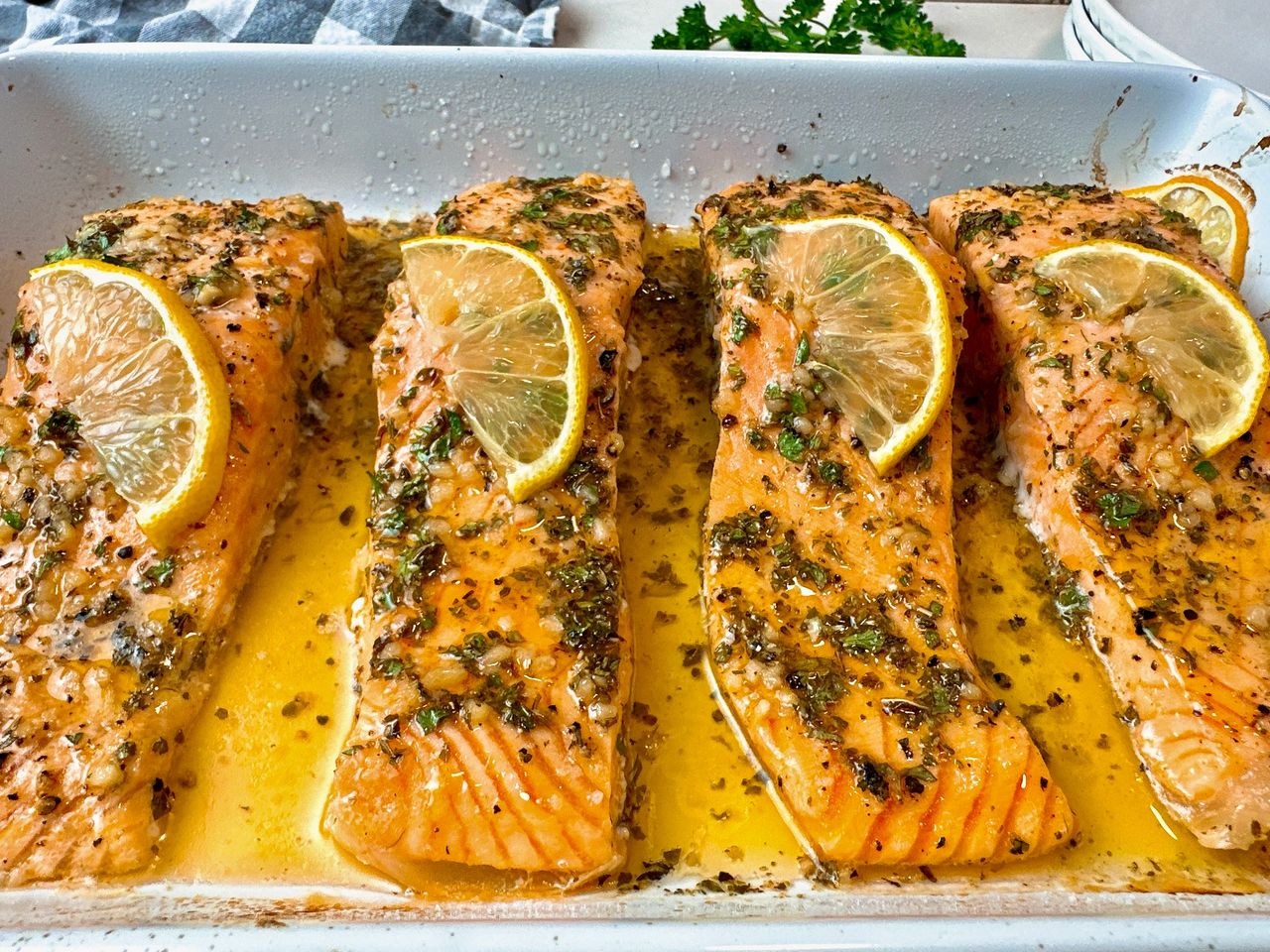
Should you choose fresh or frozen salmon? Unless you’re confident your market sells fresh-caught fish, choose frozen salmon. Truth is, the salmon sitting on ice in the grocery store might not be perfectly fresh, so ask your fish monger how fresh it is. Frozen salmon is flash frozen on the ship soon after it’s caught, which immediately preserves freshness. If you’re using frozen salmon, it’s best to thaw it slowly, 12 to 24 hours, in the refrigerator. If you forget to thaw your salmon, don’t fret. Place your frozen salmon in a large bowl of cold water; it should thaw within an hour, depending on the thickness of the fish. If your water gets lukewarm, swap it out for fresh cold water.
Make sure your fish looks fresh. Whether you purchase fresh or frozen, choose salmon fillets that are vibrant in color. The flesh should have a brilliant hue, and shouldn’t be anemic or pale looking. When purchasing frozen salmon, make sure the packaging is tightly sealed. Avoid any salmon that says, “color added”. When in doubt, ask the fish monger from your seafood department.
Tips for perfectly baked salmon
- Bring your salmon to room temperature before baking. Pull your salmon from the refrigerator about 15 to 20 minutes before baking to ensure that it cooks evenly. If you start with cold salmon, the outside may dry out before the center is cooked.
- Don’t rinse your salmon with water. There’s no need to rinse raw seafood. In fact, rinsing raw meats and seafood increases your risk of contaminating your sink and countertops. If there’s any bacteria on the salmon’s surface, it will be destroyed by the heat of the oven.
- Keep the salmon skin on. The salmon skin creates a natural barrier between the flesh and the hot baking dish, which protects the meat and keeps it moist. Once the salmon is cooked, the skin easily slides off.
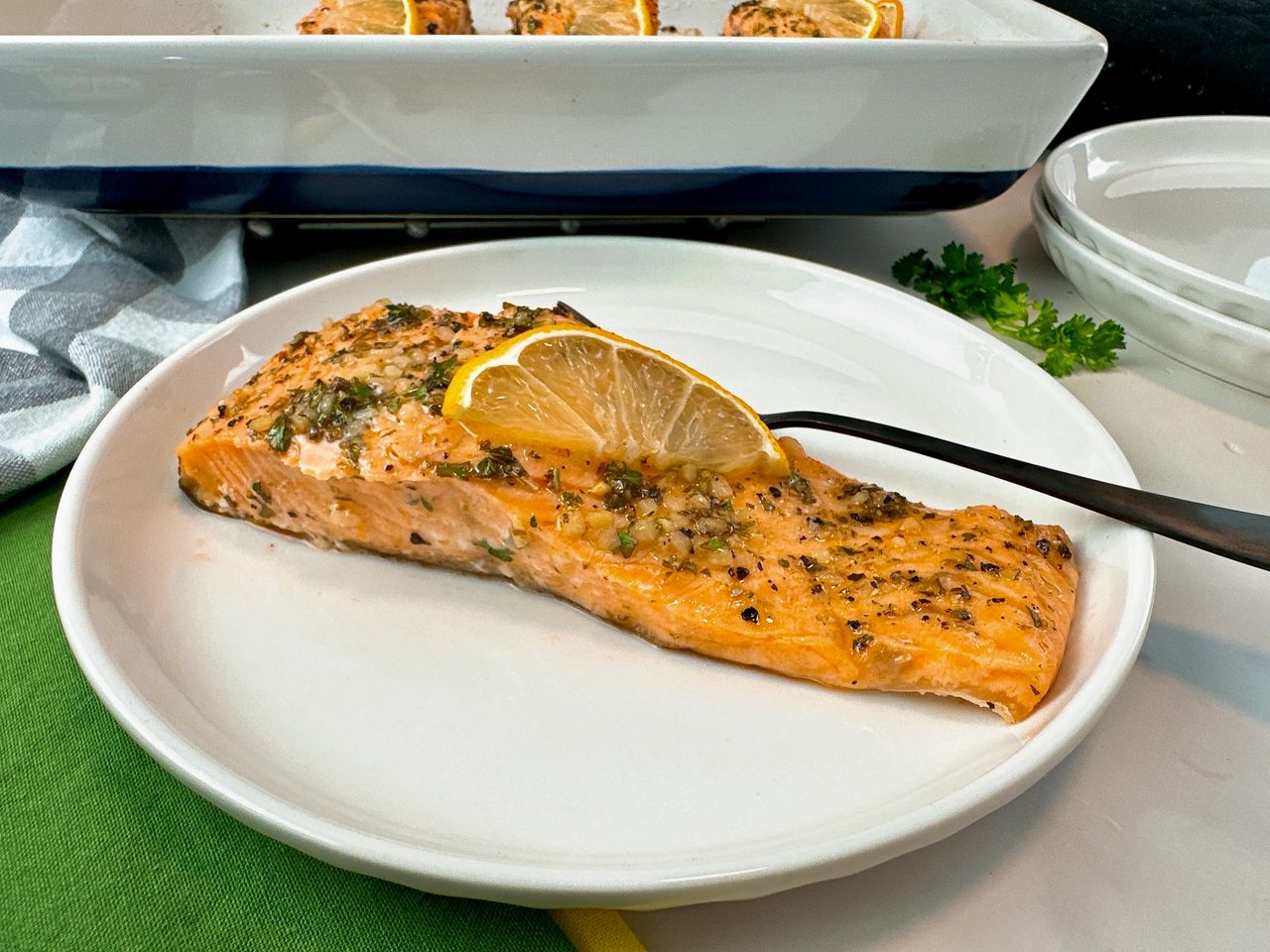
- Season your salmon right before baking. Seasonings like salt pull moisture from the flesh, so season your fish just before baking. This will guarantee deliciously juicy meat.
- Ignore any white stuff seeping from your salmon. As salmon cooks, the protein albumin oozes from the flesh and solidifies, forming white streaks on your fish. While somewhat unsightly, it’s completely harmless and safe to eat. To prevent excess albumin, don’t overcook your salmon (the hotter the fish, the more albumin production). Pro tip: Cooking your salmon in a baking dish (instead of on a baking sheet) helps protect the flesh and prevent albumin formation.
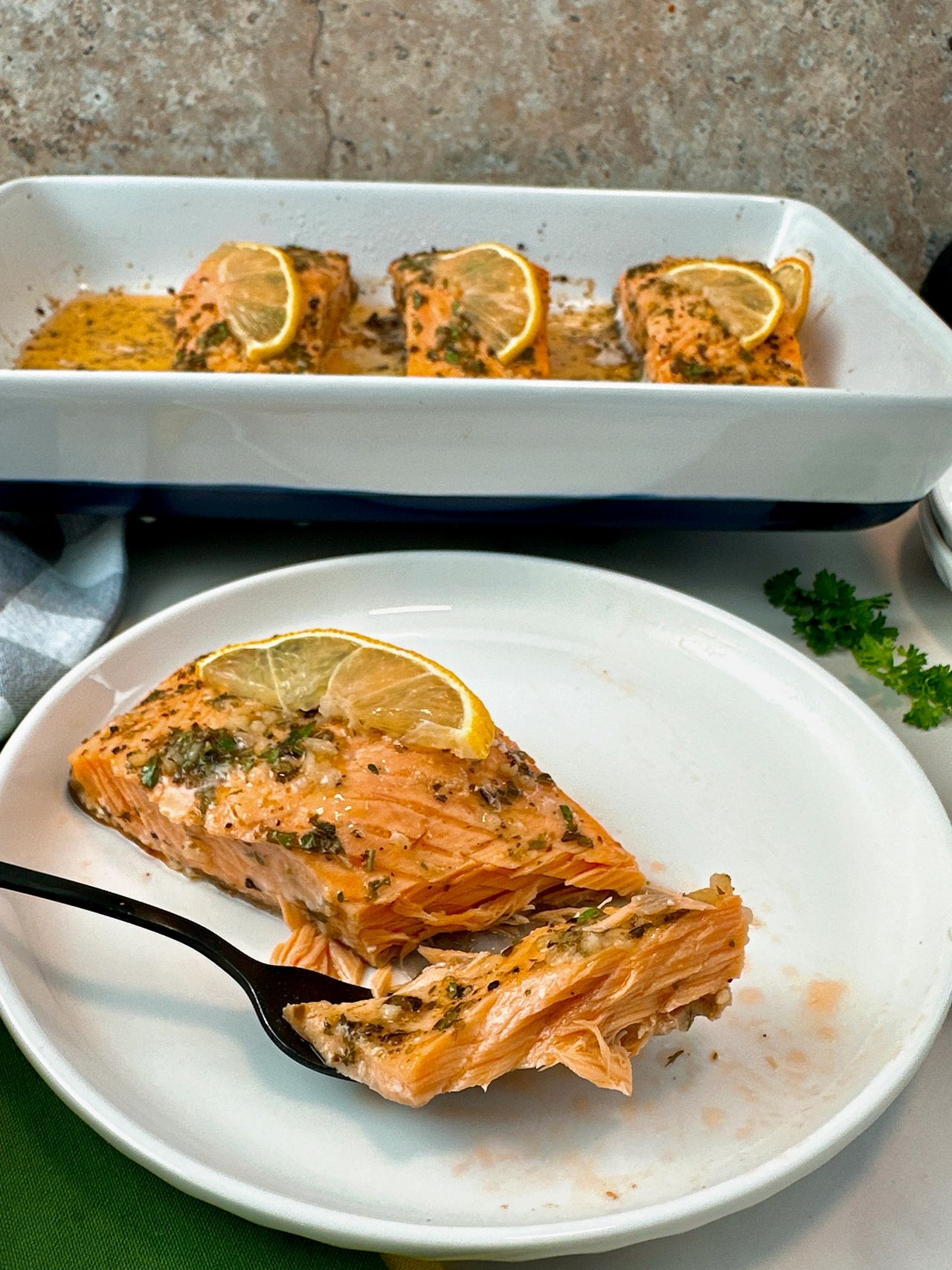
How do you know when your salmon is finished cooking?
Salmon can be served medium-rare to almost well-done, which translates to an internal temperature of 110 to 140 degrees in the center of the thickest part of the meat. I find the sweet spot to be an internal temperature of 125 to 130 degrees; at this temperature, you will achieve moist, perfectly cooked salmon. If you don’t have an instant-read meat thermometer, you can use your eyes. As salmon bakes, it turns from orange/red to pink. To check for doneness, use a sharp knife to cut into the thickest part of the meat; when cooked, the flesh will start to pull apart, almost flake.
General cooking times
- Regular salmon fillet: 12 to 13 minutes
- Thick salmon fillet: 13 to 15 minutes
- Whole side of salmon: 15 to 20 minutes
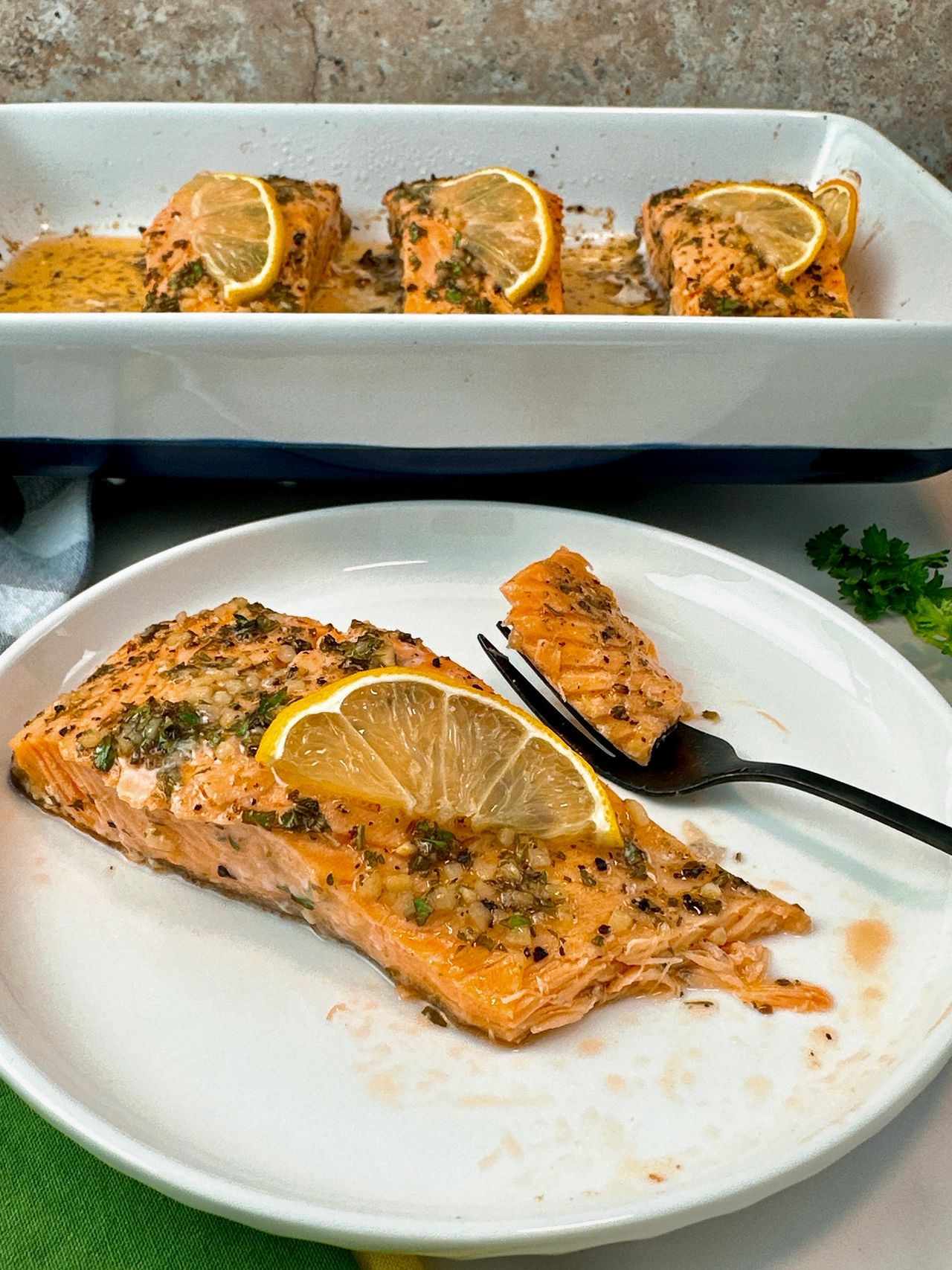
What should you serve with your baked salmon? This baked salmon partners with practically everything! I suggest adding a starchy side dish, such as rice, potatoes, noodles, or your favorite cooked grain. And when it comes to vegetables, anything goes. I recommend steamed, roasted, or sautéed broccoli, green beans, asparagus, cauliflower, carrots, or spinach.
Storing leftovers. Store leftover salmon in an airtight container in the refrigerator for up to 4 days. Enjoy your leftover salmon warm or chilled. Pro tip: Chilled salmon makes an excellent addition to a variety of salads, from grain-based dishes to those made with leafy greens.
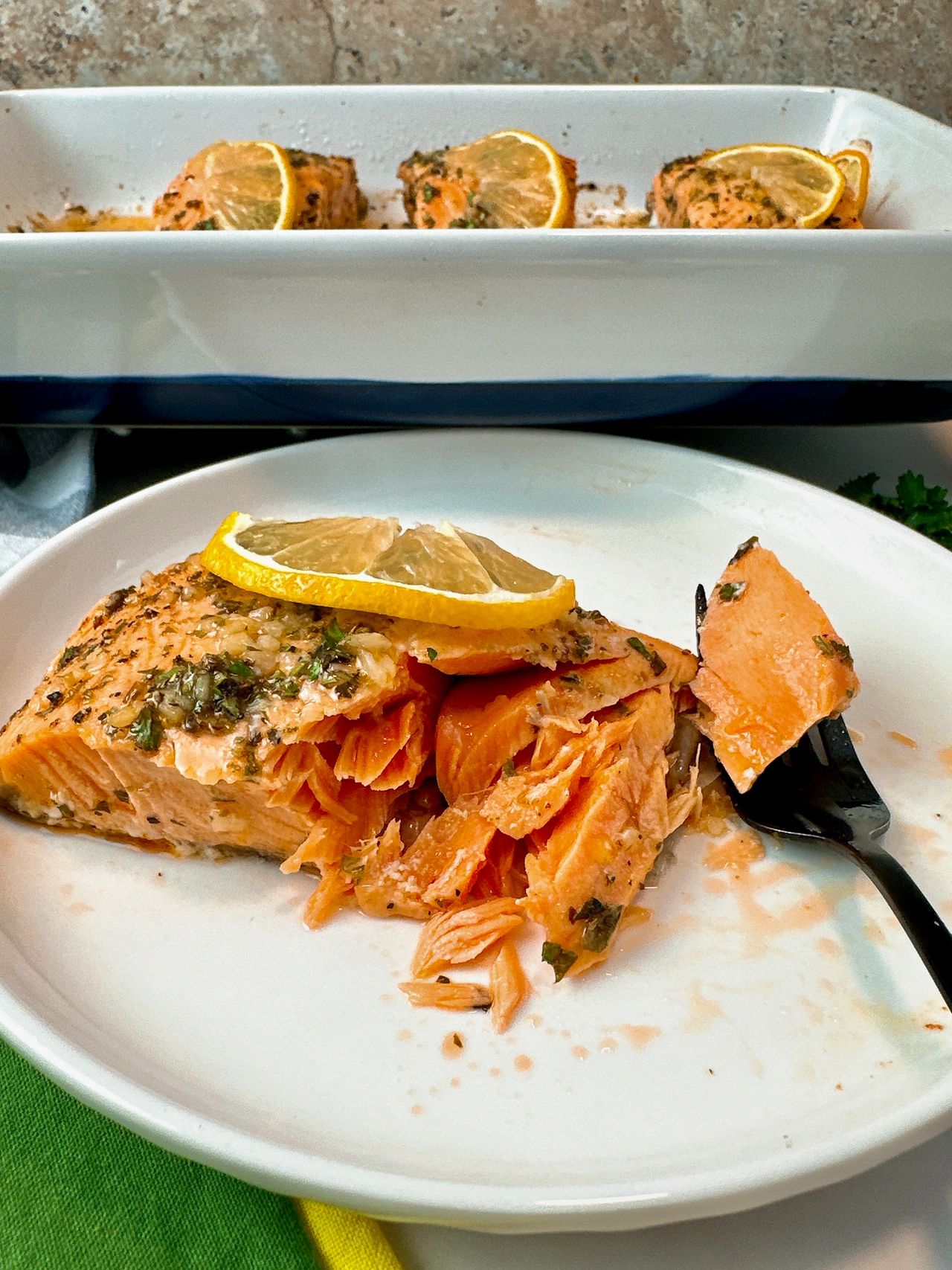
Easy Baked Salmon

Ingredients
- 4 salmon fillets, about 6 ounces each
- Salt and coarsely ground black pepper
- 2 tablespoons olive oil
- 1 tablespoon chopped fresh parsley
- 2 teaspoons minced fresh garlic, or pre-minced garlic
- 1 teaspoon Italian herb seasoning, or 1/4 teaspoon each dried thyme, parsley, oregano, and basil
- 1 lemon
Instructions
- Preheat oven to 400 degrees. Coat a shallow baking dish with cooking spray or brush with olive oil.
- Arrange the salmon in the prepared pan and season generously with salt and pepper.
- In a small bowl, combine the olive oil, parsley, garlic, Italian herbs, and juice of 1/2 lemon (reserve the second half of the lemon for slicing). Spoon the mixture all over salmon fillets, completely covering the tops and sides.
- Thinly slice the remaining 1/2 of lemon and arrange the slices on top of the salmon.
- Bake for 12 to 15 minutes, until the salmon is opaque and fork-tender. If you’re using a meat thermometer, the internal temperature should be 125 to 130 degrees when inserted into the thickest part of the meat.