


Homemade Pizza
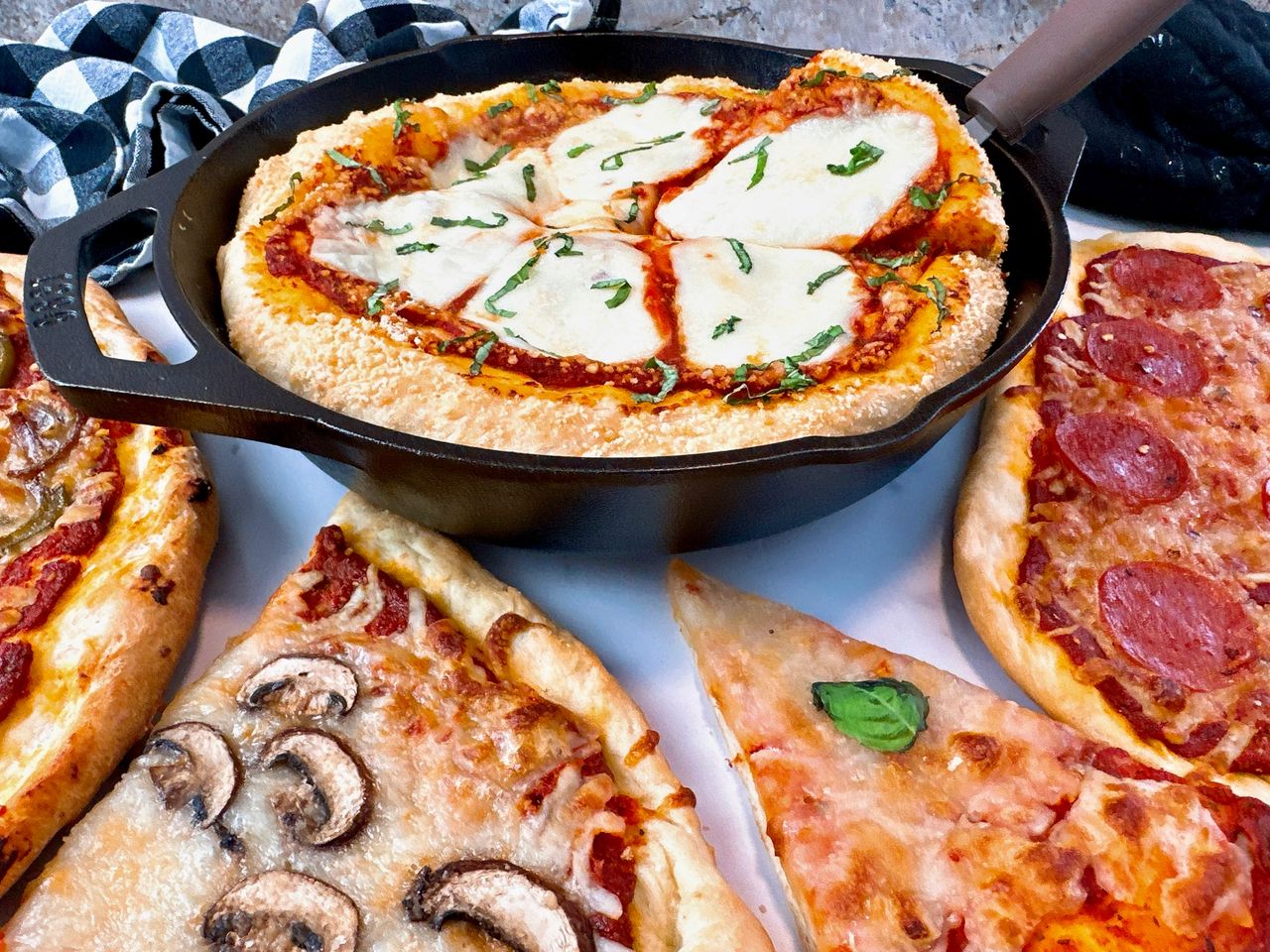
Behold the easiest, most delicious, and infinitely versatile pizza dough you will ever meet. The flavorful dough bakes up chewy crisp, can be made thick or thin, and is ready in under 45 minutes. You need just six ingredients and one bowl to get started, and in about one hour, you’ll be noshing on fresh, hot, homemade pizza!
This recipe was written for the Arizona Republic.
Simple, approachable, and nothing fancy required. How about that for a recipe description?! And it’s all true. This incredible pizza dough requires very few, easy-to-find ingredients and comes together in minutes. There’s no need for a stand mixer, dough hook, or lengthy kneading by hand. After a quick 30-minute rise, the dough gets 5 seconds of kneading before it’s shaped into a crust (by hand or with a rolling pin). And get this, the crust can be as thick or as thin as you like, or pressed into a pan for a deep-dish pizza.
Don’t fear the yeast! If you typically shy away from yeast-based doughs, take note – you cannot mess up this recipe. It’s practically foolproof. Use the correct water temperature for proofing your yeast (not too hot, not too cold, and easily measured with a thermometer), and you’ll create flawless pizza dough every single time. Note: This recipe calls for rapid rise/instant yeast, but you can also use active dry yeast. When using active dry yeast, use the same amount, (I packet or 2 1/4 teaspoons) and proof it first in the 3/4 plus 1 tablespoon of warm water (combine the yeast and water and let stand for 5 minutes).
What flour should you use? I strongly suggest you use double zero (00) flour for this pizza dough. Here’s why: Double zero flour is finely ground Italian flour made from durum wheat, which creates gluten that is strong but not elastic, the best option for a crispier crust. Bread flour is usually made from hard red spring wheat, which creates gluten that is strong and elastic, a great characteristic for chewy bread. In addition, 00 flour is less absorbent than bread flour and all-purpose flour, so you need less water to create your dough; less water produces a crispier crust. That said, you can certainly use bread flour or all-purpose flour in this recipe, just note that the crust will be more chewy than crisp.
Flavor your dough. Since pizza dough is basically flour, water, and yeast, it’s relatively bland. Most of the flavor in your pizza comes from the sauce and toppings. Until now. I encourage you to season your crust with a little garlic powder or onion powder – it’s a small addition that yields tremendous results. If desired, you can also add dried herbs like basil or oregano. When adding dried herbs, use 1 teaspoon and add them to the dry ingredients, before adding the oil and water.
Check the temperature of your water. The ideal temperature for proofing yeast is 105 to 110 degrees. Warm tap water is fine, just use a thermometer so you know the temperature; cold water won’t proof the yeast, and hot water will kill it.
Find a warm place for your dough to rise. To guarantee that your dough rises efficiently, and in just 30 minutes, park it in a warm place, away from any drafts. I suggest the top of your preheating oven.
Can you make this pizza dough in advance? Absolutely. And I strongly suggest you double or triple this recipe so you always have dough on hand. To make this dough in advance, once the dough has risen, deflate it as instructed and wrap tightly in plastic wrap. Refrigerate for up to 5 days or freeze for up to 1 month. Thaw overnight in the refrigerator before using and pull the dough from the refrigerator 30 minutes before shaping, topping, and baking.
Consider making homemade pizza sauce*. Once you taste my herby, rich pizza sauce, you’ll never use store-bought again. Pizza sauce is thicker than pasta sauce, and mine boasts plenty of Italian herbs, onion, and garlic. Plus, there’s no need to cook it! When stored in an airtight container, my homemade pizza sauce will last up to 2 weeks in the refrigerator, or 3 months in the freezer.
How should you roll out your pizza dough? This is entirely up to you. You can use a rolling pin or keep things simple and use your hands. This pizza dough is not overly elastic, so it won’t spring back while rolling out and shaping. You can also choose how thick/thin to make the crust and the edges. See below for recommendations on the thickness of the crust. When it comes to the edges, pinch with your fingers it you want it thin, or roll the dough over to create a thicker, puffy edge. Once your pizza dough is ready for sauce and toppings, brush the entire surface with olive oil and use a fork to poke holes all over the base; this will prevent bubbles from forming during baking.
Note: Cooking time will depend on the thickness of your dough and how many toppings you’ve added.
- For regular crust, roll into a 12-inch circle.
- For thin crust, roll into a 14-inch or 16-inch circle.
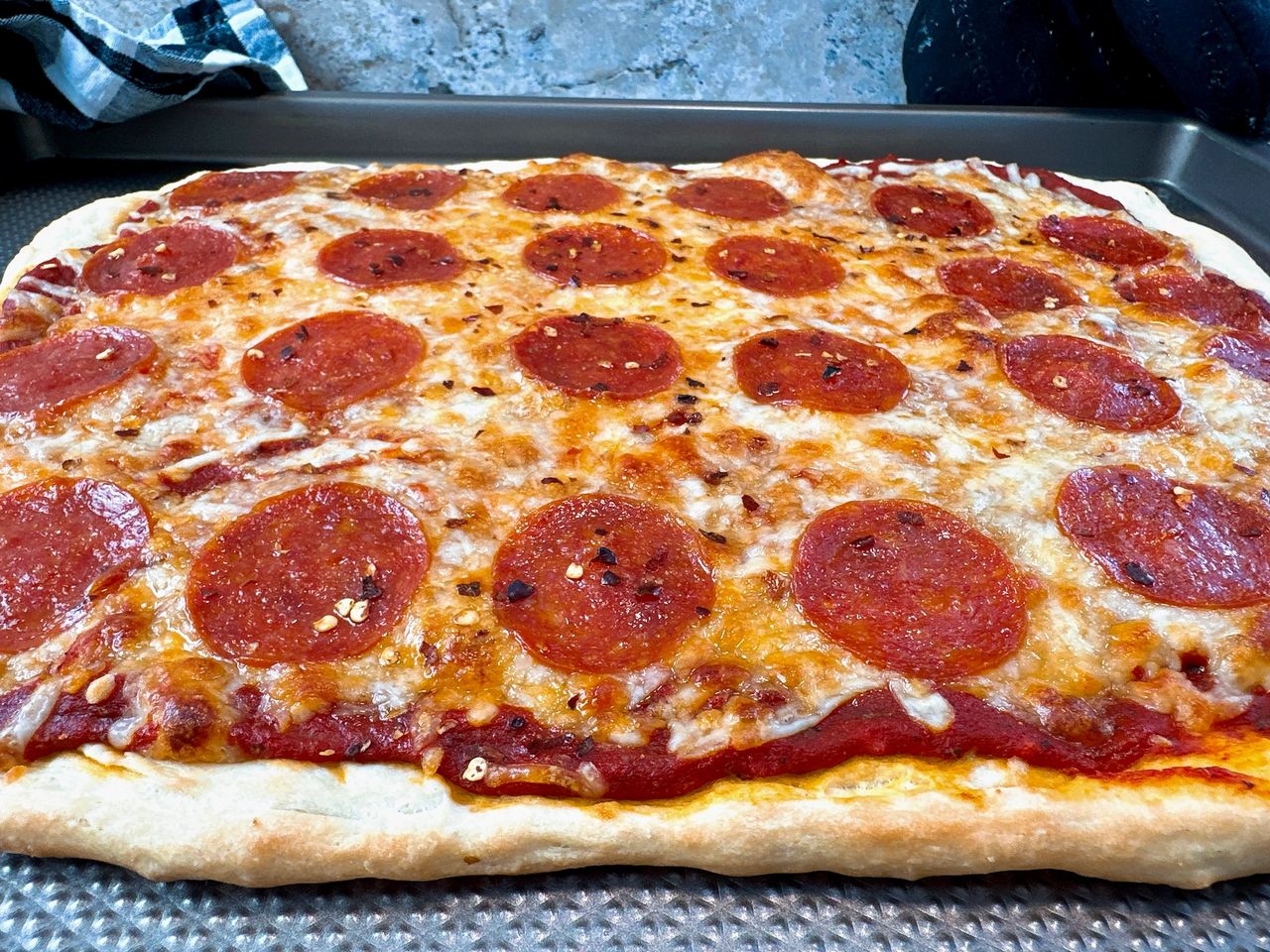
- For a rectangular pizza or flatbread, roll into a 10×14-inch rectangle. When making flatbread, there’s no need to add toppings before baking.
- For deep-dish pizza, press the dough into a 12-inch, ovenproof skillet, or baking dish.
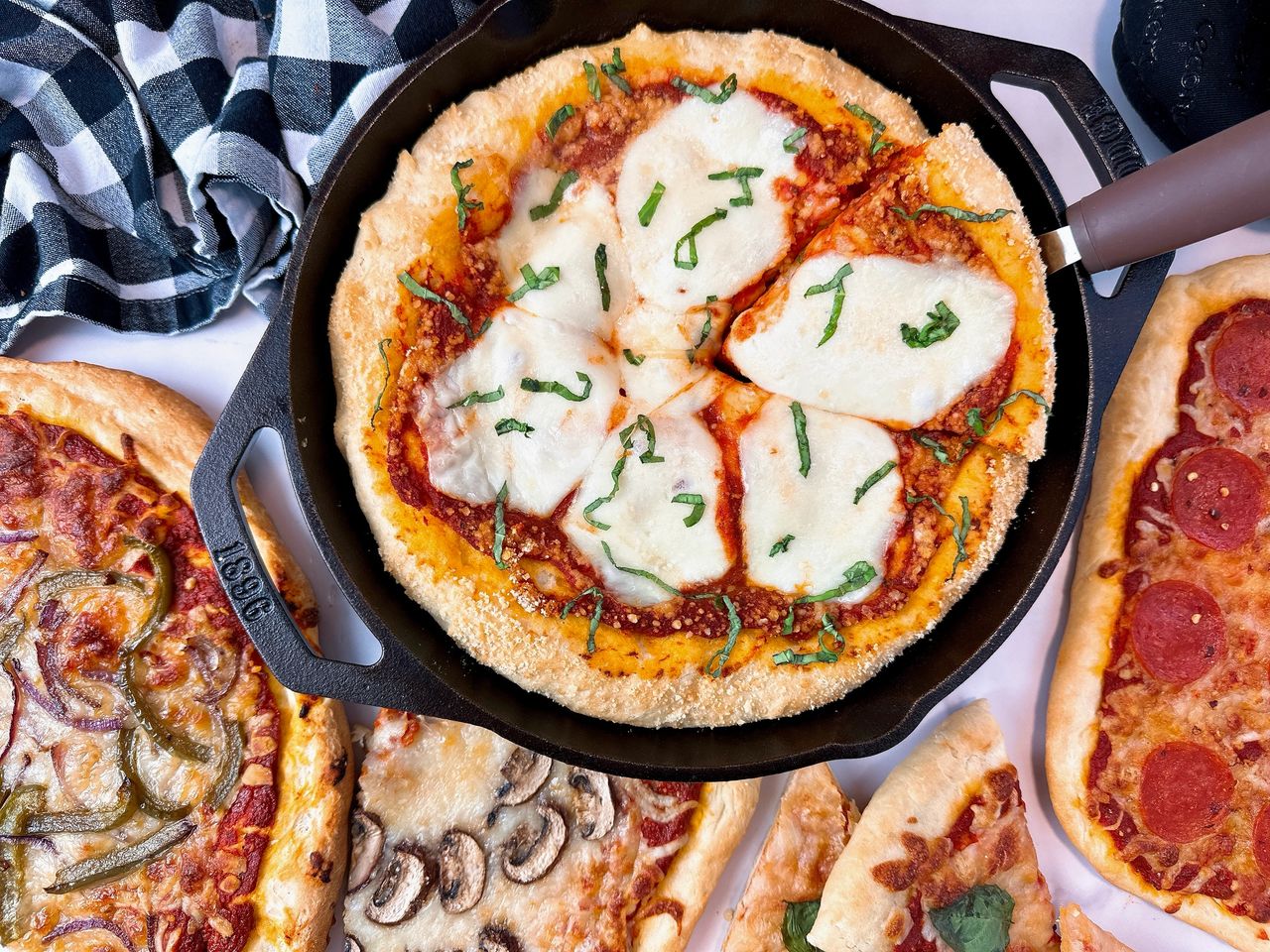
The pizzas I made
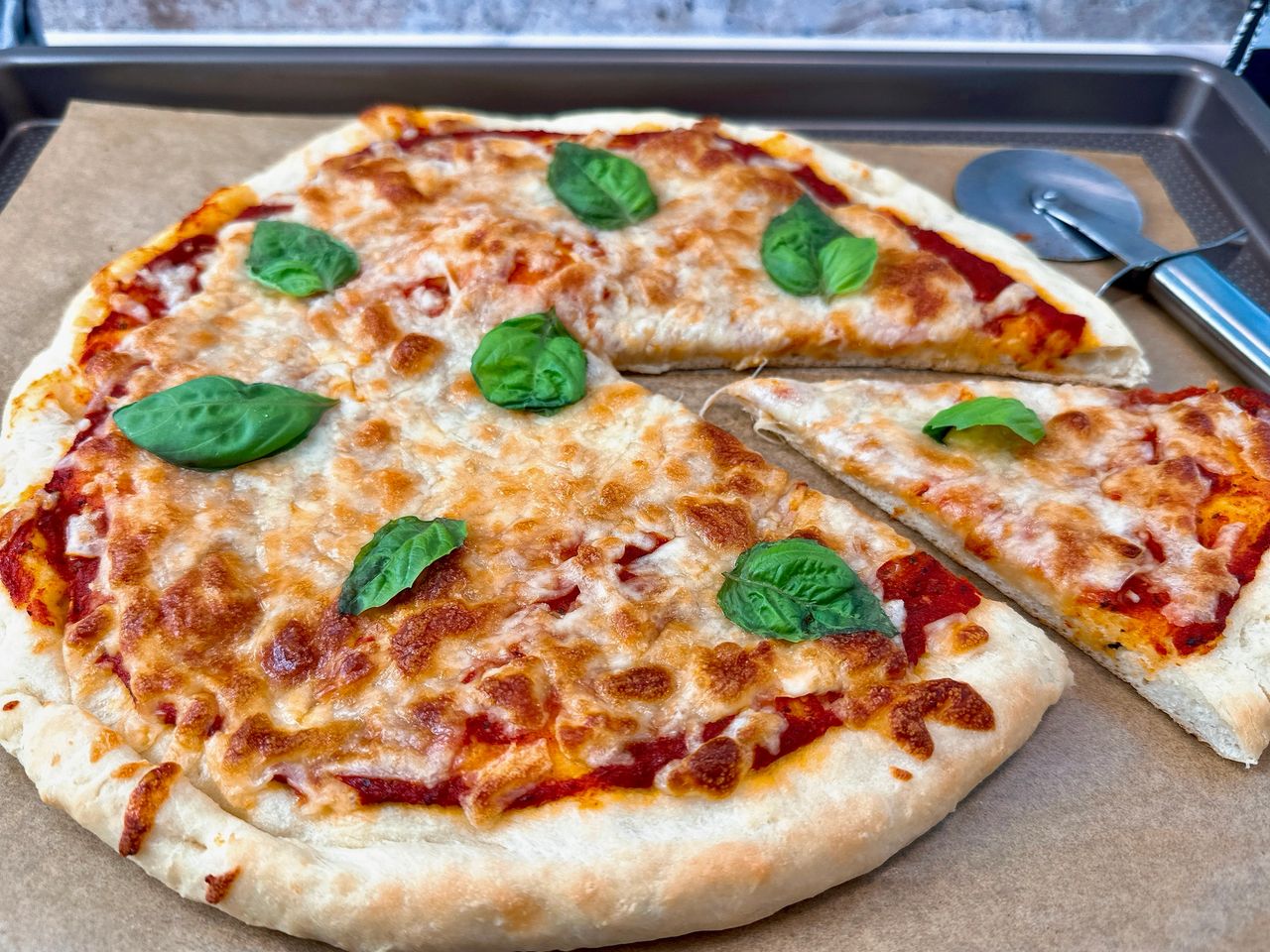
- Plain with pizza cheese (a combination of mozzarella and provolone; some brands add additional cheeses) and fresh basil
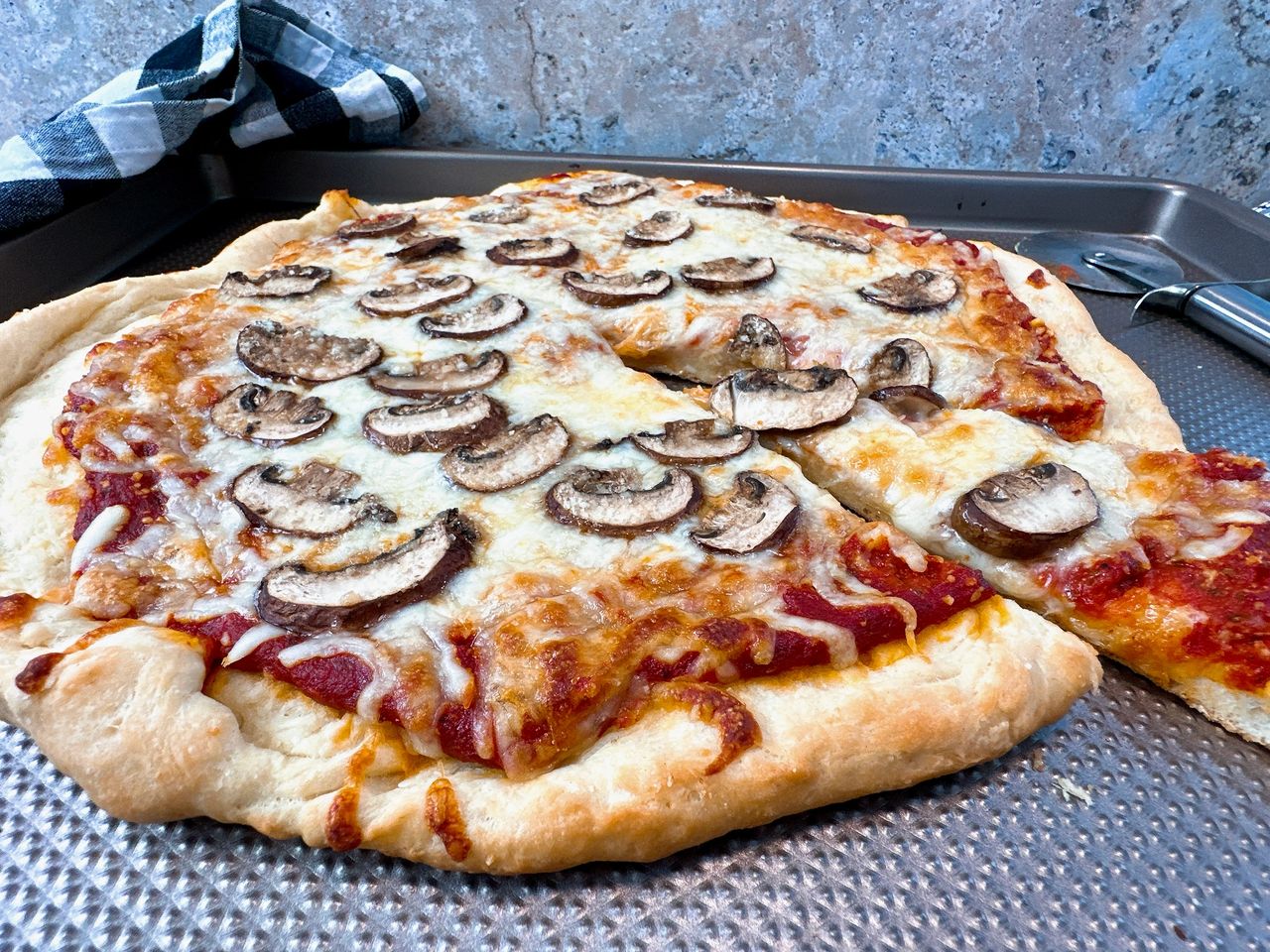
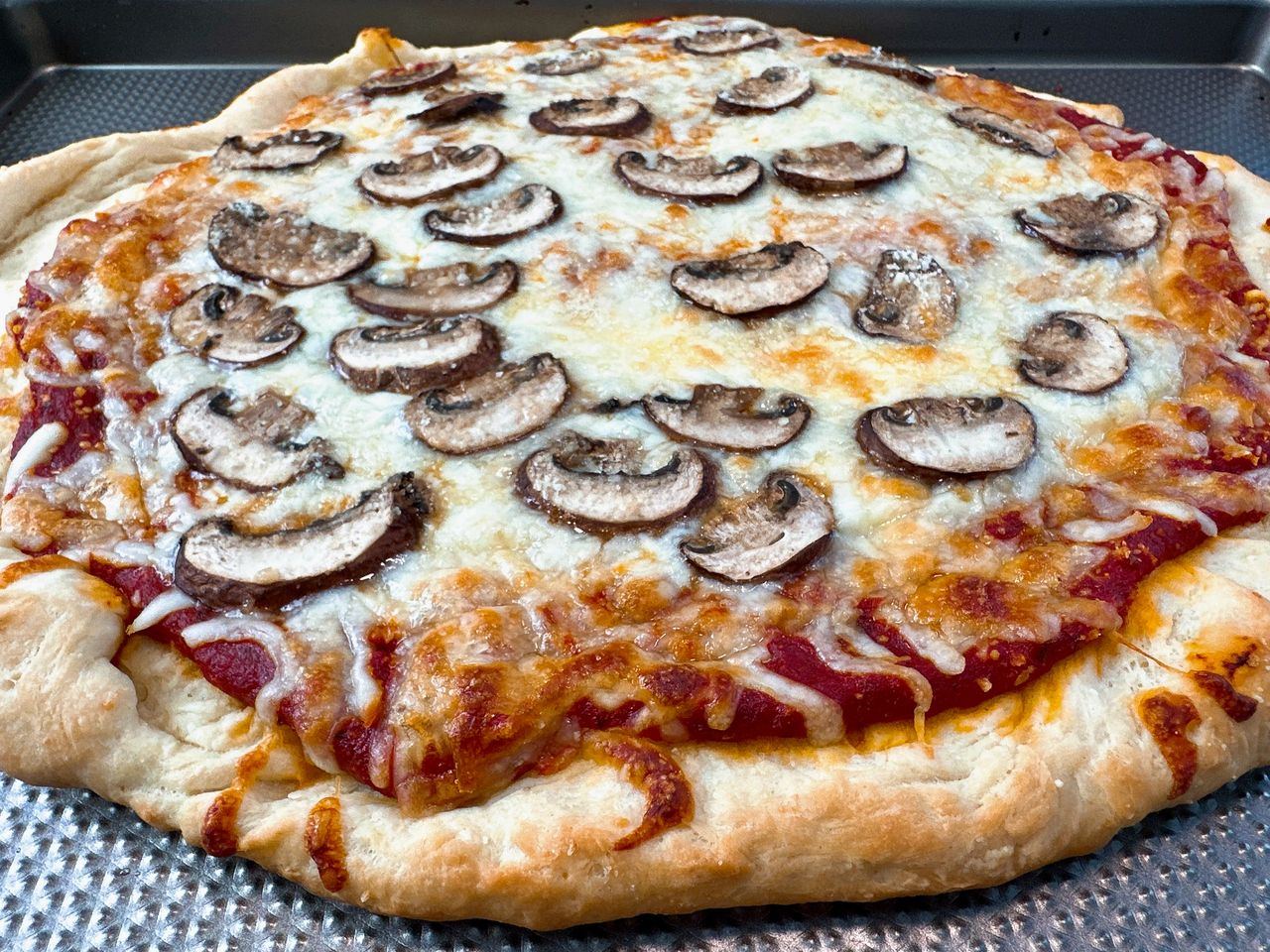
- Cremini mushroom with mozzarella and parmesan (I sautéed the mushrooms first)
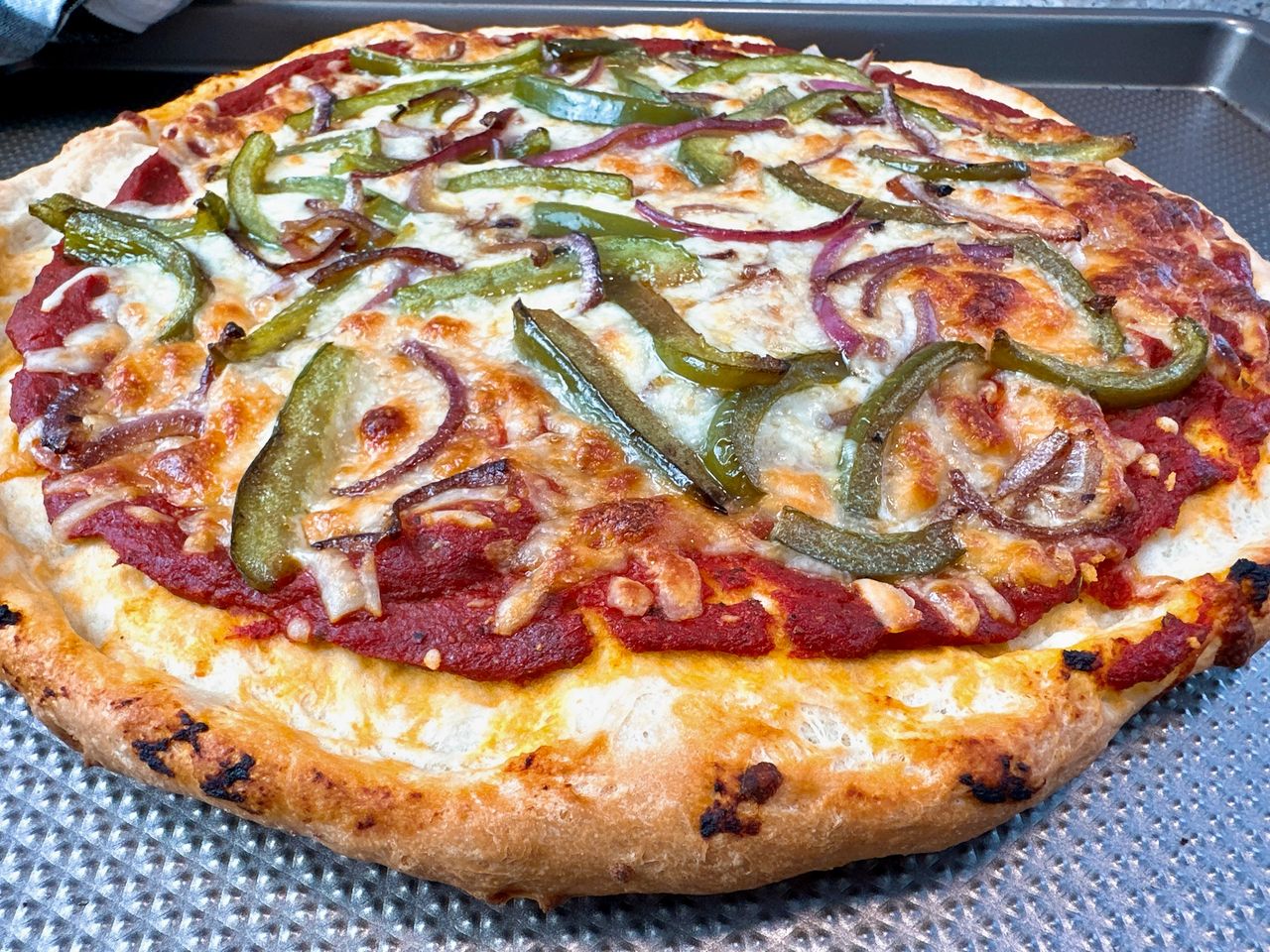
- Mozzarella with green bell peppers and red onion (I sautéed the vegetables first)
- Mozzarella with pepperoni and crushed red pepper flakes
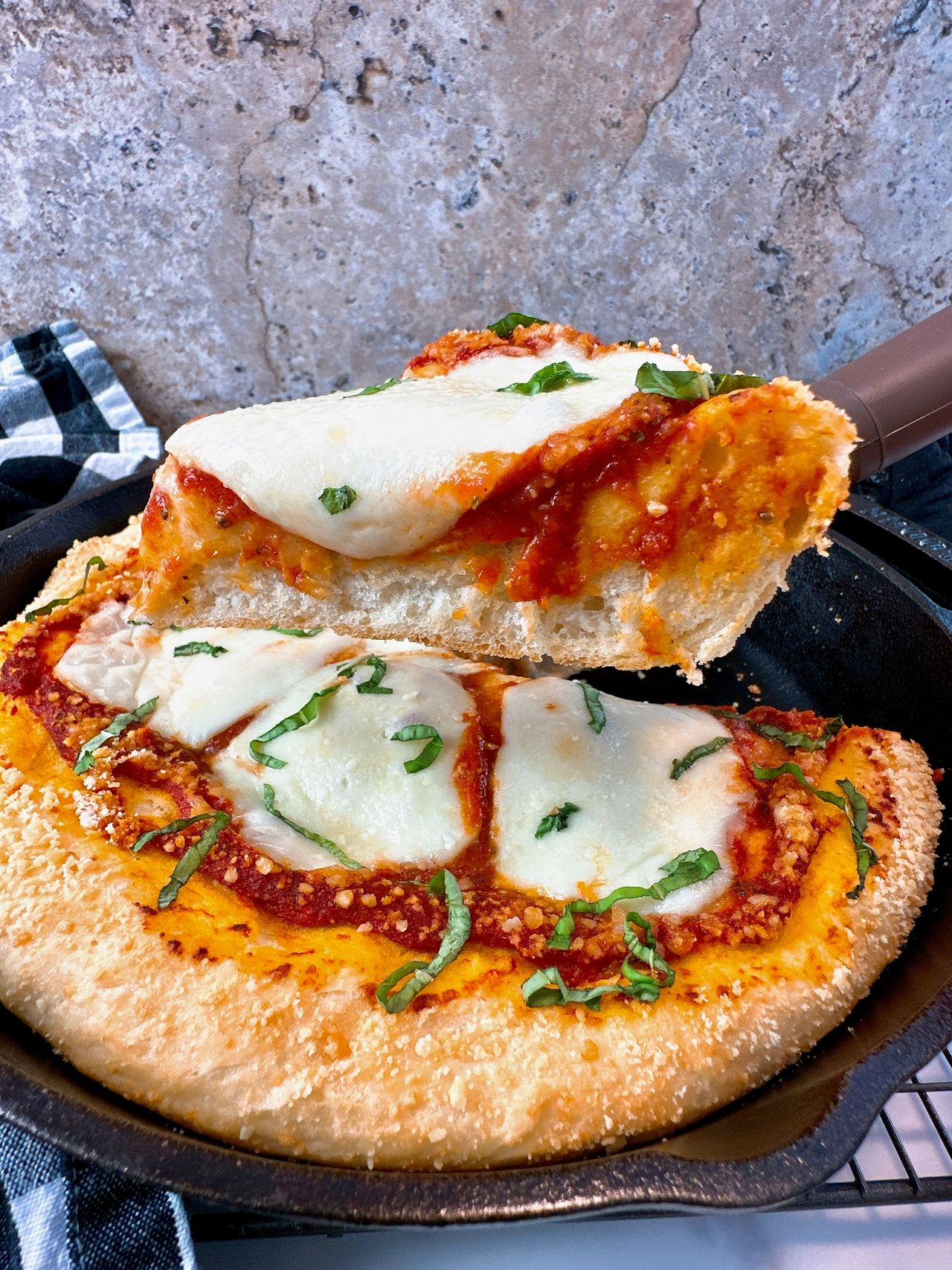
- Deep dish with fresh mozzarella, parmesan, and fresh basil (I sprinkled the crust with parmesan cheese too)
I can’t wait for you to try this recipe! Let me know what you think in the comment section below!

Homemade Pizza
Ingredients
For the Pizza Dough
- 2-2 1/3 cups 00 flour, or bread flour, or all-purpose flour
- 1 packet rapid rise/instant yeast, 2 1/4 teaspoons
- 1 1/2 teaspoons granulated sugar
- 3/4 teaspoon salt
- 1/4 teaspoon garlic powder, or onion powder, optional
- 2 tablespoons olive oil, plus more for coating the bowl and pizzas
- 3/4 cup plus 1 tablespoon warm water, 105 to 110 degrees
For the Homemade Pizza Sauce
- 15 ounces tomato sauce
- 6 ounces tomato paste, regular or seasoned (I used tomato paste with basil, garlic, and oregano)
- 1 tablespoon Italian seasoning
- 1 teaspoon dried oregano
- 1 teaspoon granulated sugar, optional
- 1/2 teaspoon garlic powder
- 1/2 teaspoon onion powder
- Salt and freshly ground black pepper
Instructions
For the Pizza Dough
- In a large bowl, combine 1 cup of the flour, yeast, granulated sugar, salt, and garlic or onion powder (if using). Add 2 tablespoons of the olive oil and warm water and mix well with a wooden spoon. Add 1 more cup of flour and stir with a wooden spoon or spatula until the dough is cohesive, elastic and starting to pull away from the sides of the bowl, adding more flour as needed (that’s why there’s an extra 1/3 cup, in case you need it). The dough will be sticky, yet manageable.
- Coat a separate, large bowl generously with olive oil, coating the bottom and sides. Using your hands, shape the dough into a ball and transfer the ball to the oil-coated bowl. Turn to coat all sides of the dough with oil (coat the dough generously with oil or you risk dry spots).
- Cover the bowl tightly with plastic wrap and let rise in a warm place for 30 minutes, until doubled in size.
- While the dough is rising, preheat the oven to 425 degrees. Line a large baking sheet with parchment paper or use a nonstick baking pan.
- Once the dough has risen, use your hands to gently deflate it and transfer to a flat surface. Knead briefly until smooth, about 3 to 5 times.
- Using your hands or a rolling pin, shape the dough into a 12-inch round (or 14- to 16-inch round for thin crust), or a 10×14-inch rectangle, or press the dough into a 12-inch, oven-proof skillet or baking dish.
- Pinch or roll over the edges to form a crust (this isn’t necessary for a deep-dish pizza). Rolling over the edges will create a thicker crust.
- Brush about 1 tablespoon of olive oil over the top and crust of the pizza. Use a fork to poke holes all over the center of the dough (this will keep the dough from bubbling up in the oven).
- Add sauce and desired toppings.
- Bake for 12 to 15 minutes, until the crust is golden brown and the cheese melts (cooking time will depend on the thickness of your dough and how many toppings you’ve added).
- Slice and serve.
For the Homemade Pizza Sauce
- Whisk together all the ingredients but the salt and pepper. Season to taste with salt and black pepper.