


Kung Pao Chicken
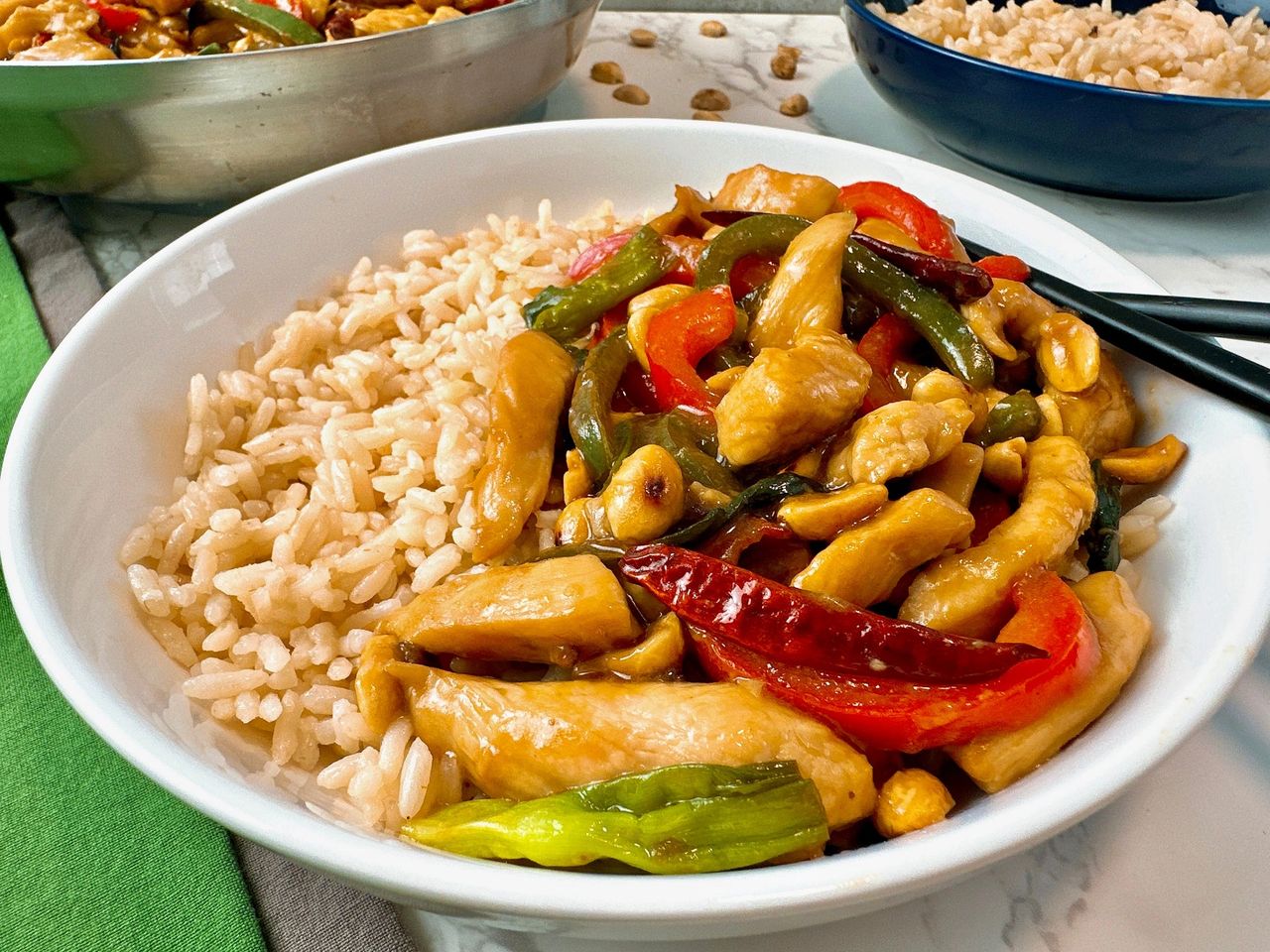
Golden chicken, caramelized bell peppers, crunchy nuts, and a shimmering, sweet/savory, chili-based sauce. Moderately fiery, delightfully nutty, and completely addictive.
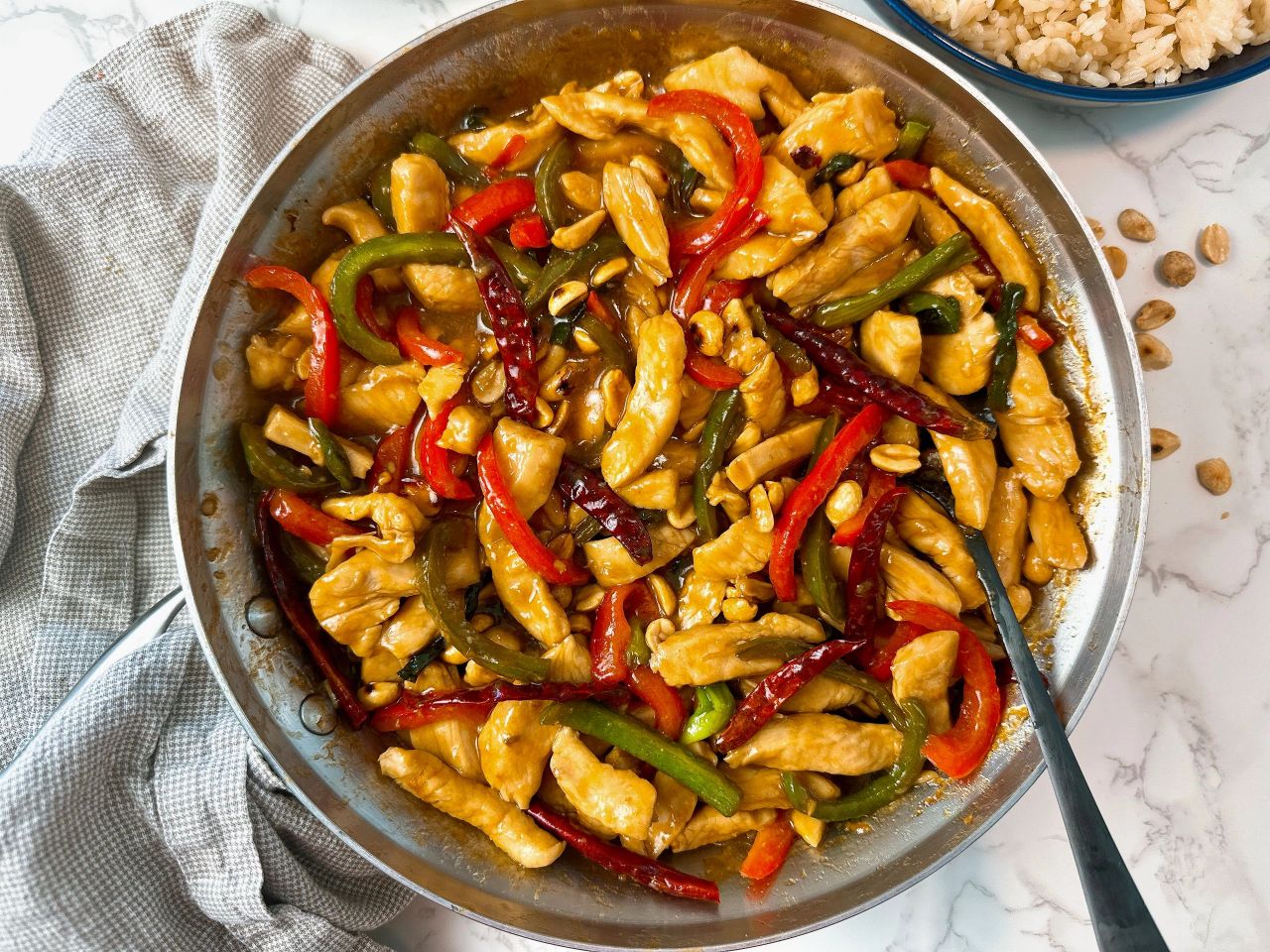
This recipe was written for the Arizona Republic.
What are the ingredients for Kung Pao chicken? Kung Pao chicken is a classic, spicy chicken stir-fry from the Sichuan province of southwest China. Recipes vary, but the core ingredients remain the same – chicken, chile peppers, and “Kung Pao sauce”, a garlicky blend of soy sauce, vinegar, rice wine, and sugar. While Chinese restaurants often use specialty ingredients, such as Sichuan/Szechuan peppercorns, Chinese black vinegar, and Chinese rice wine (which may not be sold in your local grocery store), you can achieve the same depth of flavor – spicy, sweet, tangy, and umami – with easy-to-find, everyday ingredients.
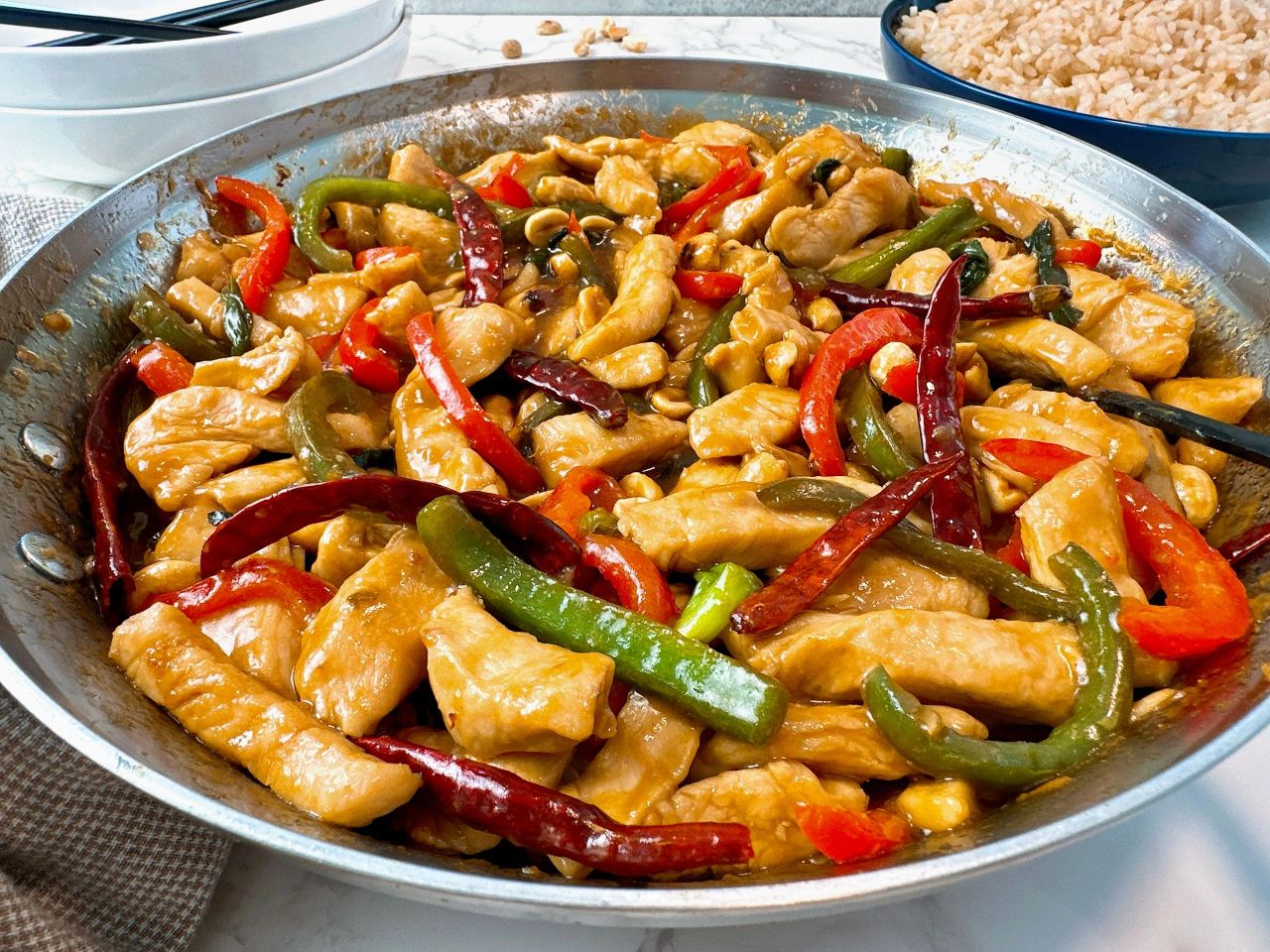
This recipe is much healthier than the restaurant version! The restaurant version of Kung Pao chicken is often oily – which explains the puddle of grease in the bottom of your to-go box. Have no fear, Kung Pao chicken is a quick-and-easy meal you can make in your own kitchen, with a handful of ingredients, any night of the week!
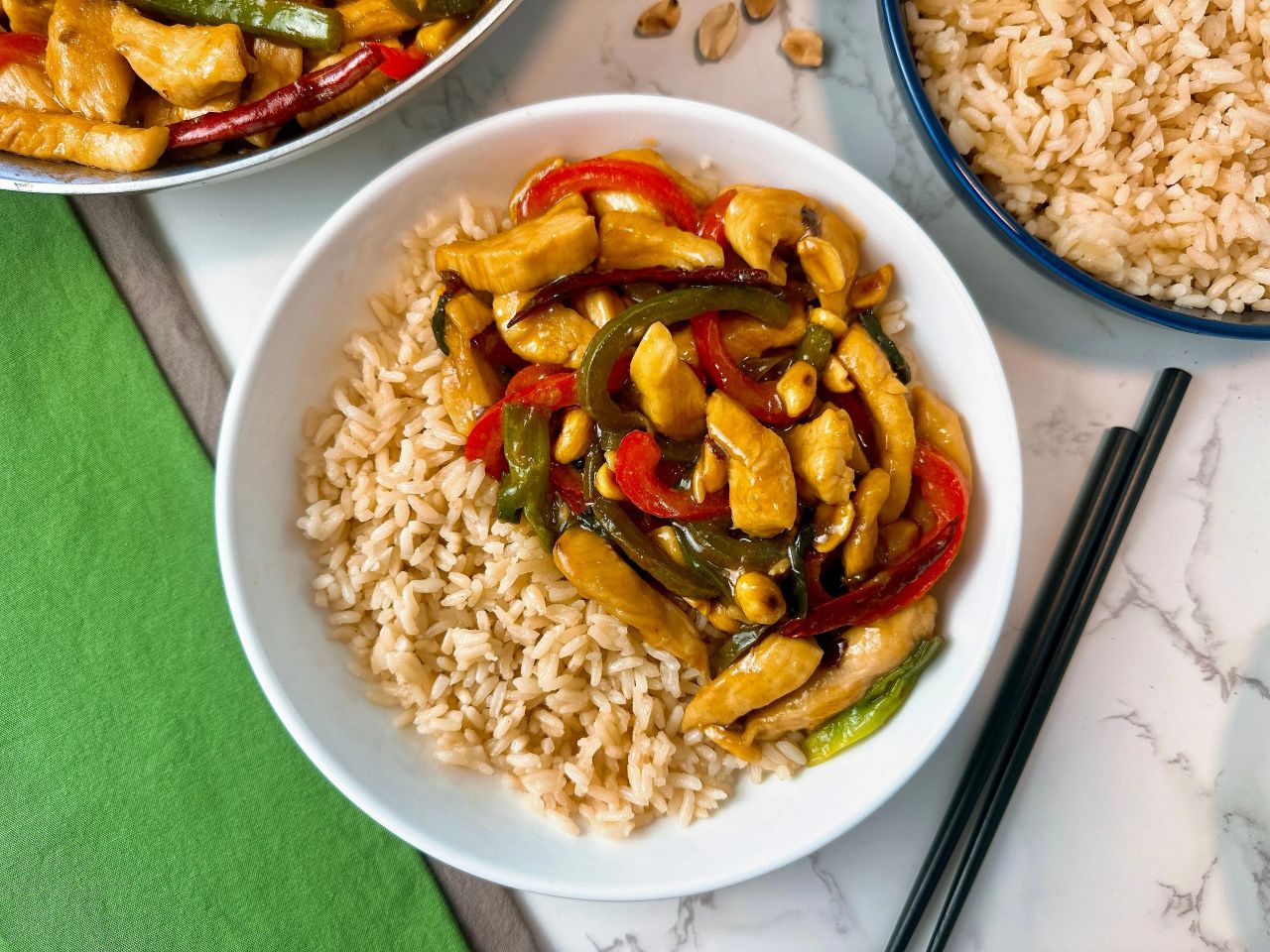
Prep ahead! As with all stir-fry dishes, this meal comes together quickly. Cut your chicken and vegetables, and prepare your sauce, before you start cooking.
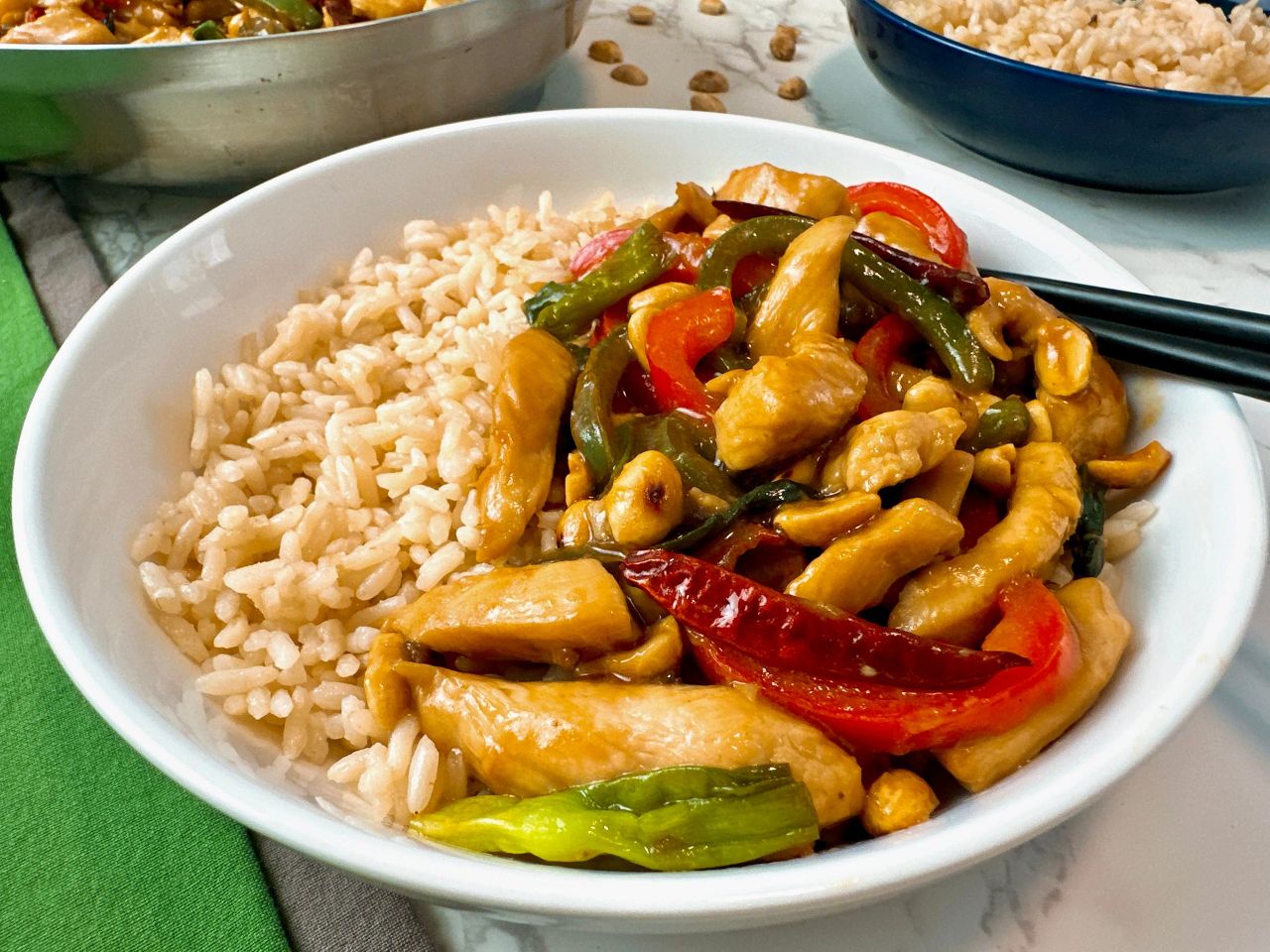
Choose chicken breasts, tenders, or thighs. This is a personal preference but note that chicken thighs will retain more moisture. When using chicken breasts and tenders, be careful not to overcook them or the meat will dry out. I used boneless, skinless chicken breasts. Note: You can cut your chicken into strips or cubes, there are no rules when it comes to the shape of the pieces. Pro tip: While chicken shape doesn’t matter, uniform size does, so make sure to cut the chicken into equally sized pieces so they cook uniformly.
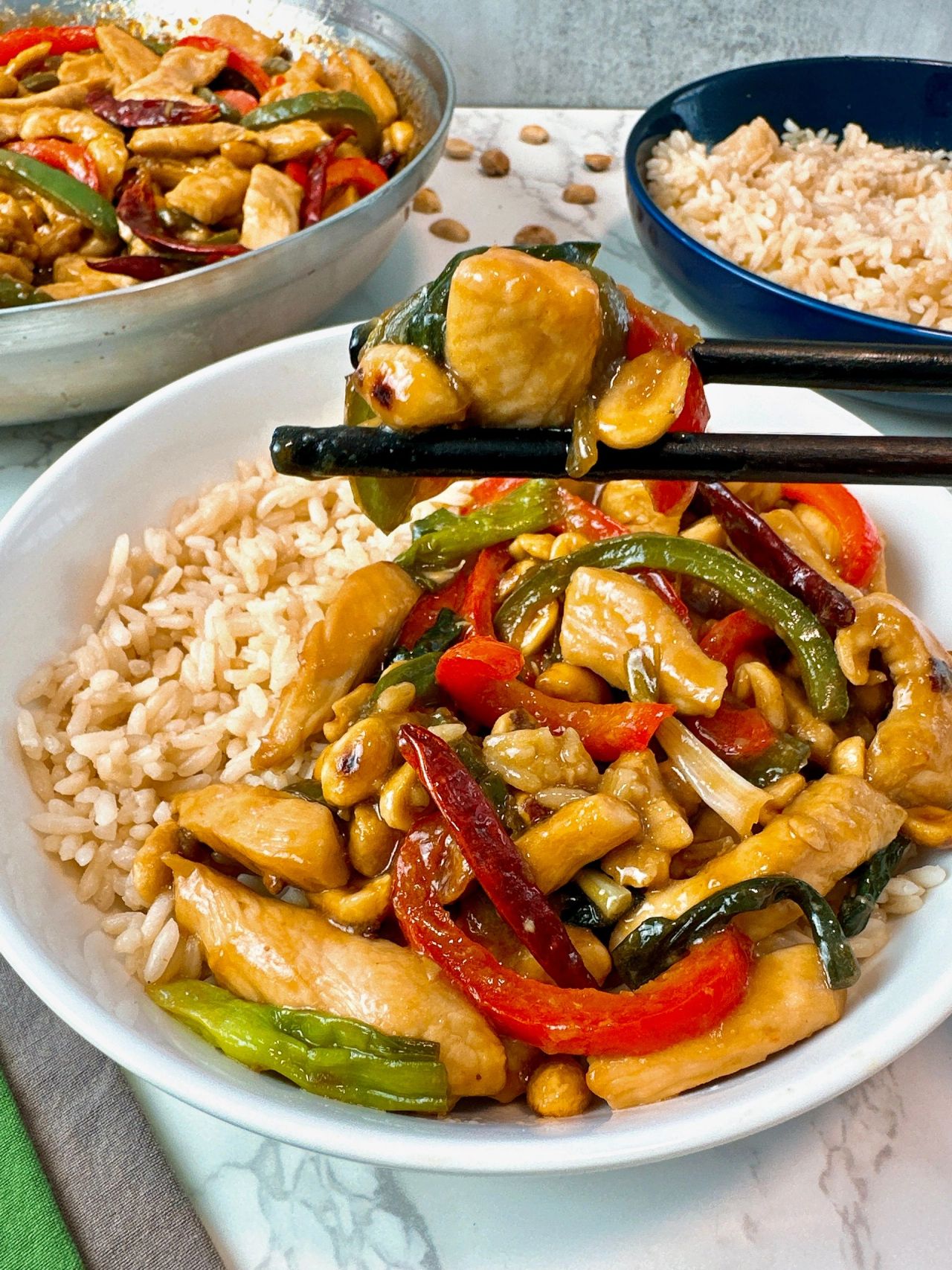
Use dried chilies, or (in a pinch), red chili flakes. Dried chilies are what make Kung Pao chicken unique because they introduce the iconic Sichuan flavor known as Mala/麻辣, or numbing and hot. Dried chilies are smoky, fiery, and critical to the success of this dish.
That said, you don’t have to choose the spiciest chilies on the market, choose a variety that’s readily available and wholly enjoyable. I used Chile de Arbol – easy-to-find dried chilies that are hotter than serranos, yet milder than habaneros. It’s a nice middle ground. And, you can add as many as you want, which means you control the heat. This recipe calls for 8 to 10 chilies, but you can add just 2 if that’s your preference. Note, the chilies are meant to flavor the dish, they’re not meant to be consumed.
Pro tip: Choose fresh-looking dried chilies, meaning those that are vibrant and shiny; they will soften slightly and lend great flavor when introduced to the sauce.
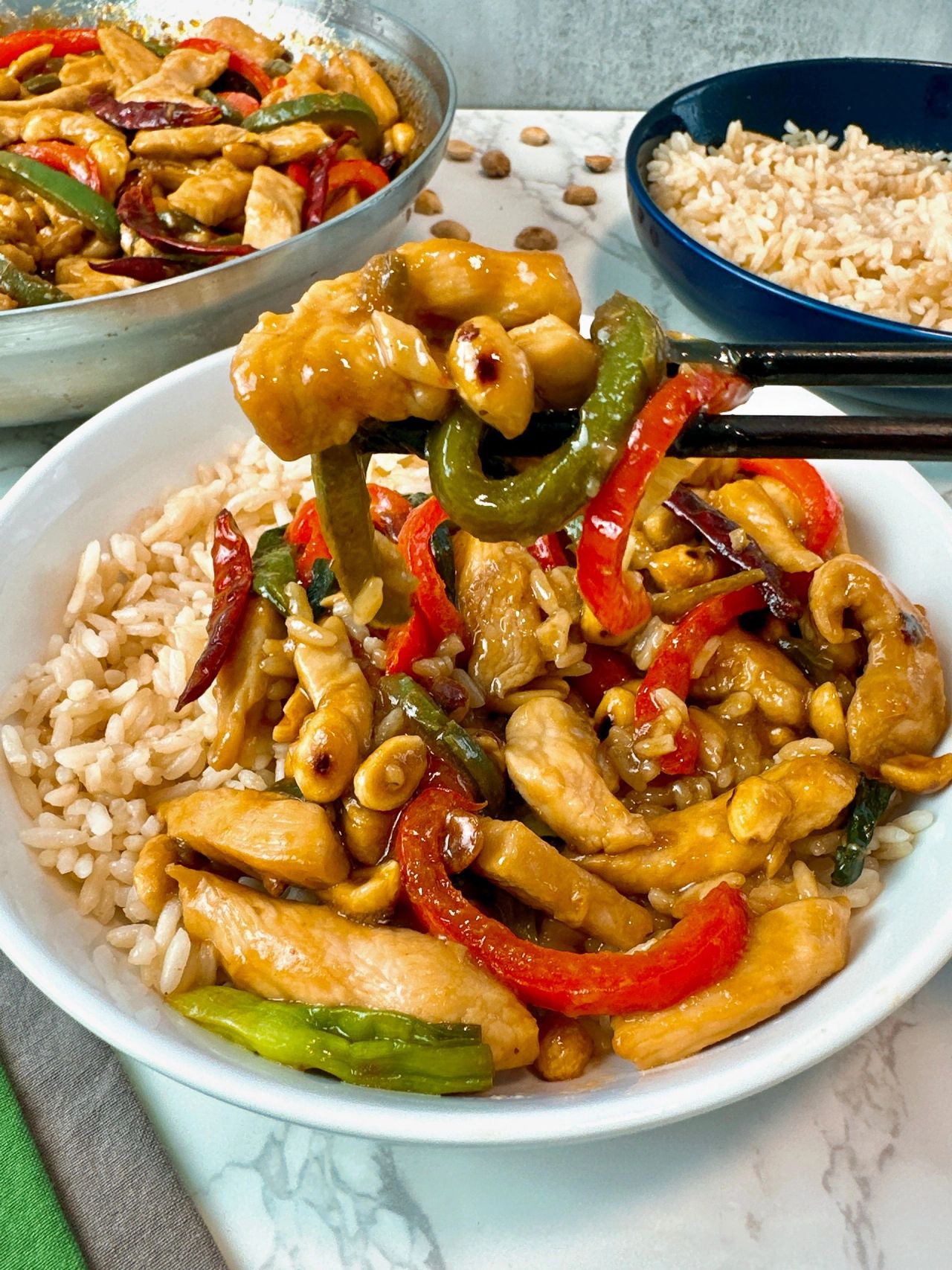
Peanuts are classic, but you can use cashews. Authentic Kung Pao chicken calls for peanuts, and they’re either toasted or deep-fried. Nuts balance the dish by adding taste and texture, while complementing the sweet, spicy, and tangy elements of the other ingredients. If desired, you can substitute cashews. Pro tip: Toast the nuts before adding them to the dish and add them to the pan at the end of cooking, as instructed below – this guarantees a more flavorful, nutty crunch.
Kung Pao Chicken
Ingredients
- 1/3 cup roasted, unsalted peanuts, or cashews
- 1/4 cup plus 2 tablespoons soy sauce, divided
- 2 tablespoons cornstarch, divided
- 1 1/2 pounds boneless, skinless chicken breasts, tenders, or thighs, cut into bite-size pieces or thin strips
- 1 tablespoon rice vinegar
- 1 tablespoon Shaoxing rice wine, or mirin (Japanese rice wine)
- 1 tablespoon granulated sugar
- 2 teaspoons toasted sesame oil
- 1/4 teaspoon ground ginger
- 2 tablespoons vegetable oil
- 1 red bell pepper, seeded and diced or cut into thin strips
- 1 green bell pepper, seeded and diced or cut into thin strips
- 8-10 dried red chilies, or 1 teaspoon red chili flakes, or more/less to taste
- 5-6 green onions/scallions, white and green parts, cut into 2-inch pieces
- 3 cloves garlic, minced
- Salt to taste
- Cooked rice for serving
Instructions
- In a medium bowl, whisk together 2 tablespoons of the soy sauce and 1 tablespoon of the cornstarch. Add the chicken and toss to coat. Let the chicken marinate for 15 minutes.
- Meanwhile, in a small bowl, whisk together the remaining soy sauce, remaining tablespoon of cornstarch, rice vinegar, rice wine, sugar, sesame oil, and ginger. Set aside.
- Toast the peanuts in a large, dry skillet over medium heat shaking the pan frequently. Stay close to prevent burning. You want the nuts lightly toasted and aromatic. Set aside to cool.
- Heat 1 tablespoon of the vegetable oil in a large skillet over medium-high heat. Add the chicken to the hot oil and cook until golden brown on all sides, stirring frequently. If necessary, work in batches to prevent crowding the pan. Transfer the chicken to a plate.
- Heat the remaining tablespoon of vegetable oil in the same skillet over medium heat. Add the bell peppers and cook for 3 to 5 minutes, until the peppers soften. Add the dried chile peppers (or red chili flakes), green onions, and garlic and cook for 2 to 3 minutes, until fragrant.
- Return the chicken to the pan with any accumulated juices from the plate. Whisk the sauce to make sure the cornstarch is dissolved (it sometimes sticks to the bottom of the bowl when sitting) and add the sauce to the pan. Bring to a simmer, reduce the heat to medium-low and simmer for 2 to 3 minutes, until the sauce thickens, and the chicken is cooked through.
- Fold in the peanuts and season to taste with salt.
- Serve over rice.