


Pesto Pasta
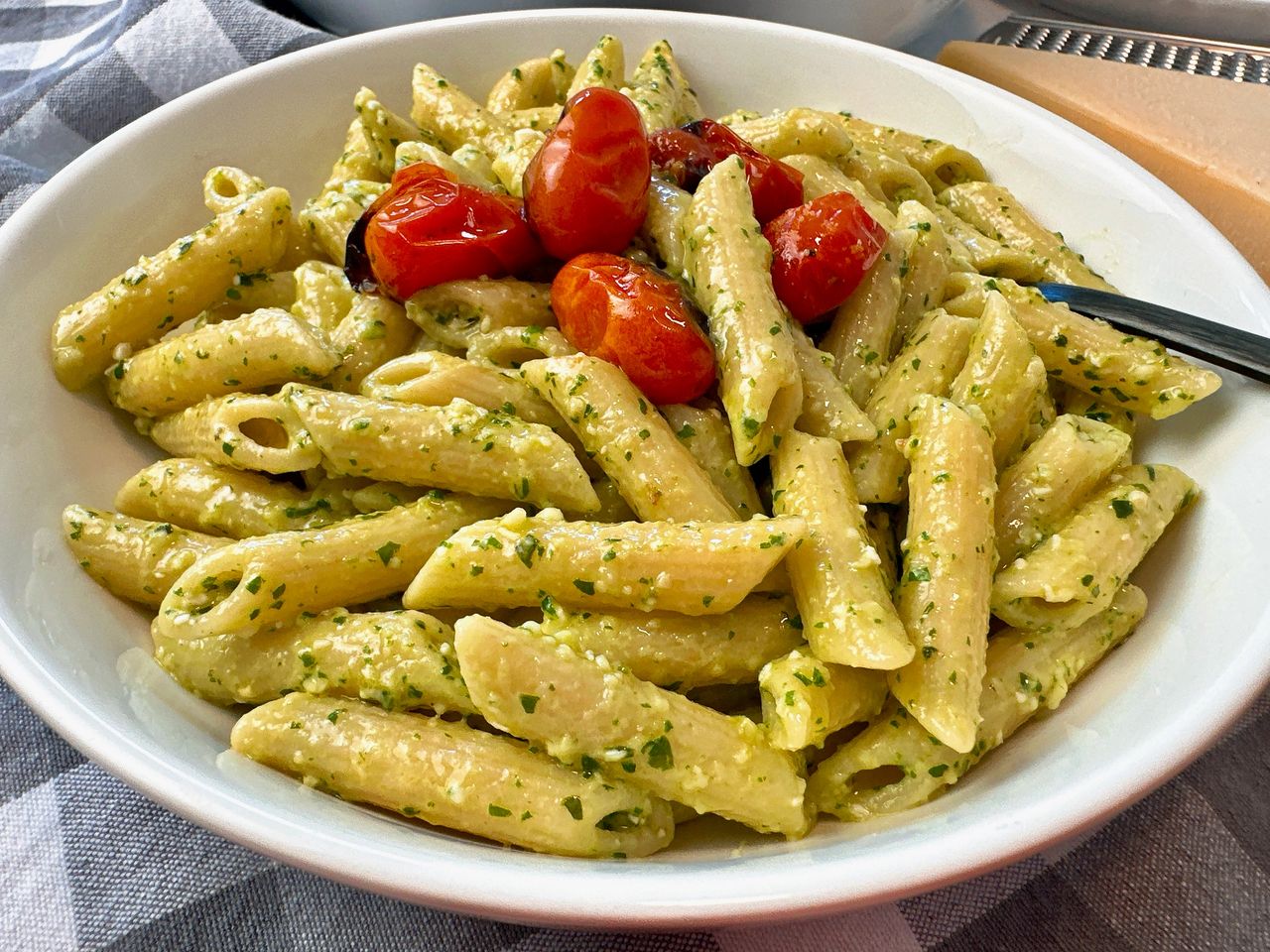
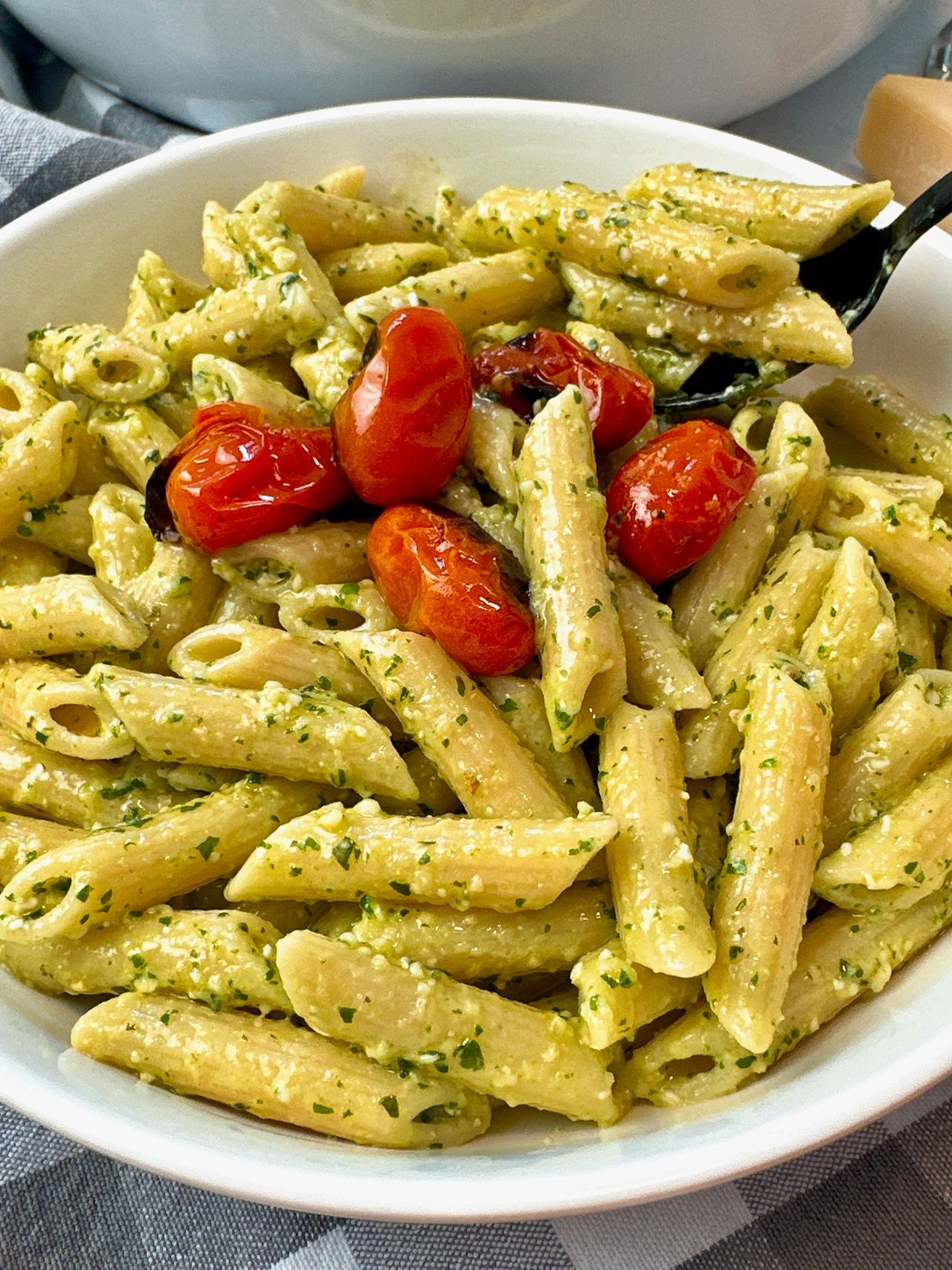
This vibrant dish features tender pasta in a satiny basil pesto sauce. Topped with bright, blistered tomatoes, each bite delivers the perfect balance of savory and sweet. And it couldn’t be easier to prepare.
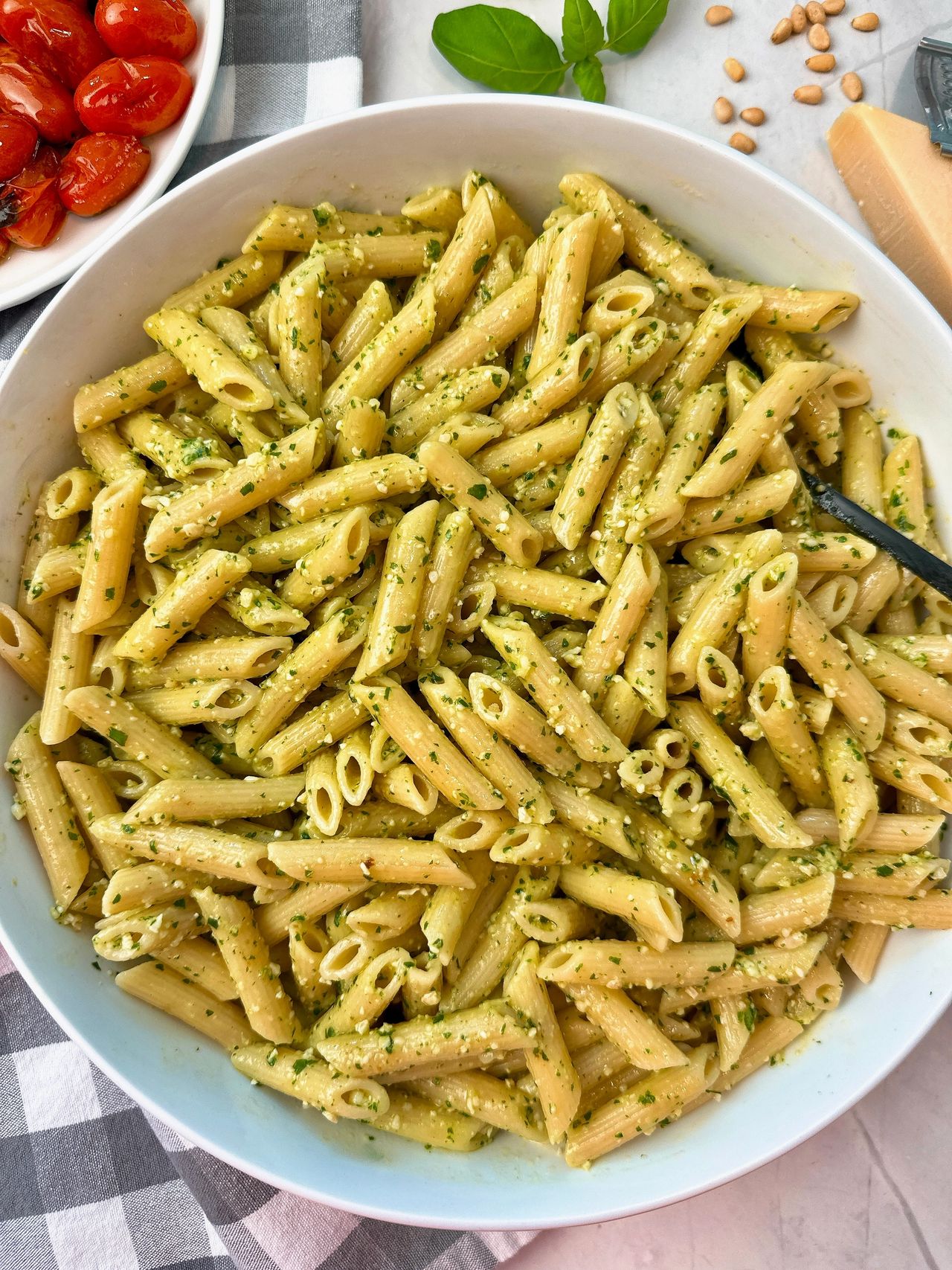
This recipe was written for the Arizona Republic.
Homemade basil pesto is quick and easy to make. While you can use store-bought pesto here, I strongly encourage you to make pesto from scratch. You need just 5 ingredients, and your food processor makes quick work of the task. Store-bought pesto simply can’t compete with this fresh homemade version. If you must use store-bought pesto, opt for a refrigerated variety; my store’s in-house pesto is pretty fabulous and it’s sold near the specialty cheeses.
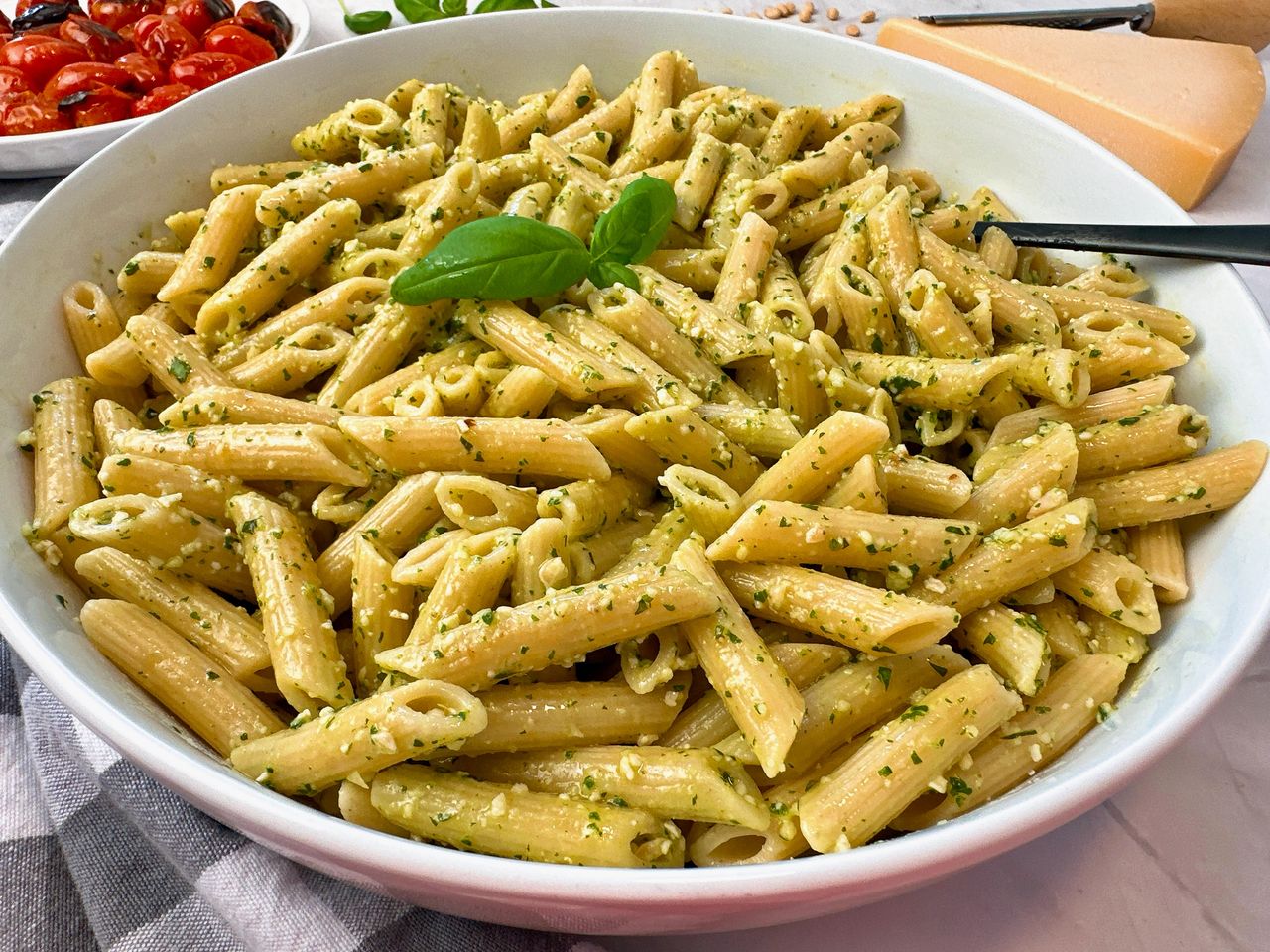
Enjoy this creamy dish without copious amounts of oil. Since pesto is a thick paste of pureed basil, parmesan cheese, and pine nuts, it’s often too thick to coat pasta. Sadly, many recipes try to remedy this by adding oil or cream, leading to an overly greasy dish. Never fear, in this recipe, we use pasta cooking water to thin the pesto while creating a velvety sauce. The pasta cooking water not only thins the pesto, but the starch in the water also emulsifies the pesto so it’s guaranteed to coat every noodle.
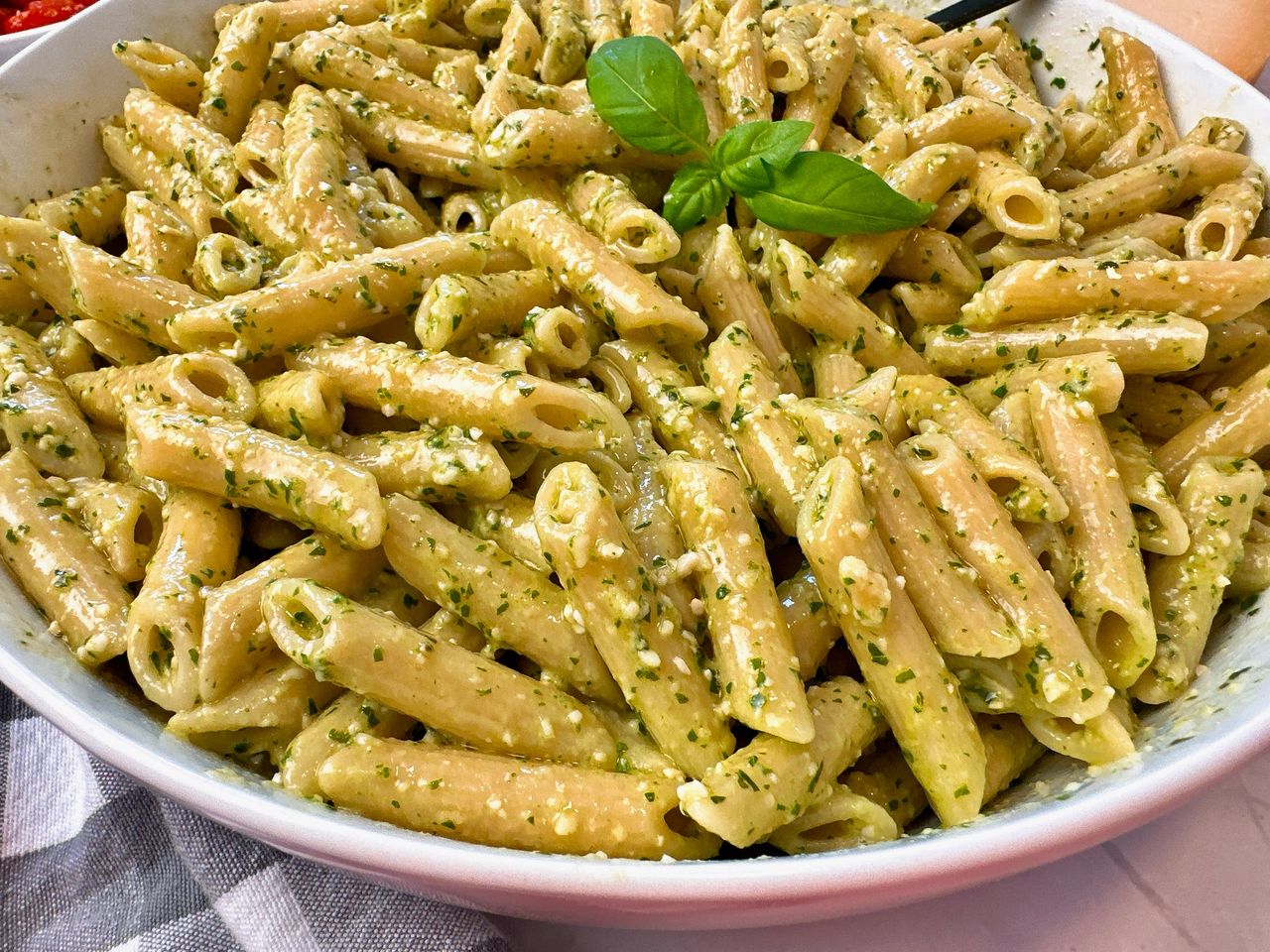
Here’s what you need for this easy pesto pasta
- Basil. Fresh basil makes up the bulk of the pesto, and you need about 2 cups of the leaves. When shopping, look for bright green basil leaves that are free from wilting and browning.
- Parmesan cheese. Freshly grated parmesan cheese is ideal for the best flavor. You can purchase freshly grated parmesan cheese from your grocery store’s cheese section, or you can grate it yourself from a block or wedge of cheese.
- Pine nuts. Pine nuts are the classic choice for pesto, and they add a wonderful nutty note to the puree. If desired, you may substitute cashews.
- Olive oil. Use a good-quality extra-virgin olive oil for the best flavor.
- Garlic. One clove of garlic is all you need to add zing to the pesto.
- Pasta. Any pasta shape works, and you may use gluten-free pasta if desired.
- Salt and freshly ground black pepper. Salt is used to season the pasta cooking water, and both salt and black pepper are used to make flavors pop before serving.
- Grape tomatoes. Small, blistered tomatoes add a wonderful, juicy element to this pasta dish. You may also use cherry tomatoes.
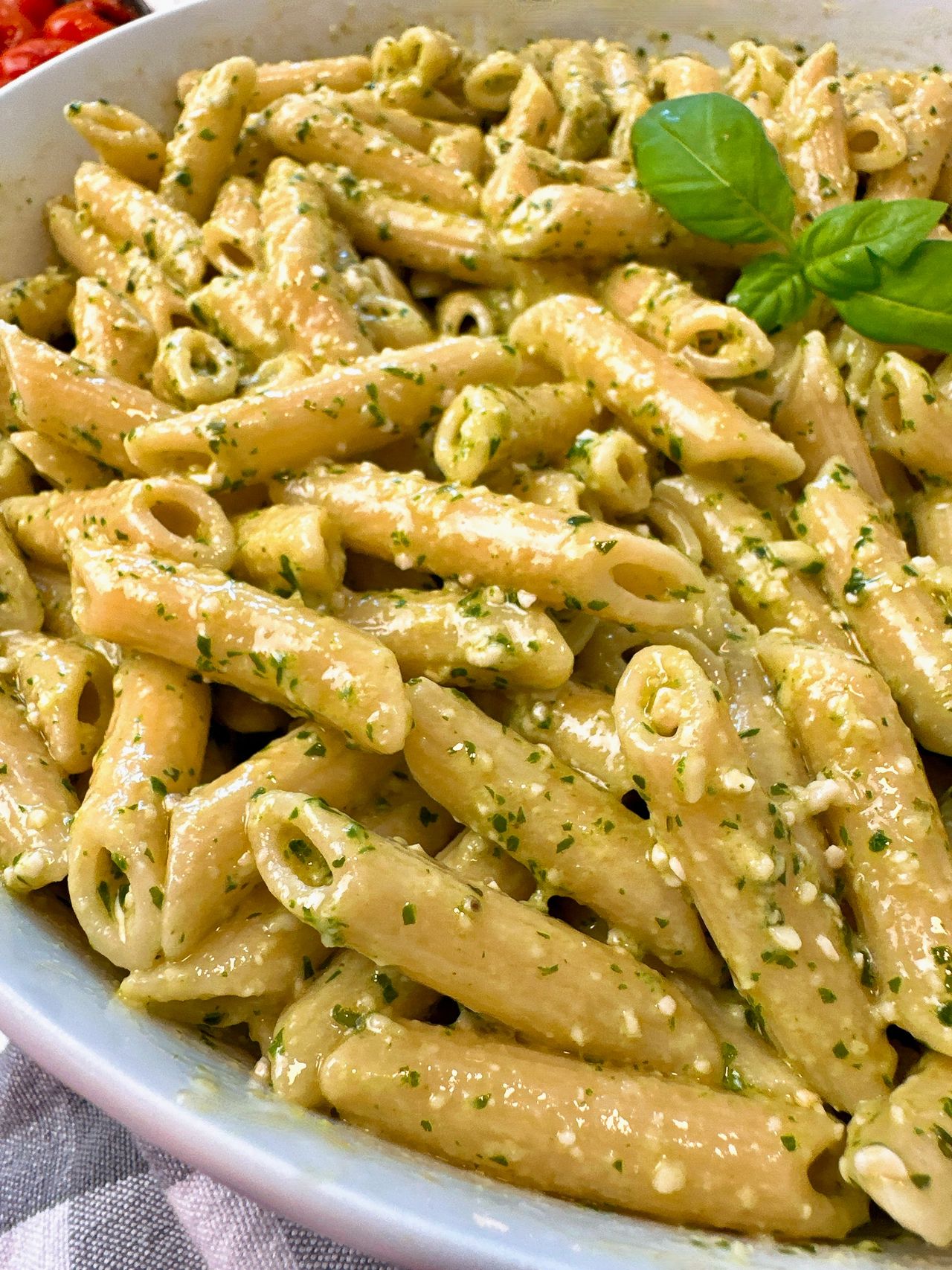
What kind of pasta should you use for this pesto pasta? This recipe works with a wide variety of pasta shapes, so use your favorite variety (including gluten-free). Great choices include penne, ziti, and the shorter (mezze) versions of both. You can also use long strands of spaghetti and linguine, just note that you may need more pasta cooking water to coat the noodles.
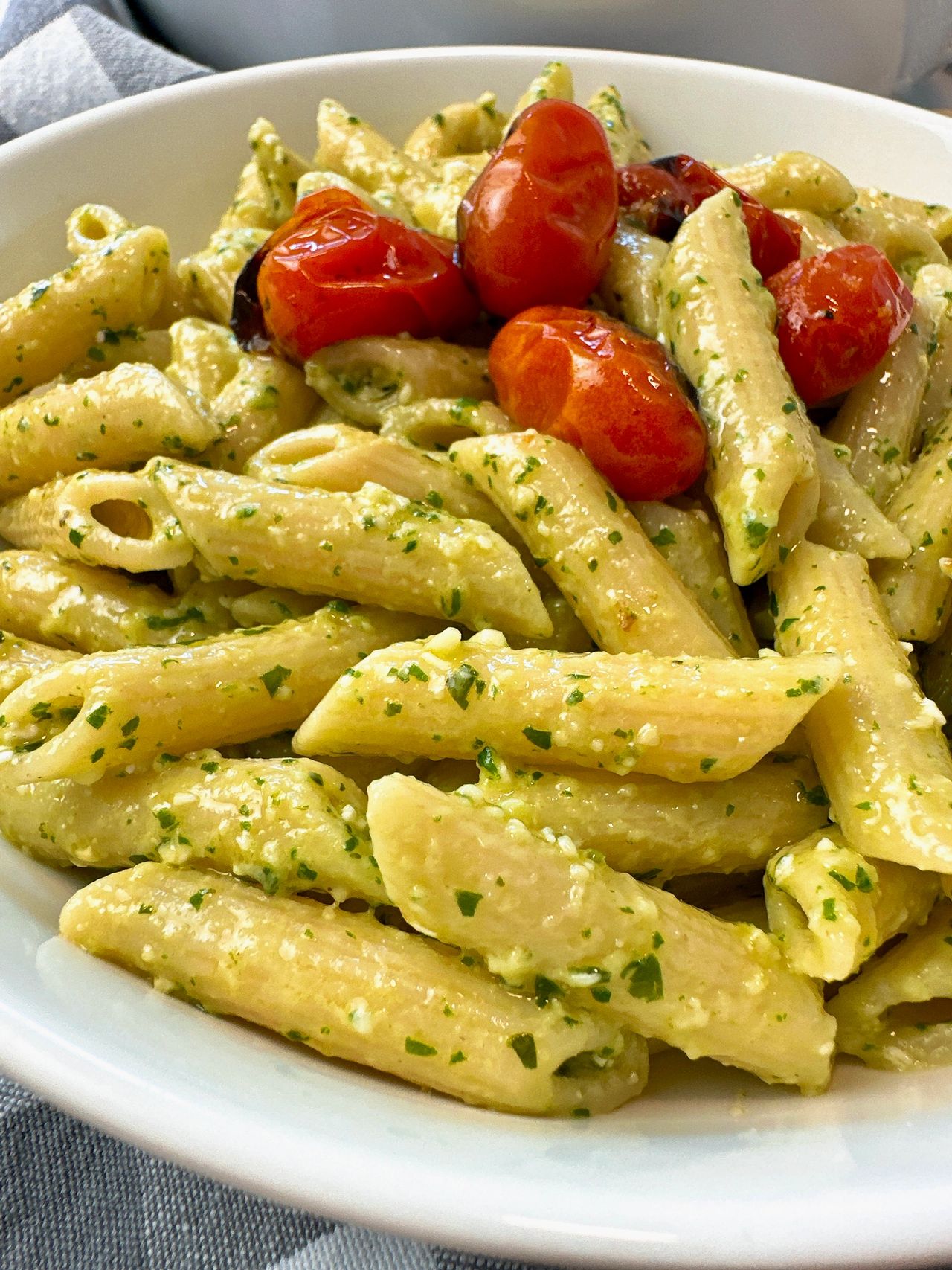
The blistered tomatoes are optional, but I highly recommend you add them. These two-ingredient blistered tomatoes add a pop of color and juicy sweetness to the green pasta. When cooked in hot oil, grape tomatoes become delightfully caramelized and sublimely charred. You may also use cherry tomatoes.
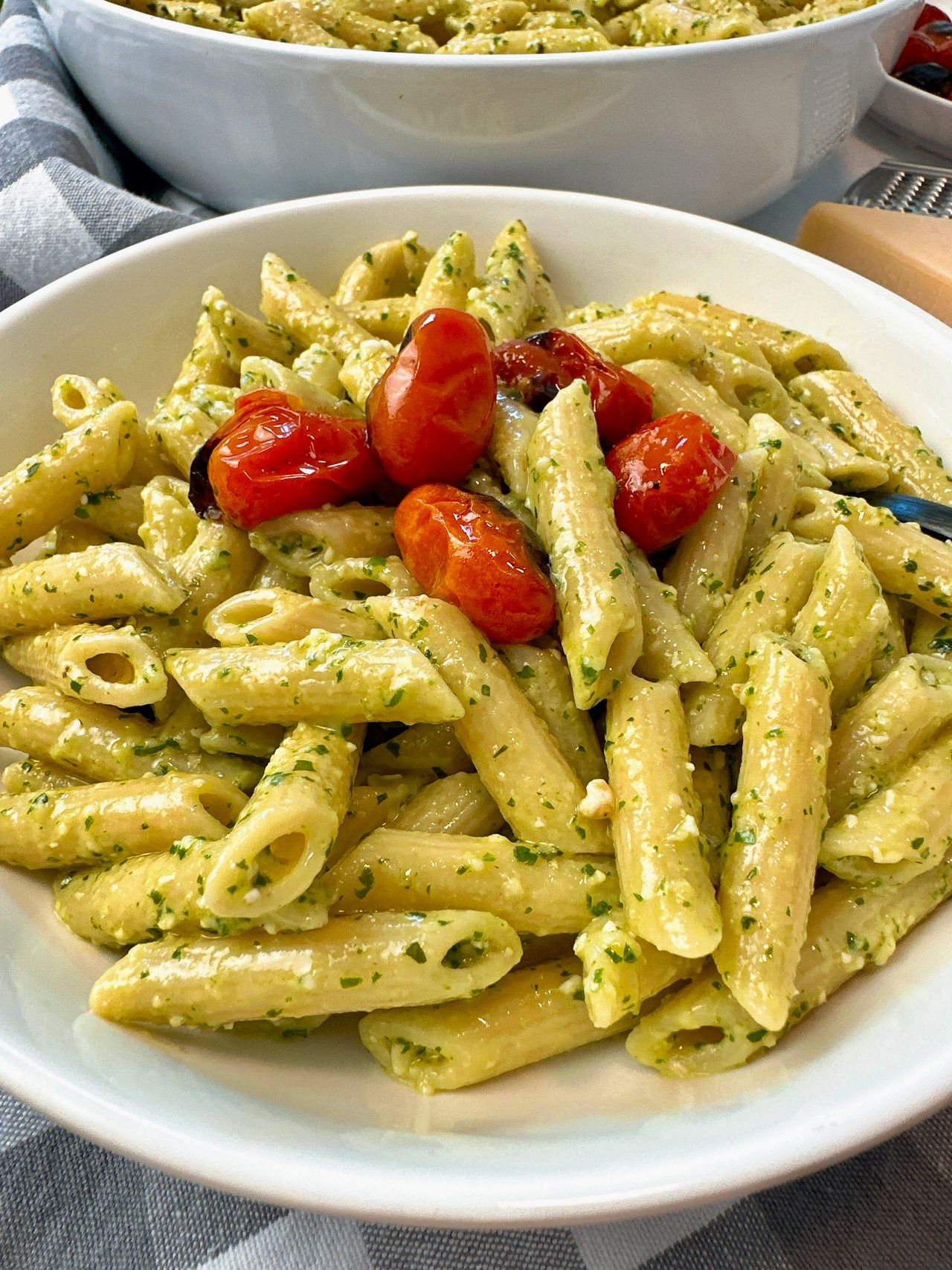
A few tips for flawless pesto pasta
- Salt the pasta cooking water. The pesto in this recipe isn’t seasoned with salt since there’s plenty of salt in the parmesan cheese. For that reason, we salt the pasta cooking water, so the pasta has flavor throughout.
- Don’t forget to reserve some pasta cooking water. Before you drain the pasta, remove and reserve about 1 cup of the pasta cooking water; we need the starchy water to thin out the pesto to create a sauce. You might not need the full cup, but it’s better to have more than you need. Pro tip: Place a ladle in your colander so you remember to save some cooking water.
- Toss everything together in a bowl, not the pot. Basil turns dark when heated, so transfer your cooked pasta to a bowl before tossing with the pesto. If you add the pesto to the pot with the pasta, it will lose its vibrant color.
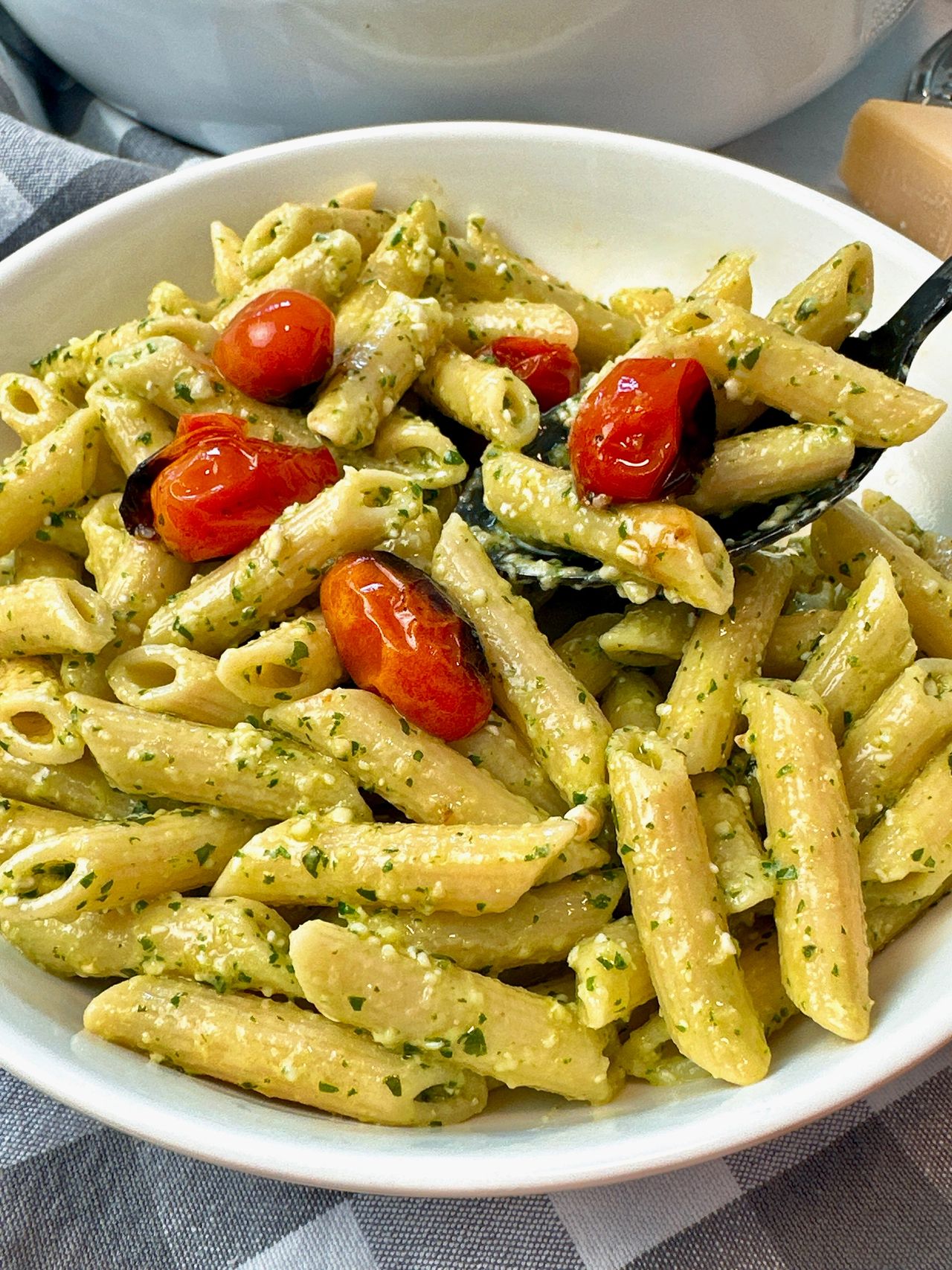
What should you serve with your pesto pasta? To round out this meal, I suggest serving your pesto pasta with a crisp salad and warm crusty bread.
How should you store leftover pesto pasta? Transfer leftovers to an airtight container and refrigerate for up to 3 days. Note that the pesto will lose its bright green color when reheated (but it will still taste delicious).
Pesto Pasta
Ingredients
For the Pesto (or use 1 cup store-bought pesto)
- 2 cups fresh basil leaves
- 1/2 cup grated parmesan cheese, preferably freshly grated
- 2 tablespoons pine nuts, or cashews
- 1/2 cup extra-virgin olive oil
- 1 clove garlic
For the Pasta
- 1 pound pasta of choice, such as penne, rigatoni or spaghetti
For the Blistered Tomatoes
- 2 cups grape tomatoes, or cherry tomatoes
- 2 tablespoons olive oil
- Salt and freshly ground black pepper
Instructions
- To prepare the pesto, combine the basil leaves, parmesan cheese, pine nuts, and garlic in a food processor. Add the olive oil and puree until smooth. Set aside.
- To prepare the blistered tomatoes, heat the oil in a large skillet over medium-high heat. When the oil is hot, add the tomatoes. Cook, undisturbed, until the tomatoes start to blister on the bottom. Stir and cook for a few more minutes, until the tomatoes are blistered all over. Season the tomatoes with salt and black pepper. Set aside.
- To prepare the pasta, add 2 teaspoons of salt to a large pot of water and bring to a boil over medium-high heat. Add the pasta and cook according to the package directions. Drain, reserving 1 cup of the pasta cooking water.
- Transfer the pasta to a large bowl. Add the pesto and 1/4 cup of the pasta cooking water. Toss to coat, adding more pasta cooking water as necessary to create a silky sauce.
- Season to taste with salt and black pepper.
- Top the pasta with the blistered tomatoes (if using) and serve with extra parmesan cheese on the side.