


Spanish Paella
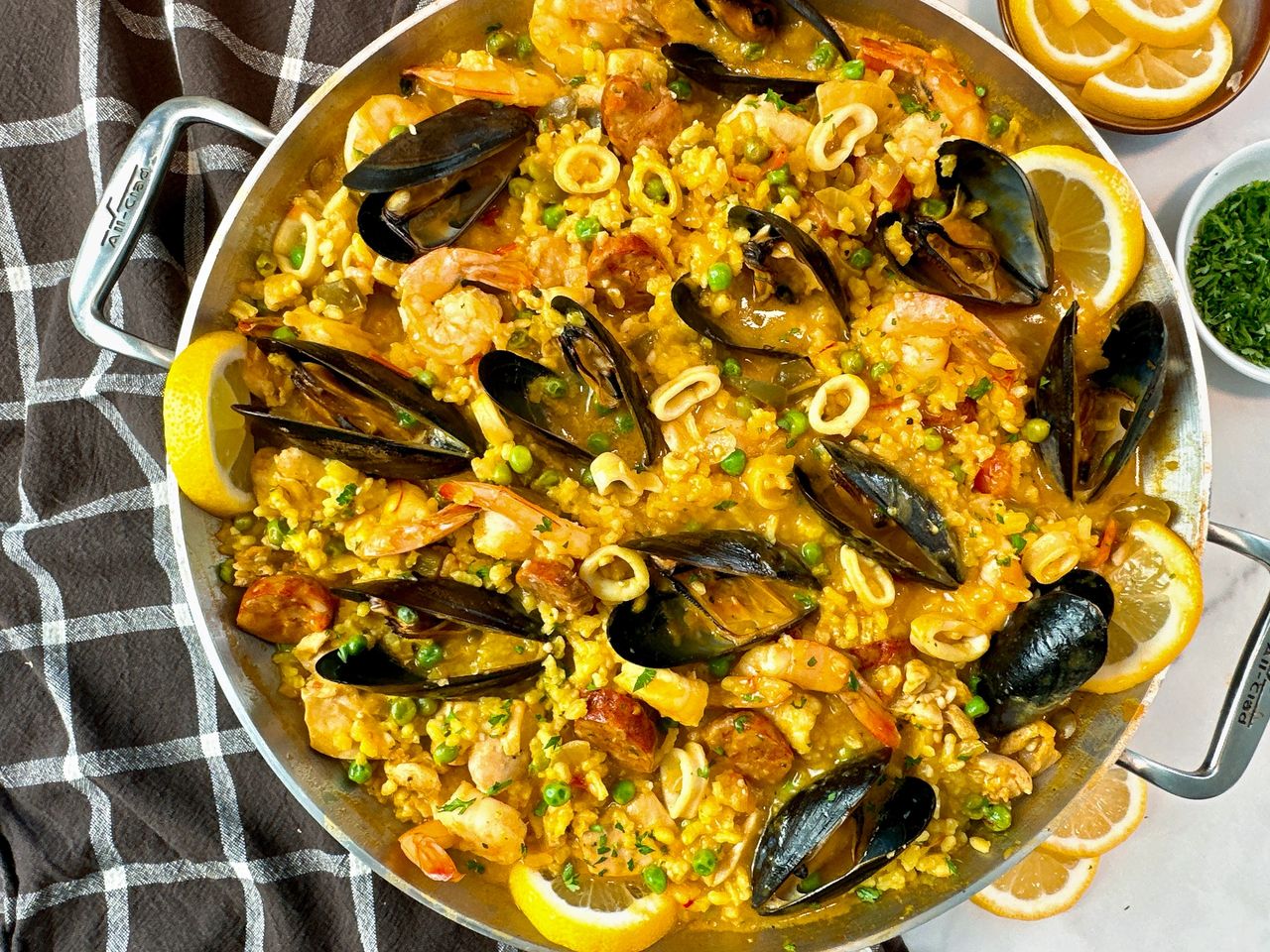
Each luxurious bite of this paella delivers moist chicken, smoky chorizo, a trio of seafood, aromatic vegetables, and wine-infused, saffron-scented rice. And while this bounty of deliciousness might suggest there’s a complicated recipe to follow, take note: Classic Spanish paella is the ultimate one-pot meal that’s made with easy-to-find ingredients, and ready in about 30 minutes.
This recipe was written for the Arizona Republic.
What is paella? Paella (pai-ay-uh) is a traditional, riced-based Spanish dish that features saffron, vegetables, and chicken and/or seafood. The entire meal is cooked and served in one large pan, creating a colorful, flavorful, show-stopping feast. Paella originates from Valencia, but is recognized as the national food of Spain. Note: Valencians will tell you that true paella does not contain seafood.
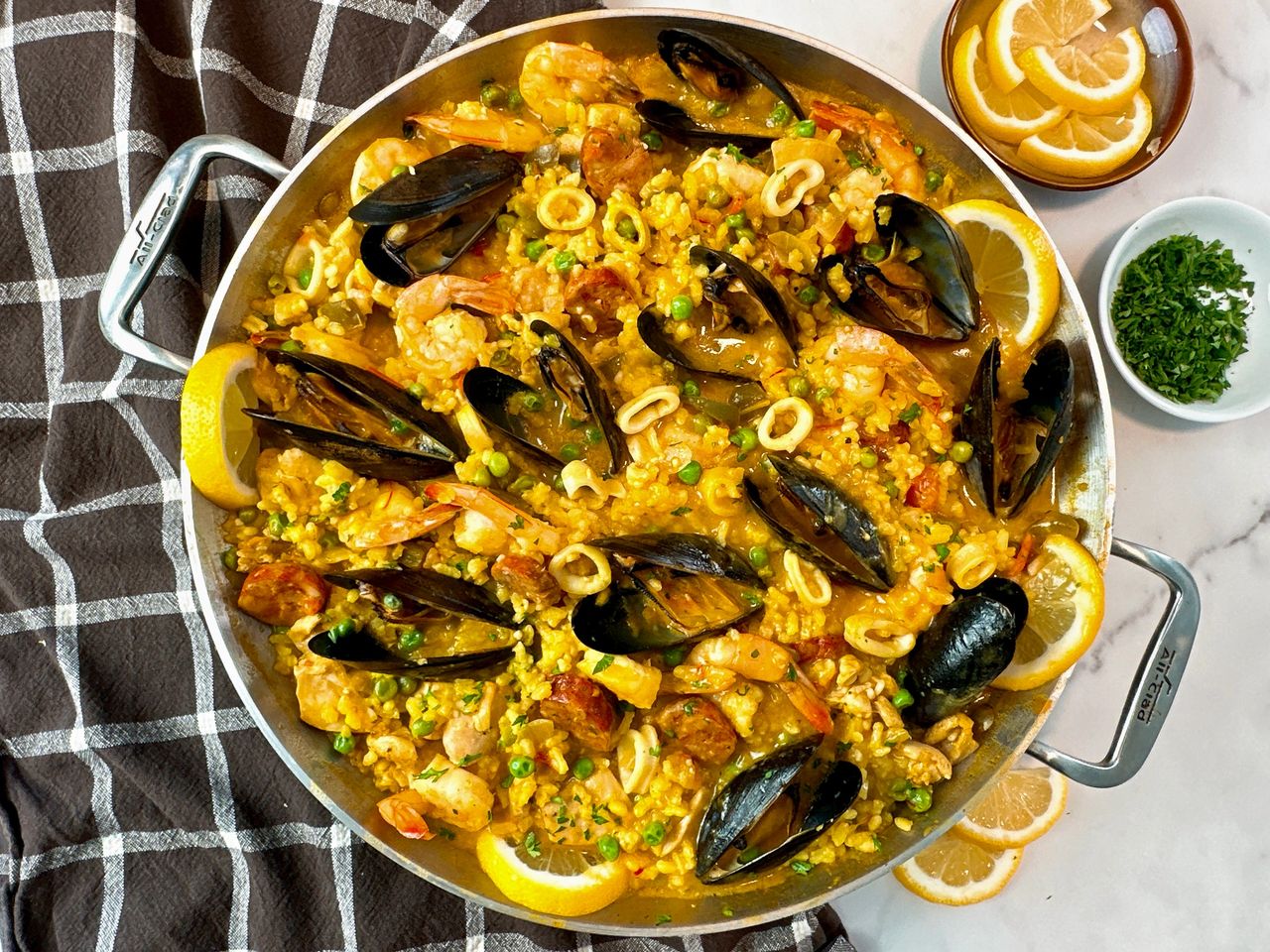
What are the variations of paella? There are many versions of paella, but the most common types are chicken paella, seafood paella, and mixed paella, which is a medley seafood, meat, and vegetables. The recipe below features mixed paella, and the dish boasts an abundance of flavorful ingredients that marry well. That said, the beauty of paella lies in its versatility, and there are many ways to modify this dish. Read on and discover one of the finest meals you will ever prepare (with ease).
Ingredients
The main ingredients in every paella dish are rice, olive oil, saffron, and vegetables. From there, ingredients vary depending on the type of paella or region where it’s made. Some have chicken, some have seafood, and others are entirely vegetarian. You can also find paella with rabbit, pork, sausage, artichokes, lima beans, and green beans. Below you will find the ingredients you need for THIS paella.
- Olive Oil. If possible, use Spanish olive oil to stick with the genre. If you don’t have Spanish olive oil, use any good quality olive oil.
- Vegetables. Onion, bell pepper, garlic, Roma tomatoes, and peas. Some paella recipes eliminate the onion due to its moisture content (for fear it will add too much moisture to the dish and make the rice mushy). This is not an issue when using Spanish rice.
- Spices. Saffron, bay leaf, and paprika. Saffron threads are the most important ingredient in paella, so choose a high-quality product. The good news is, high-quality doesn’t always mean high price; you can find reasonably priced saffron at international markets and online. I purchased my saffron online; it was high-quality, incredibly affordable, and arrived the next day. While not ideal, you can substitute 1 teaspoon saffron powder for the saffron threads.
- Spanish rice. Also called bomba rice, Calasparra rice, or Arroz Redondo, this short grain rice absorbs more liquid than regular rice (3 times as much), yet never gets mushy. If your local grocery store doesn’t carry Spanish rice, check an international market, or buy it online. I purchased my Spanish rice online and it was delivered the next day. If necessary, substitute short-grain Arborio rice, or medium grain rice, like Calrose. When using medium-grain rice, reduce the chicken broth to 3 1/2 cups. Pro tip: Don’t use long-grain rice for this paella.
- Chicken. I recommend chicken thighs in this dish because the moist meat won’t dry out during cooking. If desired, you may substitute turkey or pork. When using pork, choose loin or tenderloin and brown it in olive oil before adding to the dish.
- Chorizo. You can use Spanish or Mexican chorizo in this paella but note that they are different. Spanish chorizo can be mild or spicy, and is a blend of meat, paprika, and other spices. Spanish chorizo is cured and smoked (technically fully cooked), pleasantly smoky, and firm in texture. Mexican chorizo is flavored with peppers and is therefore slightly spicier than Spanish chorizo. In addition, some Mexican chorizo is packaged raw, and this recipe calls for cooked or cured sausage. If you can only find raw, fresh Mexican chorizo, brown it first before adding to the dish.
- Seafood. Shrimp, mussels, calamari. Feel free to mix up the seafood here (use clams, scallops, and/or chunks of firm-fleshed fish). When shopping, make sure the seafood is fresh; fresh seafood will have a sweet smell, and an aroma akin to the sea. Leave fishy-smelling seafood behind. Pro tip: Save money and buy frozen shrimp and calamari. Thaw frozen seafood overnight in the refrigerator. Purchase the mussels the same day you plan to make your paella. If you want to leave the seafood out entirely, replace it with more chicken and vegetables if desired.
- White wine. This is optional, but I highly recommend adding wine for its delicate floral flavor. The best option is sauvignon blanc or chardonnay. If you would like to eliminate the wine, use chicken broth instead.
- Chicken Broth. Choose good-quality broth since it’s the main liquid used for cooking and flavoring the rice. Low-sodium broth is fine.
- Garnishes. Lemon and parsley. Both lemons and parsley add a burst of fresh flavor just before serving.
Tips
- You don’t need a paella pan. You can use any large skillet for this paella recipe. The larger the skillet the better because the goal is to spread the rice out so it cooks evenly in one layer (it’s not stirred during coking). Note: If you use a 12-inch skillet, you will fill it to the brim.
- Don’t stir the rice while cooking. While it may be tempting, don’t stir the rice as it cooks! Traditional paella boasts a crispy, toasted bottom rice layer known as the socarrat. The well-done socarrat (meaning “to burn” or “to scorch”) is one of the most prized characteristics of authentic paella. In addition, stirring can make the rice mushy.
- A note about the liquid. This paella recipe calls for 4 cups of chicken broth. That should be adequate for 2 cups of Spanish rice. If your rice is not tender after 20 minutes of cooking, drizzle over another 1/4 cup or so of broth (or water).
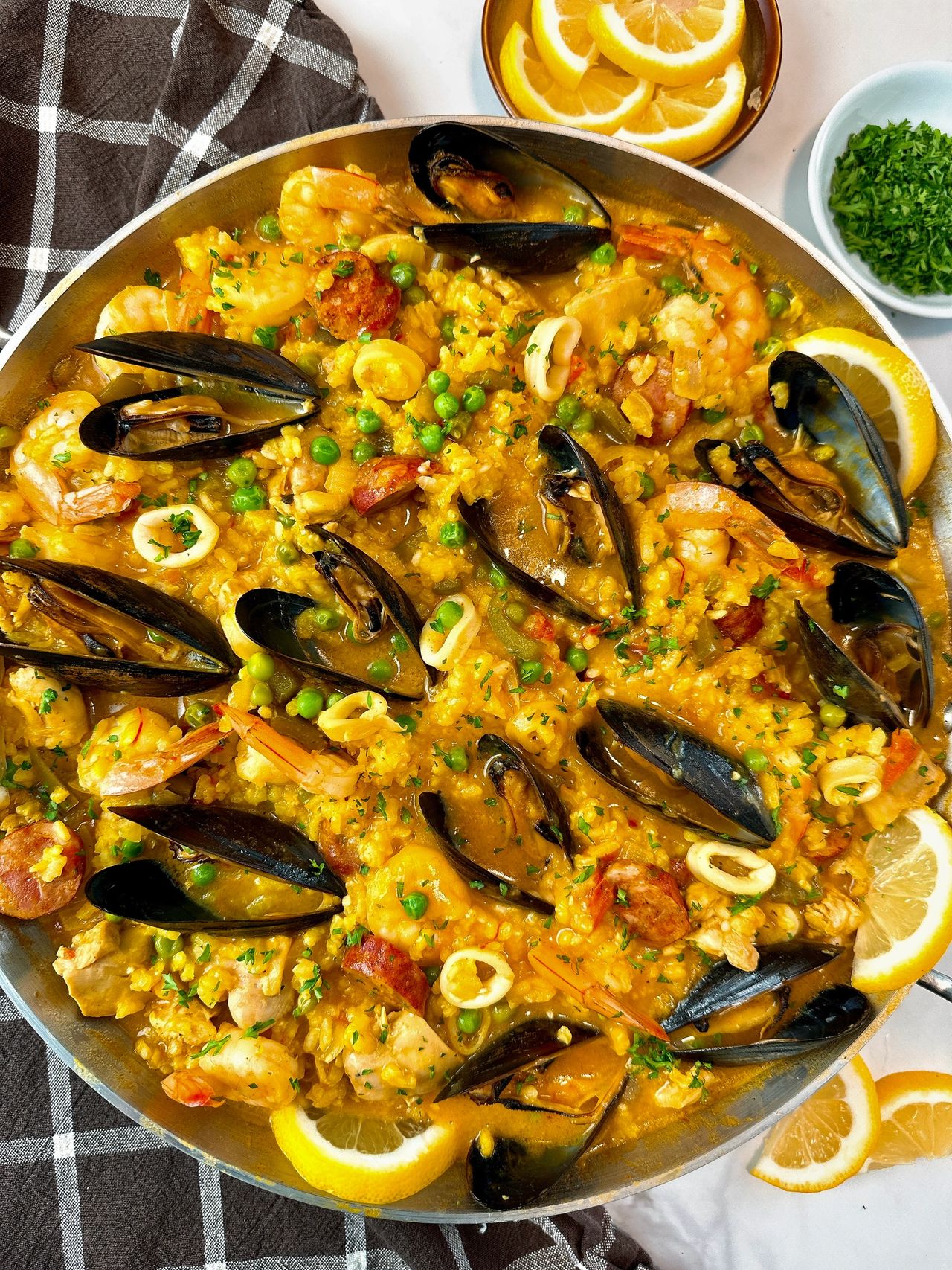
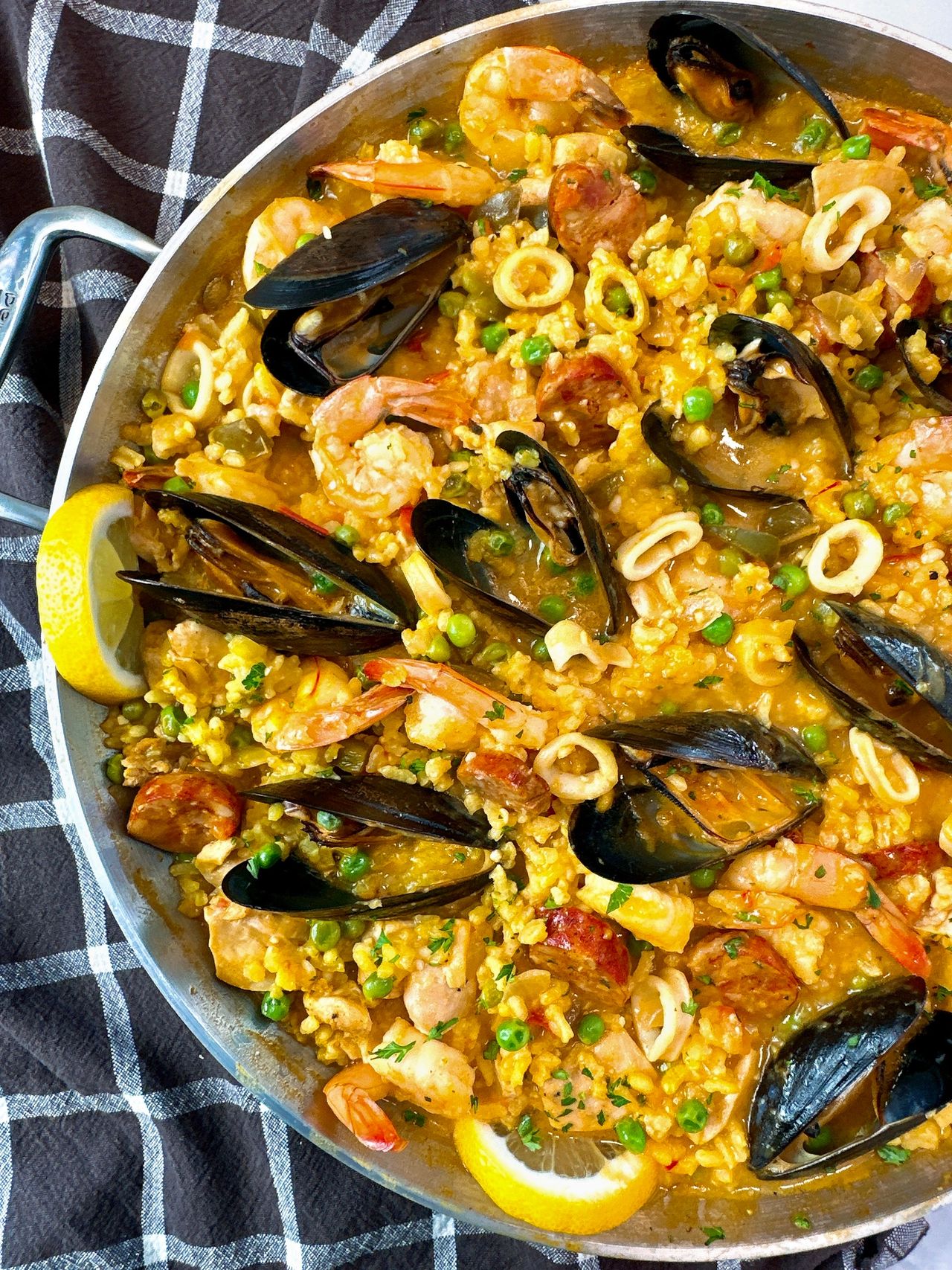
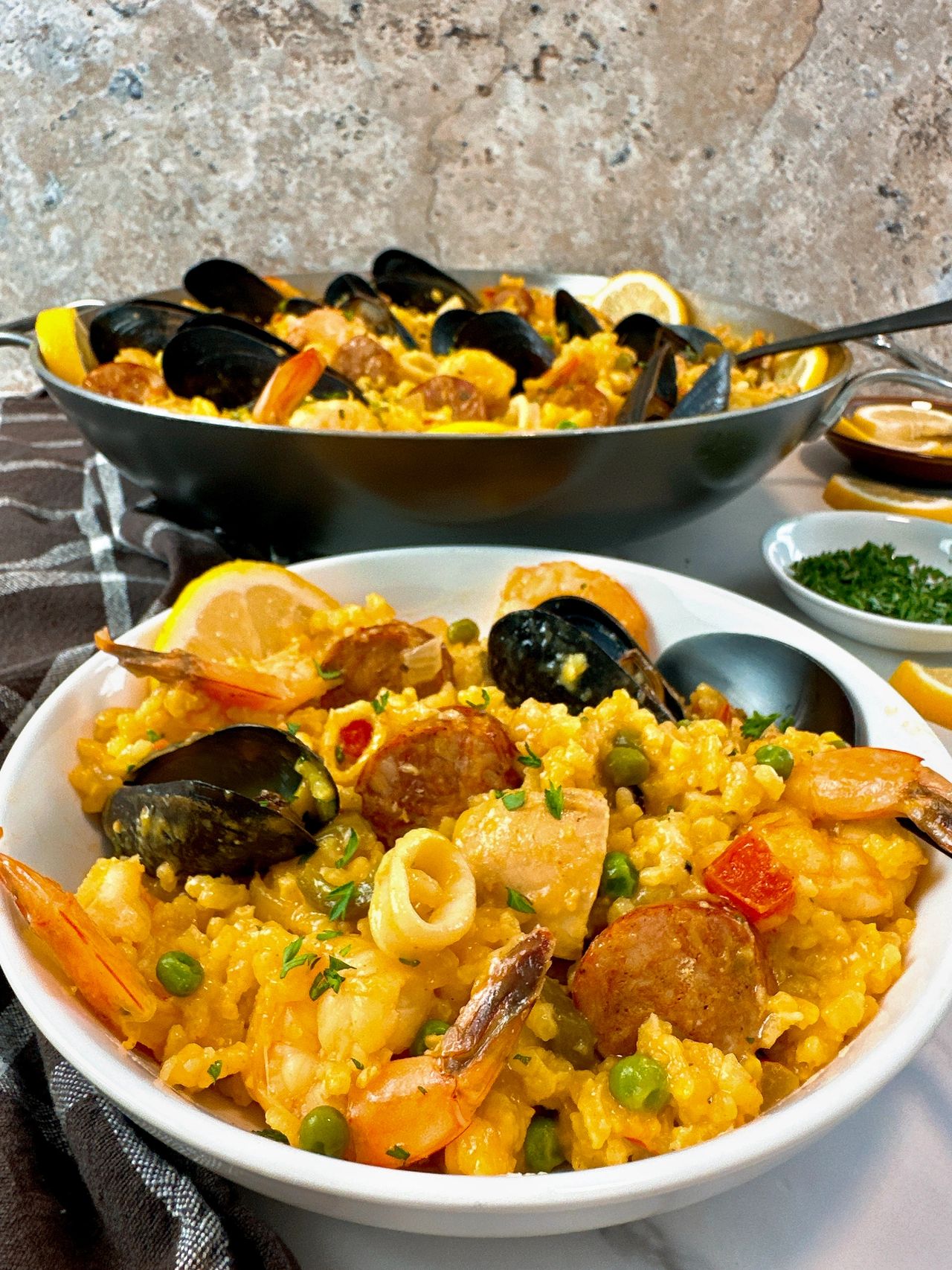
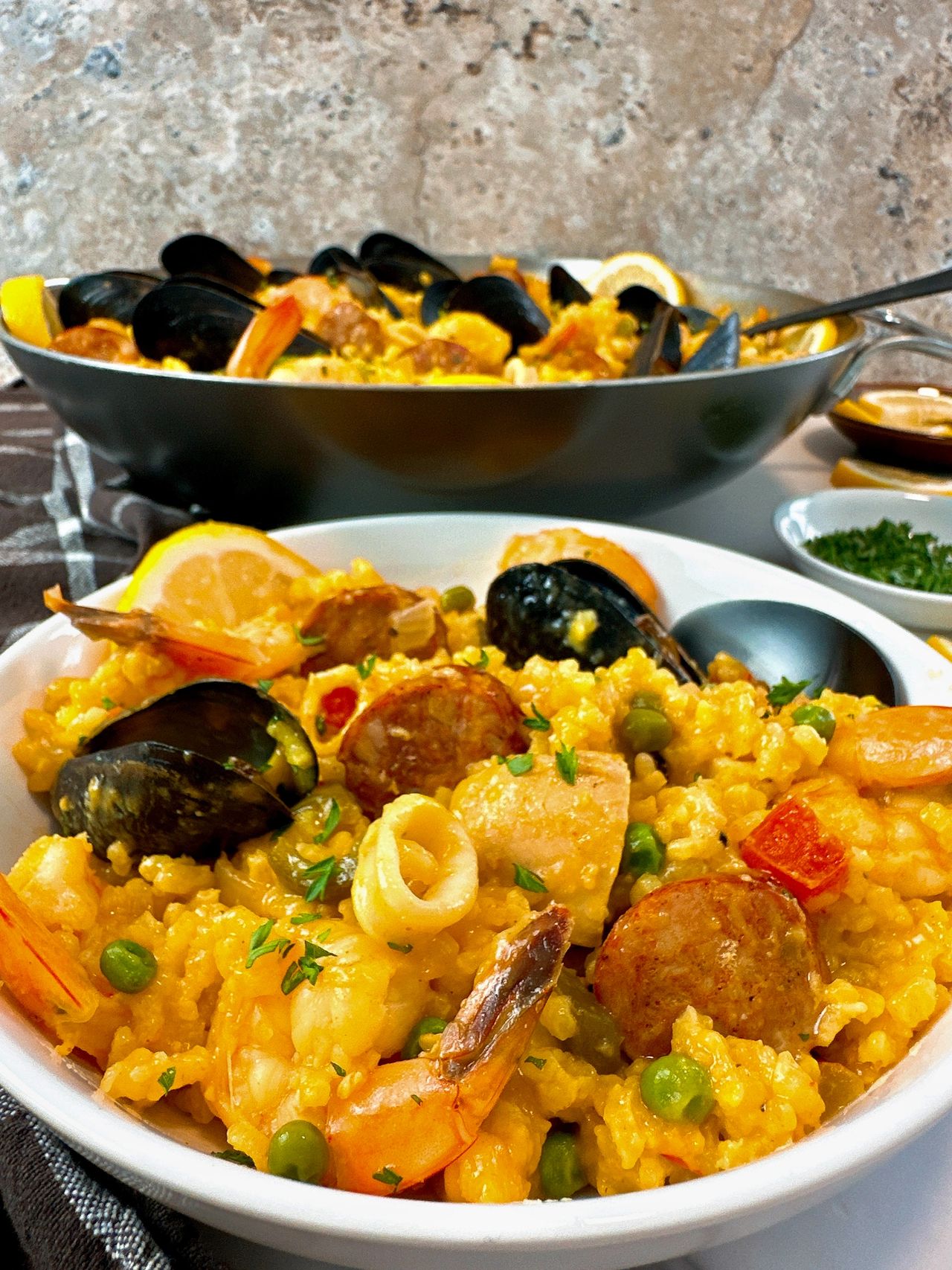
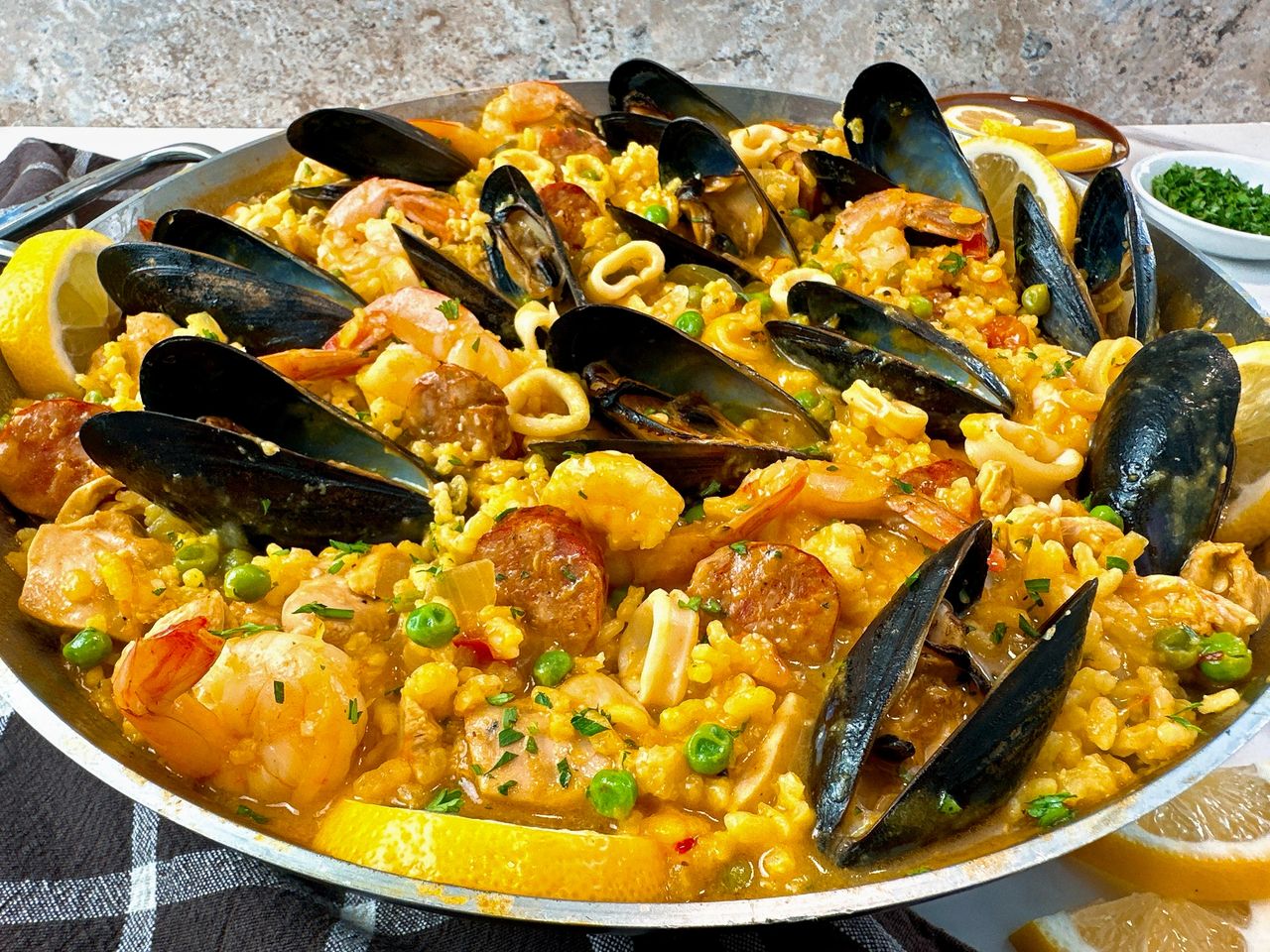
- My paella is extra moist and delicious. I find many paella recipes end up overly dry by the time they make it to the table. As you can see by the photos, this paella is delightfully moist. If you would like a “drier” paella, continue cooking until the liquid is completely gone.
Spanish Paella
Ingredients
- 2 tablespoons olive oil, divided
- 8 ounces cooked Spanish or Mexican chorizo, casings removed, sliced into rounds
- 1 yellow onion, diced
- 1 bell pepper, any color, seeded and diced
- 4 cloves garlic, minced
- 3 Roma/plum tomatoes, seeded and diced
- 1 teaspoon paprika, sweet or smoked
- 1 pinch saffron threads
- Salt and freshly ground black pepper
- 1 cup white wine
- 1 bay leaf
- 4 boneless, skinless chicken thighs, cut into bite-size pieces
- 2 cups Spanish rice, see note above
- 4 cups chicken broth
- 3/4 pound extra-large or jumbo shrimp, peeled and deveined, tail on, I used extra-large shrimp
- 12-14 fresh mussels, cleaned, beards removed
- 1/2 pound calamari, cut into rings
- 1/2 cup frozen peas, kept frozen until ready to use
- 2 tablespoons chopped fresh parsley
- Lemon slices for garnish
Instructions
- Heat 1 tablespoon of the oil in a large skillet over medium-high heat. Add the chorizo and cook until browned on all sides. Transfer the chorizo to a plate.
- Heat the remaining oil in the same skillet over medium-high heat. Add the onion and bell pepper and cook for 3 to 5 minutes, until soft. Add the garlic and cook for 30 seconds.
- Add the tomatoes, paprika, saffron, 1/2 teaspoon salt, and 1/4 teaspoon black pepper and stir to combine. Cook for 1 minute. Add the wine and bay leaf and bring to a simmer.
- Simmer for 2 minutes. Return the chorizo to the pan with any accumulated juices from the plate. Add the chicken and rice and stir to combine. Cook for 1 minute without stirring.
- Gradually add the broth, pouring it all over the ingredients. When all the broth has been added, jiggle the pan so the rice is in an even layer.
- Bring to a boil. Reduce the heat to medium-low and cook for 15 minutes, shaking the pan gently back and forth every 5 minutes; do not stir (we don’t stir the mixture because the goal is to create a crispy, slightly fried bottom crust).
- After 15 minutes of cooking, nestle the shrimp, mussels, and calamari rings in the rice mixture. Pour the peas over top.
- Cook for 5 to 10 more minutes, until the liquid is absorbed, the rice is tender, and the seafood is cooked. If your rice is not tender at this point, add 1/4 cup of chicken broth or water and cook until the rice is tender. Discard any mussels that have not opened.
- Remove the pan from the heat and cover with a lid or aluminum foil. Let stand for 10 minutes.
- Top with fresh parsley and serve with lemon slices.