


Butternut Squash Soup

When it comes to autumn’s approach, what gets you the giddiest? Pumpkin spice everything? Warm apple pie? For many, it’s a comforting bowl of butternut squash soup, the quintessential potage of fall. The velvety puree of sweet squash, aromatic vegetables, and cozy herbs is essentially autumn in a bowl.

This recipe was written for the Arizona Republic.
This is the ultimate butternut squash soup! There are many recipes for butternut squash soup, but this is one reigns supreme. It’s thick and rich, and brimming with hearty winter squash, caramelized onions, and fragrant garlic. There’s also the comfy perfume of ginger, sage, and thyme, which adds depth to every spoonful.
This soup is healthy too! This butternut squash soup is healthier and lighter than most because it’s veggie-based, not loaded with butter and heavy cream. Truth is, when you caramelize the vegetables to perfection, and blend them into a satiny puree, butter and cream aren’t needed to create a smooth mouthfeel.

Here’s what you need for this butternut squash soup
- Butternut squash. This soup requires 3 pounds of butternut squash, so grab a medium to large one at the grocery store or farmer’s market. To ensure you have the correct size, use the scale in the produce department (or a scale at the farmer’s market). If necessary, purchase 2 smaller squashes so you have at least 3 pounds. Pro tip: It’s fine if you go over 3 pounds, and up to 3 1/2 pounds. I don’t suggest you go under.
- Yellow onion. Yellow onions are ideal for soup because they have a strong flavor and high sugar content; it’s the sugar that caramelizes and builds a great foundation for your soup.
- Garlic. Like onions, garlic is an aromatic vegetable that helps build a strong base flavor for soups and stews. You can use fresh chopped garlic, or dried minced garlic. I don’t recommend substituting garlic powder.
- Fresh ginger. Fresh ginger root is warm and pungent and naturally enhances the autumnal spirit of the squash. I suggest you use fresh if possible. Pro tip: Ginger root freezes beautifully, so wrap your leftover knob in plastic wrap and freeze for up to 6 months. There’s no need to thaw the root before using in recipes.
- Sage. Used heavily in fall dishes, sage has a pronounced earthy flavor, with hints of pepper, mint, eucalyptus, and lemon. It’s comfy and complex and adds a wonderful herbal quality to this soup.
- Thyme. Like lavender and rosemary, thyme delivers sweet floral notes with a hint of mint and pepper.
- Broth. You have two options here, chicken broth and vegetable broth. For a completely vegetarian soup, choose vegetable broth. Pro tip: Since the broth is the only liquid used to make the puree, choose a good-quality, flavorful product.
- Optional garnishes. I recommend you add the optional garnishes; they add crunch and flavor to every creamy bite. I added garden-herb croutons, pepitas (pumpkin seeds). and fresh parsley.
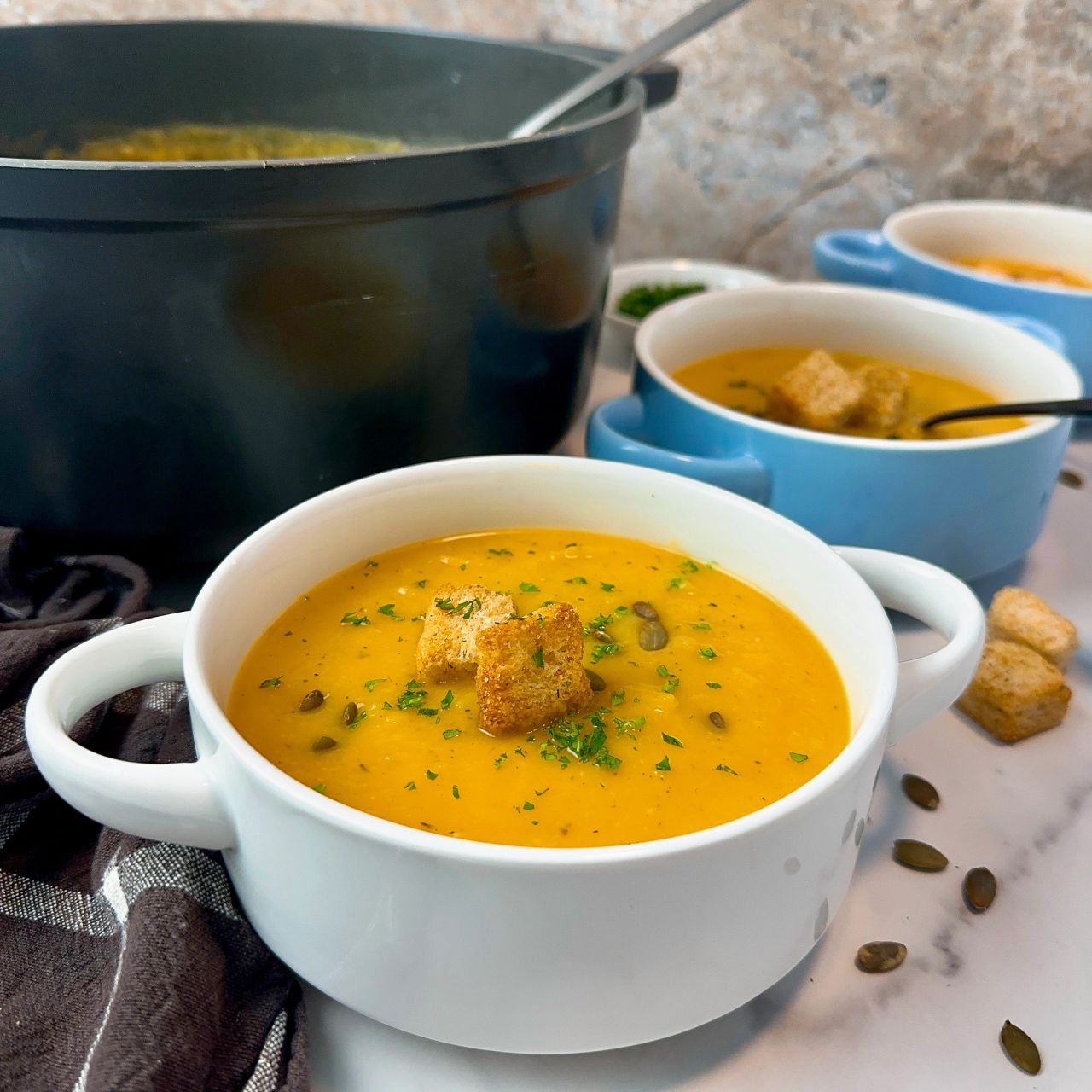
Choosing your squash. Select a dark beige squash with a very firm texture. Ideally, the stem will still be intact. Choose the squash that’s the heaviest for its size; this indicates water content, which translates to freshness. Avoid soft squash, and those with lots of dents and indentations. Pro tip: If you’d rather not cut a butternut squash, look for the pre-cut, fresh squash in your store’s produce department (remember, we need 3 pounds). I don’t recommend frozen squash.
Cut the squash into cubes for roasting. The secret to this soup’s success is roasting the squash first. Roasting adds browning, caramelization, and thus flavor. Cutting the squash into cubes (versus roasting the squash whole) guarantees that more surface area caramelizes, further intensifying the natural sweetness of the vegetable. In fact, many recipes for butternut squash soup call for sugar; roasting the vegetable eliminates the need for added sweetness.

Line your baking sheet with parchment paper. Butternut squash contains plenty of natural sugar, so it tends to stick to baking pans when roasting. We want the squash in the soup, not stuck to the pan.
Flip your squash halfway through cooking. When roasting, the goal is to tenderize and caramelize your squash, not char it. Many ovens have hot spots, even the finest ovens on the market. To promote even cooking, flip your squash halfway through cooking and then keep an eye on it; you don’t want the pieces overly browned.
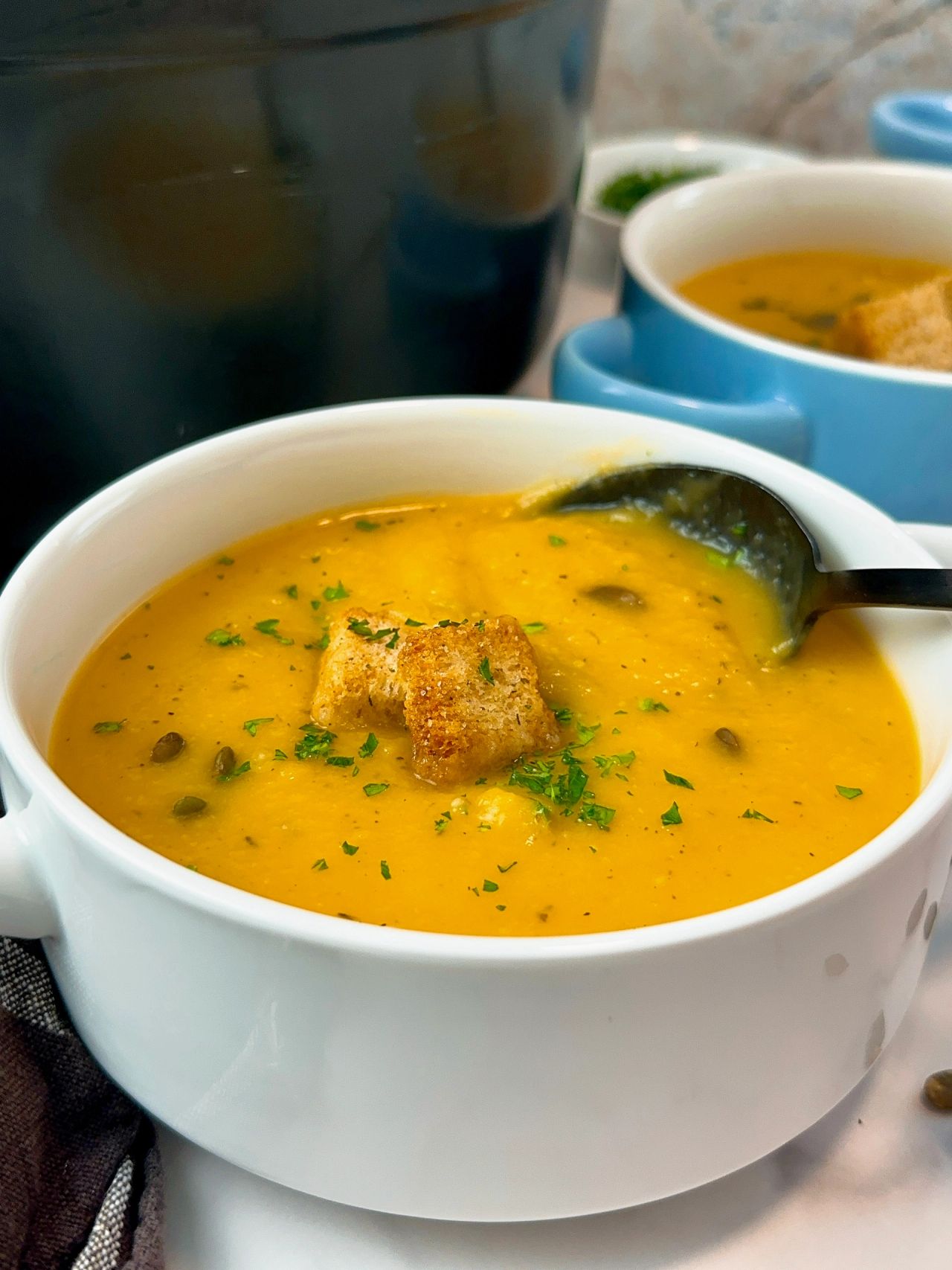
Use a blender to puree the soup. The ultimate butternut squash soup boasts a silky-smooth texture, a quality easily accomplished with a blender. You can use and immersion blender (AKA stick blender), but I find the result isn’t as smooth. Pro tip: When using a blender, let the soup cool slightly before pureeing, and then only fill the blender halfway. You can also cover the top of the blender with a dish towel, just in case there’s spillover.
Storing leftovers. Store leftover butternut squash soup in an airtight container in the refrigerator for up to 3 days, or in the freezer for up to 3 months. Thaw overnight in the refrigerator before reheating. To reheat, transfer the soup to a saucepan and reheat over medium heat until hot, adding more broth if desired.

Butternut Squash Soup

Ingredients
- 1 3-pound butternut squash
- 2 tablespoons olive oil
- Salt and freshly ground black pepper
- 2 tablespoons butter
- 1 large yellow onion, chopped
- 3 cloves garlic, chopped
- 1 teaspoon chopped fresh ginger
- 1/2 teaspoon dried thyme
- 1/4 teaspoon dried sage
- 4-5 cups chicken broth, or vegetable broth
Optional Garnishes
- Croutons
- Pepitas or pumpkin seeds
- Chopped fresh parsley
Instructions
- Preheat the oven to 400 degrees. Line a large baking sheet with parchment paper or foil.
- Peel, seed, and cut the butternut squash into 1 1/2-inch chunks. Transfer the squash to a large bowl, add the olive oil, 1/2 teaspoon salt, and 1/4 teaspoon black pepper and toss to coat. Transfer the squash to the prepared pan and spread out in an even layer.
- Roast for 15 minutes. Flip and roast for 15 to 20 more minutes, until the squash pieces are fork-tender and slightly caramelized (not charred). Set aside.
- Melt the butter a large saucepan or stock pot over medium heat. Add the onion and cook until soft and lightly caramelized (we’re not looking for lots of caramel color here), about 8 to 10 minutes. Add the garlic, ginger, thyme, sage, 1/2 teaspoon salt, and 1/4 teaspoon black pepper and stir to coat. Cook for 30 seconds to 1 minute, until the herbs are fragrant.
- Add the roasted butternut squash and stir to combine.
- Add 4 cups of the broth and bring to a simmer. Simmer for 5 minutes.
- Puree the soup with an immersion blender, or cool the soup slightly and, working in batches, puree in a blender until smooth. If you prefer a thinner soup, add more broth. Season to taste with salt and black pepper.
- Ladle the soup into bowls and top with pumpkin seeds, croutons, and parsley if desired.