


Easy Overnight Focaccia
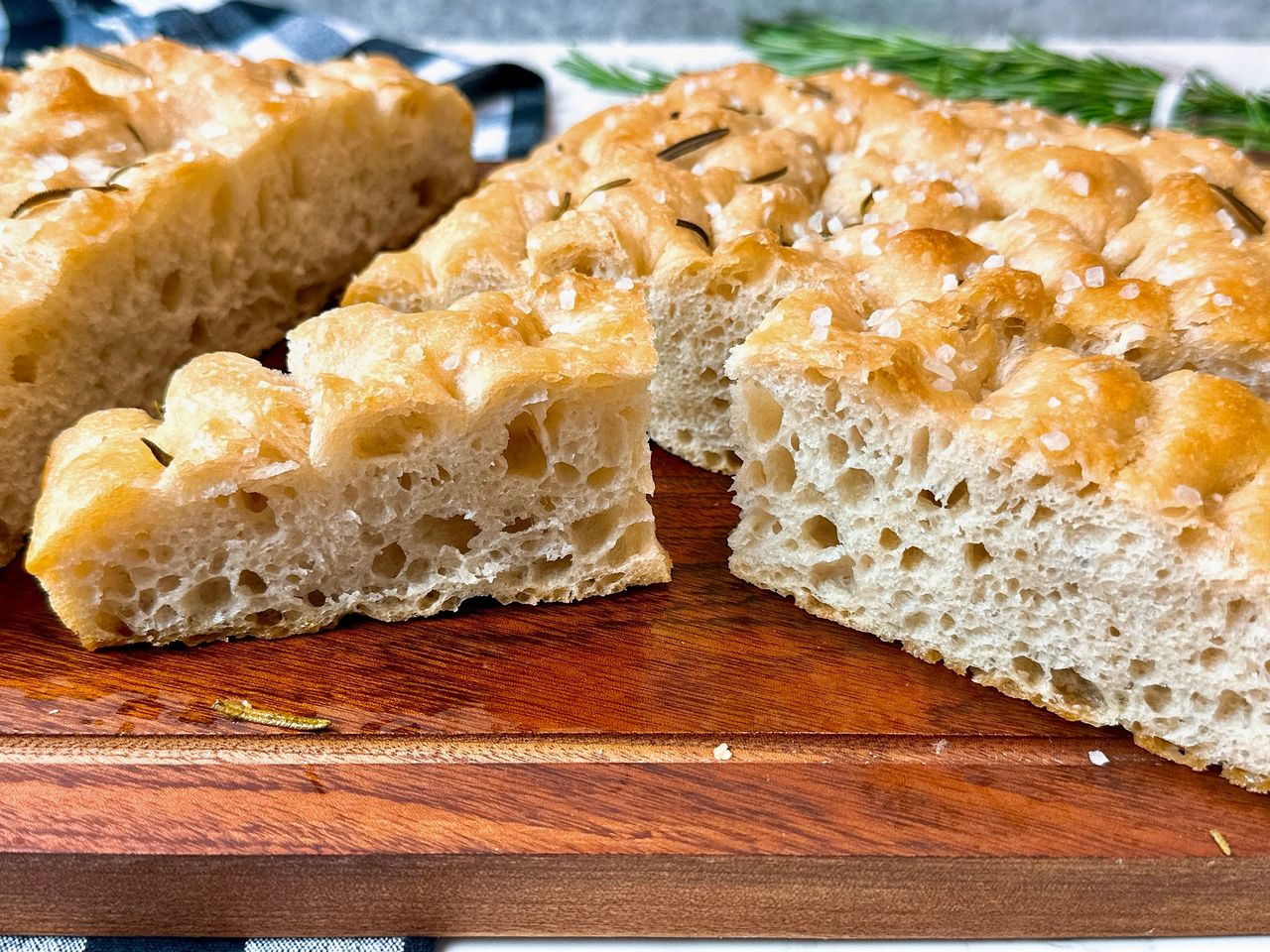
Warm, puffy bread, laced with olive oil, fresh herbs, and crunchy salt, this is the best focaccia on earth. Served plain, or dunked in olive oil, or used to make sandwiches, this easy, wildly versatile recipe will change your life.
This recipe was written for the Arizona Republic.
What’s the secret to restaurant-quality focaccia?
Your refrigerator. The cold environment of your fridge slows the rising process for the first phase (or first “rise”) of this recipe. For the second rise, the chilled dough takes longer to come to room temperature and this slow, gentle rise is the key to light, pillowy dough. And it requires zero effort on your part. Just time. Pro tip: You can leave your dough in the fridge for up to 72 hours.
Is focaccia hard to make? No. This recipe requires 4 ingredients. Plus, there’s no kneading, no electric mixer with a dough hook, no shaping, and no fussing. You simply need a bowl for making the dough, a 9×13-inch baking pan, and your refrigerator.
What ingredients do you need for focaccia?
- Flour: All-purpose flour is fine, as is bread flour. Note that bread flour has more gluten, so your focaccia will be chewier.
- Yeast: I prefer instant (rapid rise) yeast. If you only have active-dry yeast, sprinkle the yeast over the lukewarm water and let it stand for 15 minutes, or until it gets foamy. Proceed with the recipe after that. Pro tip: Note that the first step in the recipe is to combine the flour and salt before adding the yeast. Salt kills yeast, so this is done to provide a buffer between the two.
- Salt: Nothing fancy needed – salt is added for flavor. Since the dough is flour, yeast, and water, we need to bump up flavor with salt. That can be course sea salt, kosher salt, or any salt you have on hand. I prefer coarse crystals for sprinkling over the top; they add a delightful crunch. I used kosher salt in the dough and coarse sea salt for sprinkling over top.
- Water: This should be easy to find.
- Olive oil: I suggest good-quality olive with great flavor. As stated above, there aren’t many flavorful ingredients in this recipe, so you will surely taste the nuances of the olive oil. And don’t skimp on how much you use; olive oil is essential for both the bottom and top of the dough. The olive oil in the pan prevents the focaccia from sticking, and the olive oil on top encourages browning while baking. Plus, one of the most cherished features of focaccia is its slightly oily exterior. Pro tip: Make sure you generously coat your raw dough with olive oil before refrigerating; this will prevent the dough from drying out and forming a crust.
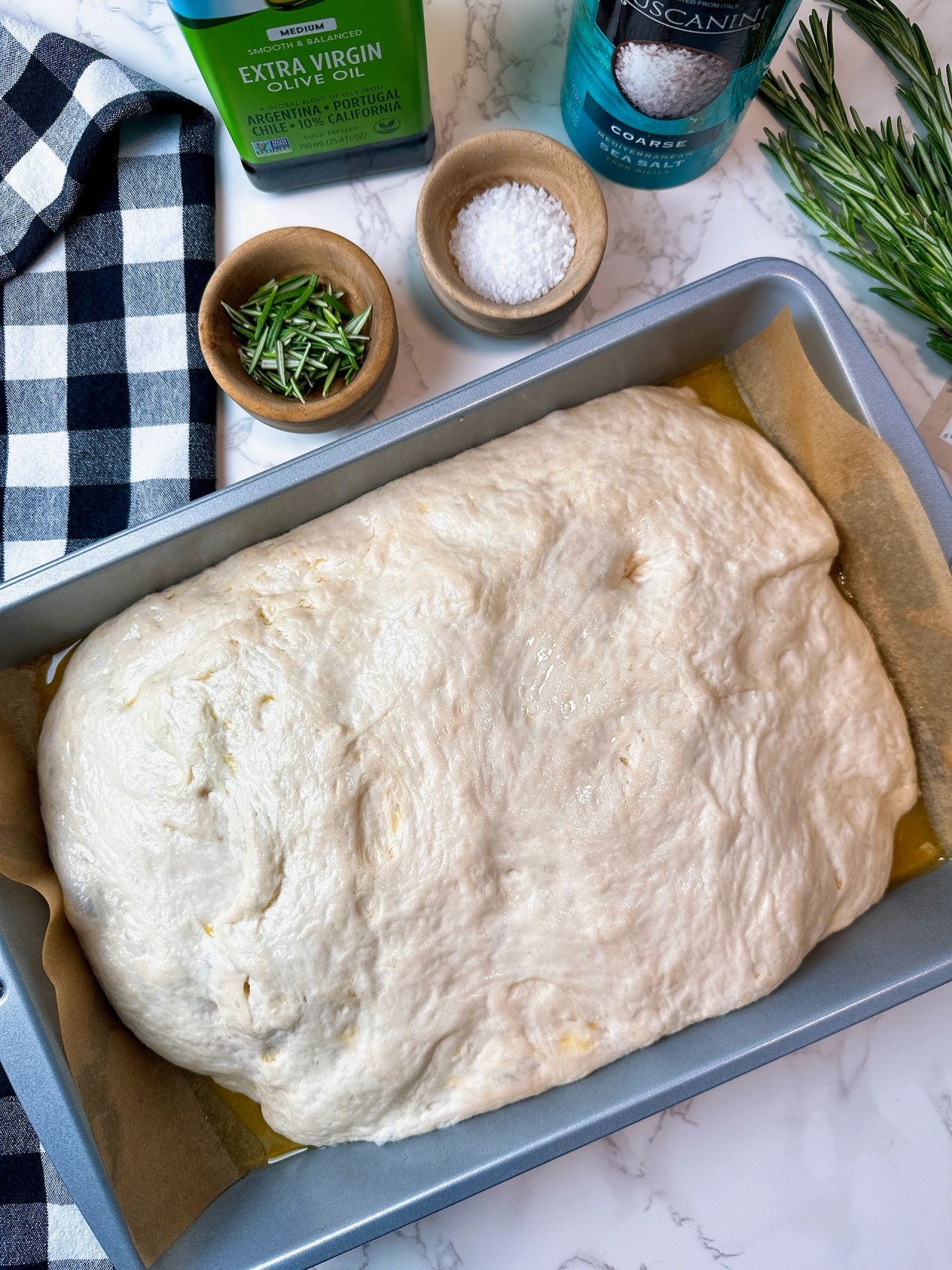
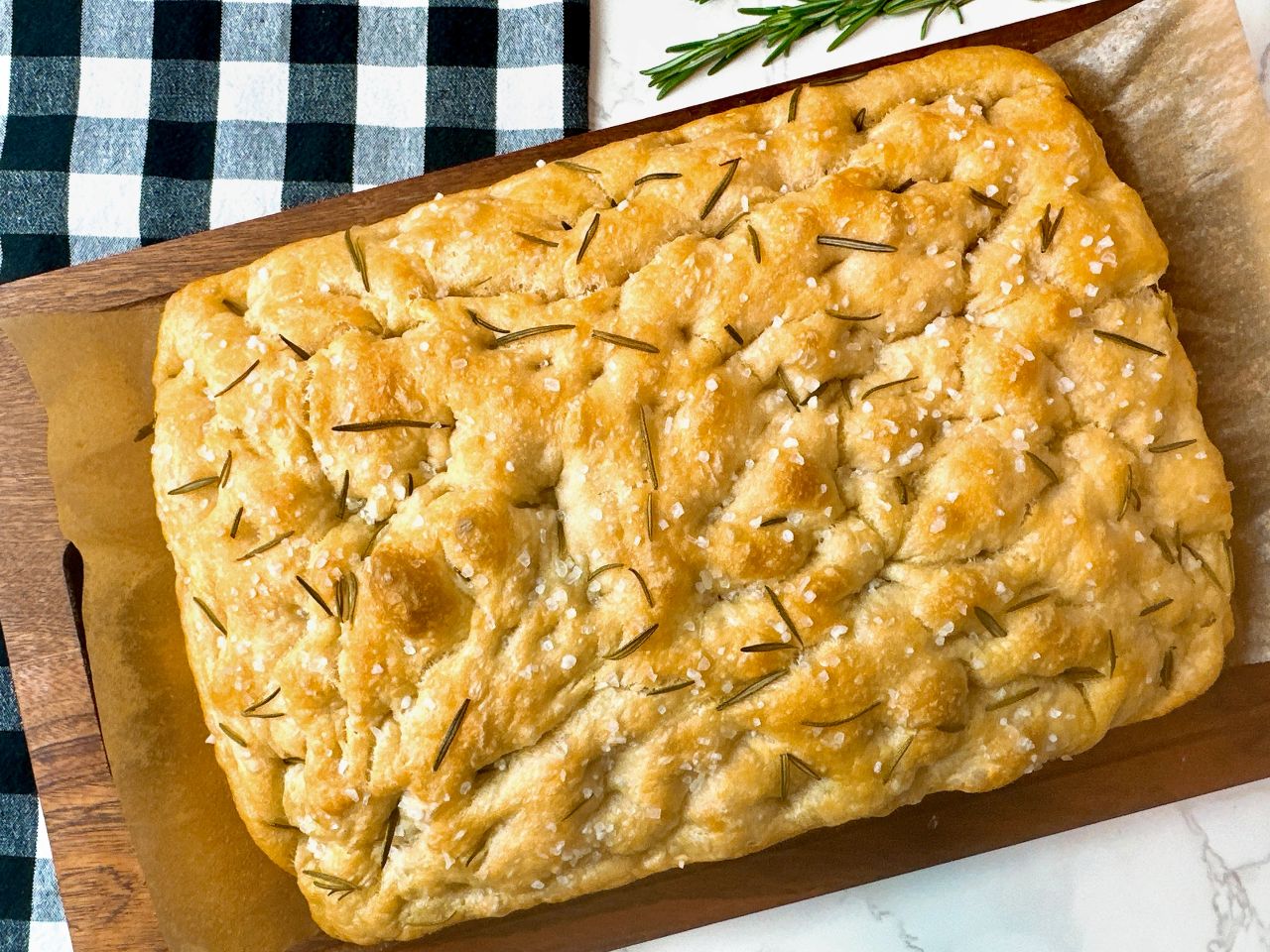
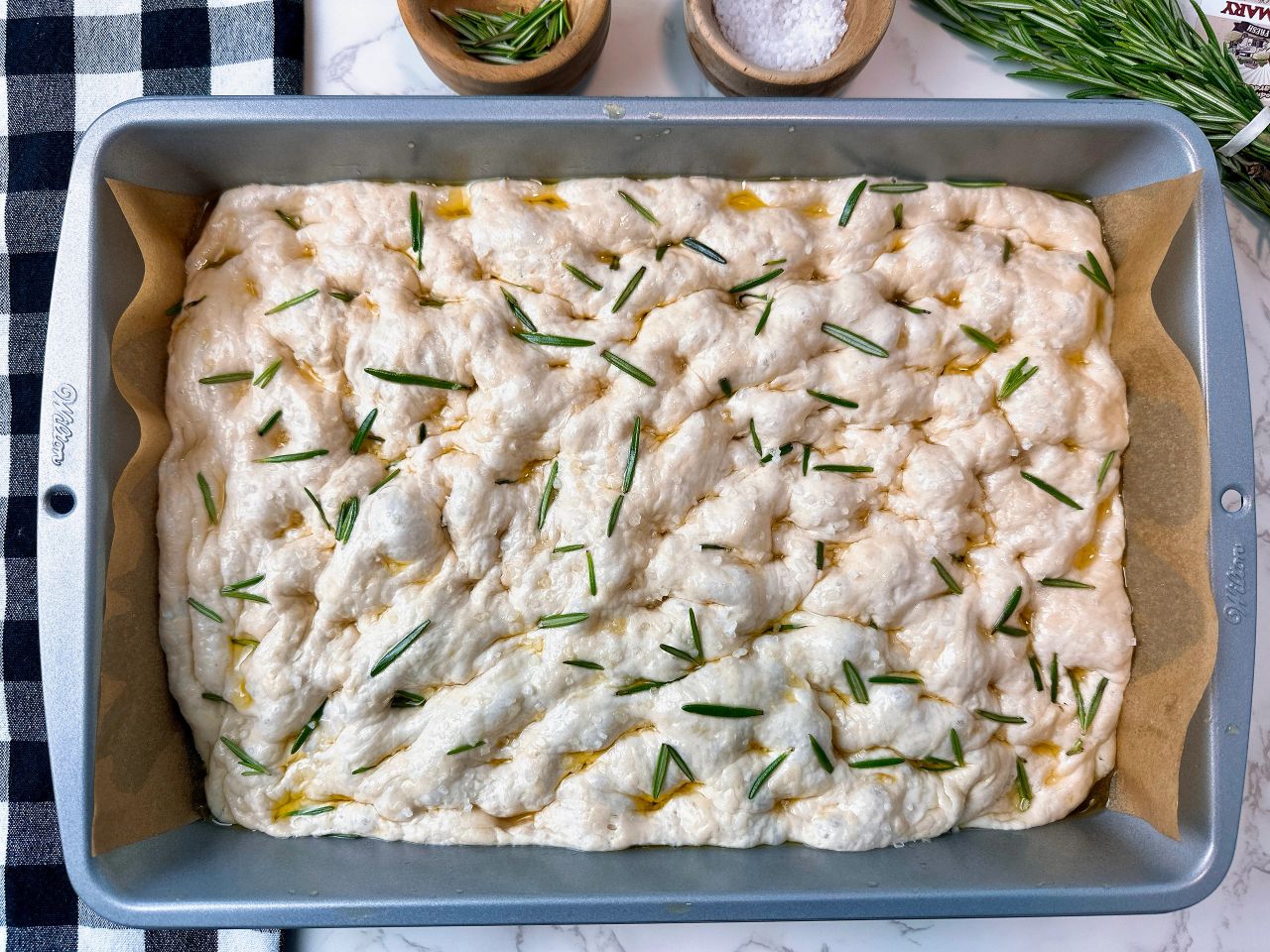
The herbs are optional. I added the classic here – fresh rosemary. You can certainly leave it out or substitute your favorite herbs. Pro tip: Press fresh herbs into the dough during “dimpling”; meaning before baking. This ensures they don’t char in the oven. Once nestled into the dough, you can also brush the herbs with more olive oil to ensure they don’t burn.
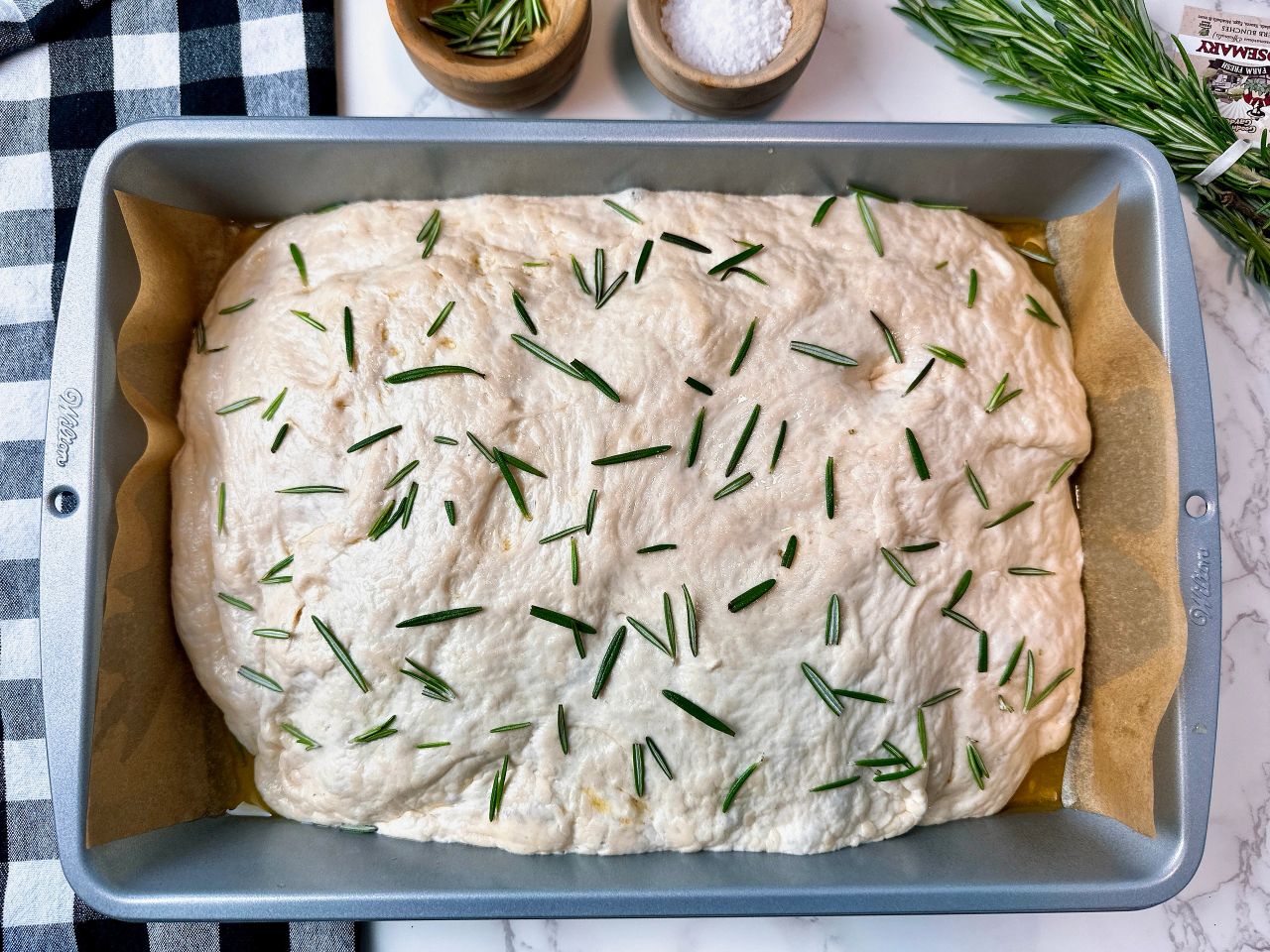
Optional toppings: For variety, consider adding other classics to the dimpled dough before baking. Sun dried tomatoes, olives, caramelized onions, red onions, garlic, feta, freshly ground black pepper, and lemon zest all make great choices. Remember to coat all toppings with olive oil before baking.
Where’s the sugar? Many bread recipes call for sugar, to help “feed the yeast”. Truth is, you don’t need sugar to activate yeast, it’s just helpful for speeding up the process. Since speed isn’t our intention here, we can leave it out.
What pan should you use for your focaccia?
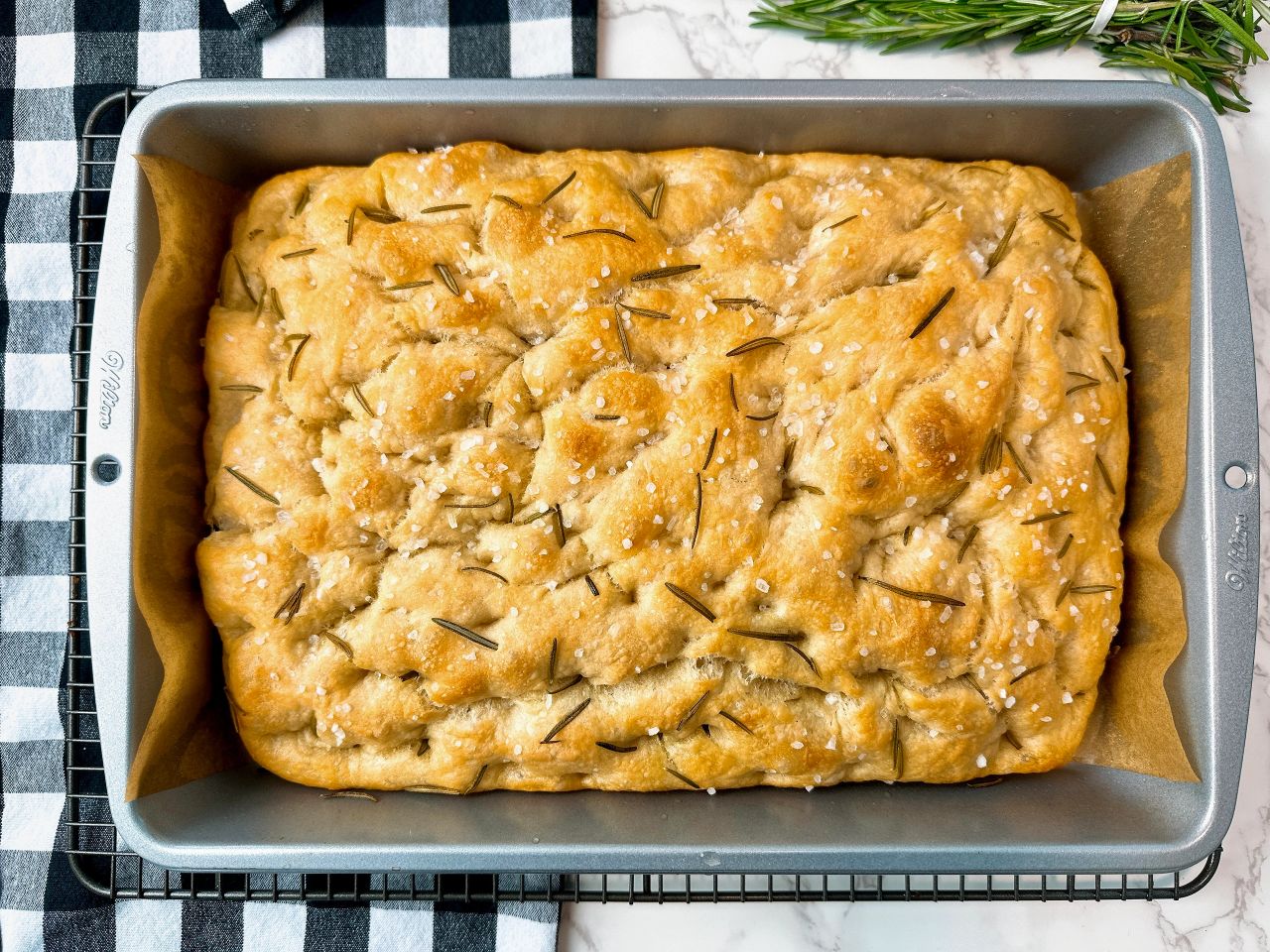
Use your 9×13-inch pan and coat it generously with olive oil. You can also add a layer of parchment paper to make removing the focaccia from the pan a quick-and-easy process. I find that coating the bottom of the pan with cooking spray before adding the parchment paper helps keep the paper from slipping.
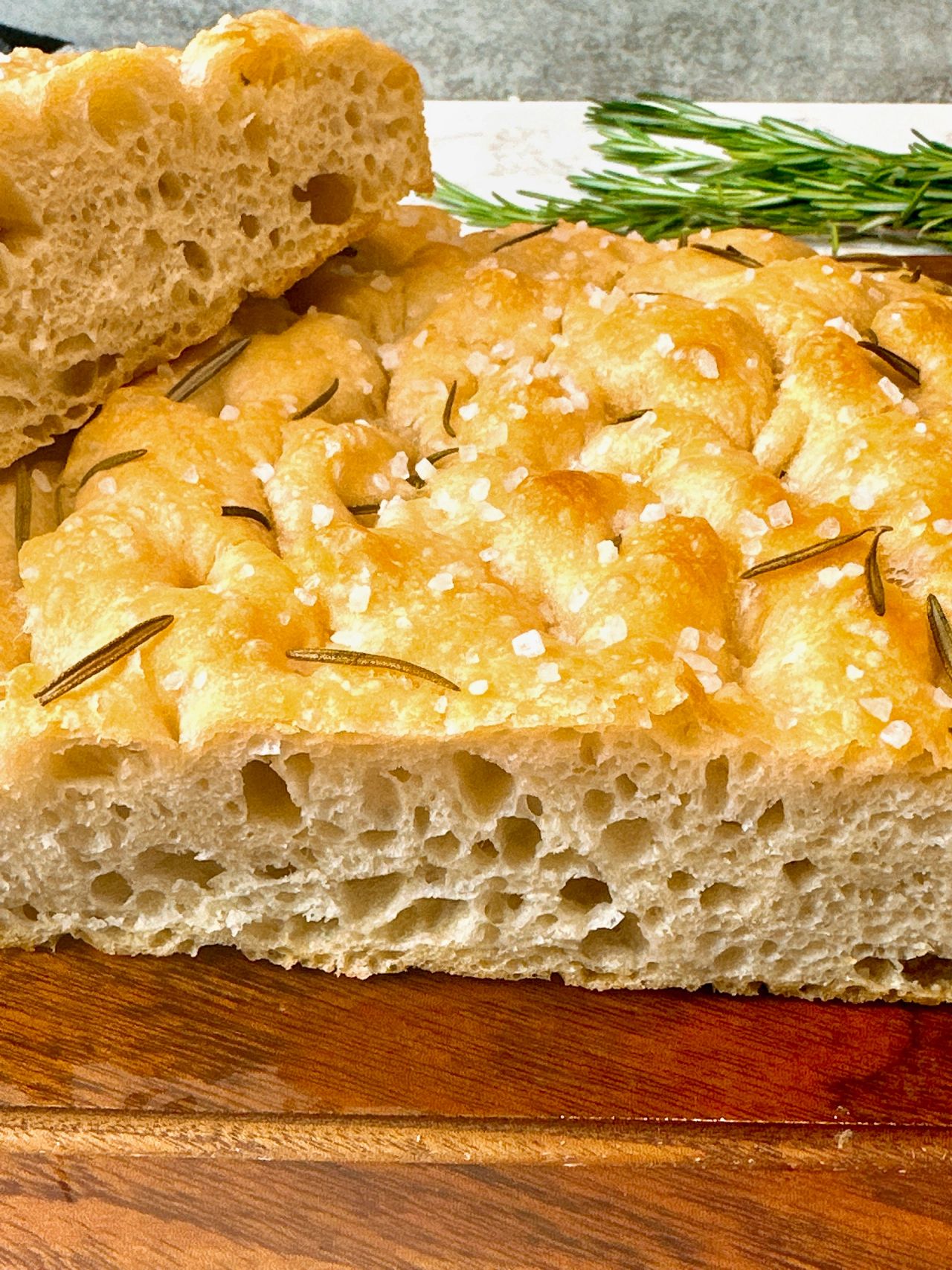
Bake your focaccia immediately after dimpling. Why? Because your dough will continue to rise and fill in all the indentations you just made!
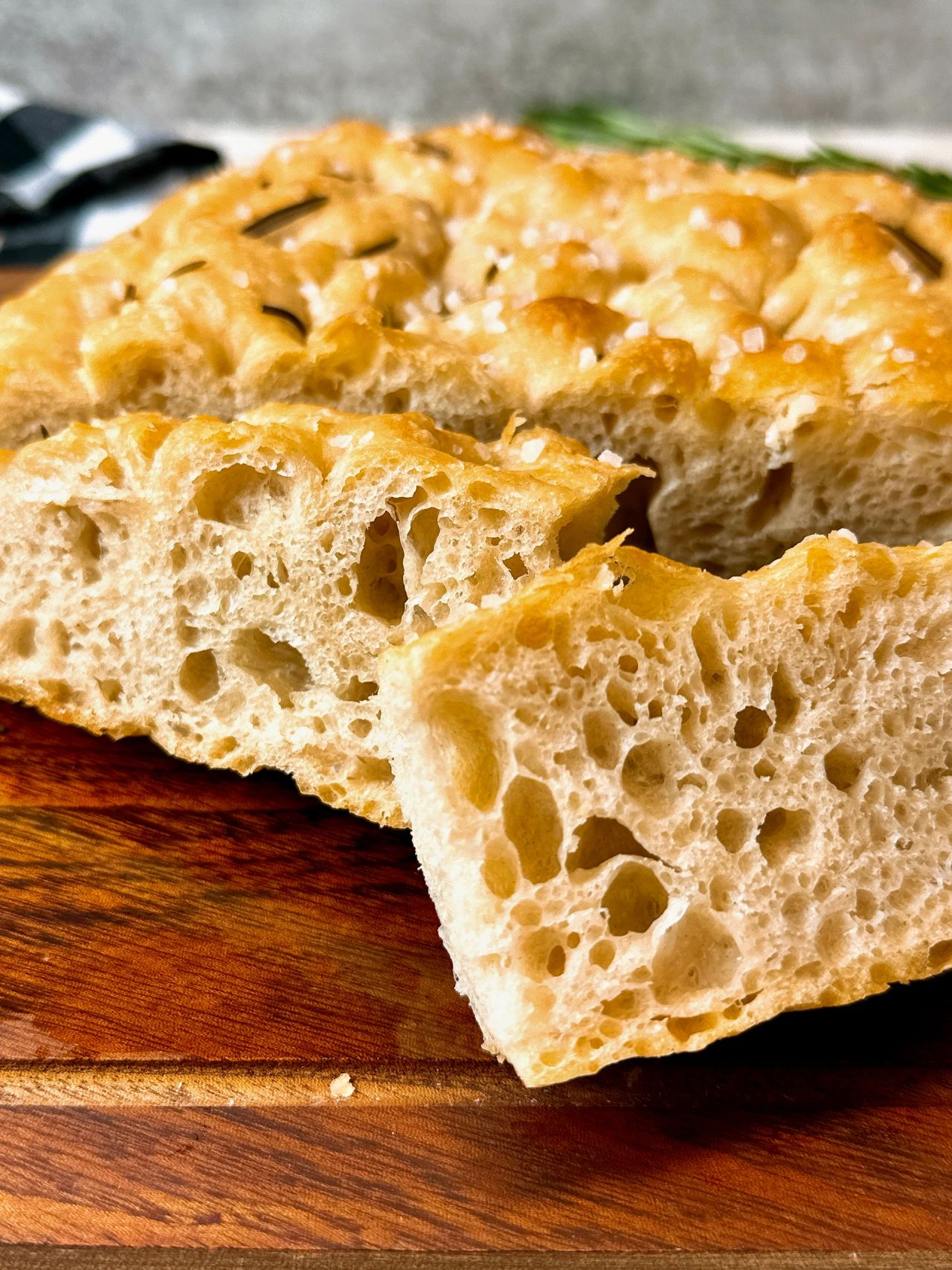
Can you skip the overnight refrigerator rise? This is not my first choice, but yes. If you want to make the focaccia the same day you prepare the dough, let your dough do the first rise at room temperature, until doubled in size (about 1 1/2 to 2 hours). Proceed with the recipe (dimpling, etc.). Take note, your second rise may take just 30 to 45 minutes. Bake as directed.
Eat ASAP. Focaccia is best eaten the day it’s made but will last 2 to 3 days at room temperature, or up to 5 days in the refrigerator. Wrap all leftover focaccia tightly in plastic wrap or a sealed container. If you plan to store your focaccia longer than a few days, I suggest freezing it for up to 3 months.
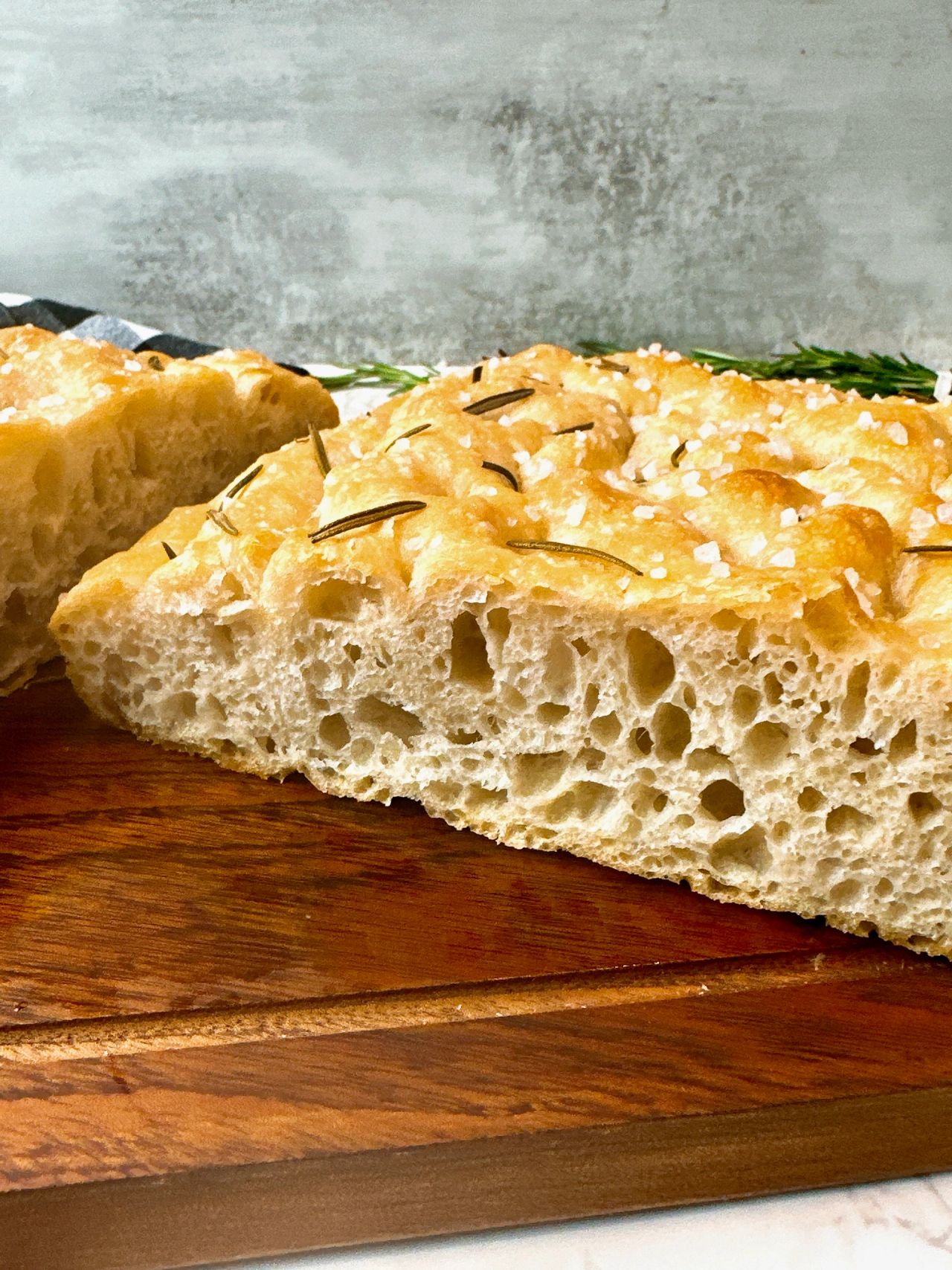
Easy Overnight Focaccia
Ingredients
- 4 cups all-purpose flour, or bread flour (see note above)
- 2 teaspoons salt, plus more for sprinkling over top, preferably coarse sea salt or coarse kosher salt
- 1 packet, 1/4-ounce instant yeast, or active-dry yeast (2 1/4 teaspoons)
- 2 cups lukewarm water, (100 to 110 degrees)
- 4 tablespoons olive oil, divided, plus more for coating dough
- 2-3 teaspoons fresh herbs of choice, I chose fresh rosemary leaves, optional
Instructions
- In a large bowl, whisk together the flour and salt. Sprinkle the yeast over top (do not be tempted to whisk the yeast into the flour mixture as salt kills yeast; we’re keeping them “sort of” apart on purpose).
- Add the water and stir with a spatula until the water is absorbed, any dry streaks are gone, and the mixture forms a tacky ball (more of a cohesive mass than a ball).
- Using your hands, coat the top of the dough with a generous amount of olive oil (make sure it’s well coated so it doesn’t dry out and form a crust in the refrigerator).
- Cover the bowl with plastic wrap and refrigerate for 18 to 24 hours (and up to 72 hours).
- Coat a 9×13-inch baking pan with 2 tablespoons of the olive oil (or line with parchment paper and then add the oil; tip – coating the pan with cooking spray helps keep the parchment paper in place).
- Remove the dough from the refrigerator and, using two forks, release the dough from two opposite sides of the bowl and pull the dough towards the center. Turn the bowl 1/4 turn and repeat. Do this 2 more times (the goal is to create a ball while gently deflating the dough).
- Use a spatula to gently shape the dough into a rough ball. Transfer the dough to the prepared baking pan and turn to coat all sides with the oil.
- Let rise, uncovered, in a dry, warm spot (like on top of the fridge or a preheating oven), until doubled in size, 1 1/2 hours to 4 hours (timing depends on your room temperature; mine took 2 hours sitting on top of my preheating oven). Your dough is ready when you can leave a visible indentation with your finger (if the dough springs back quickly, it’s not ready).
- Preheat the oven to 425 degrees.
- If you’re using rosemary or other ingredients, place them on top of the dough. Cover the top of the dough with the remaining 2 tablespoons of olive oil. Using oiled fingers, press straight down into the dough, reaching the bottom of the pan to create deep dimples. Sprinkle the top with salt, preferably coarse salt.
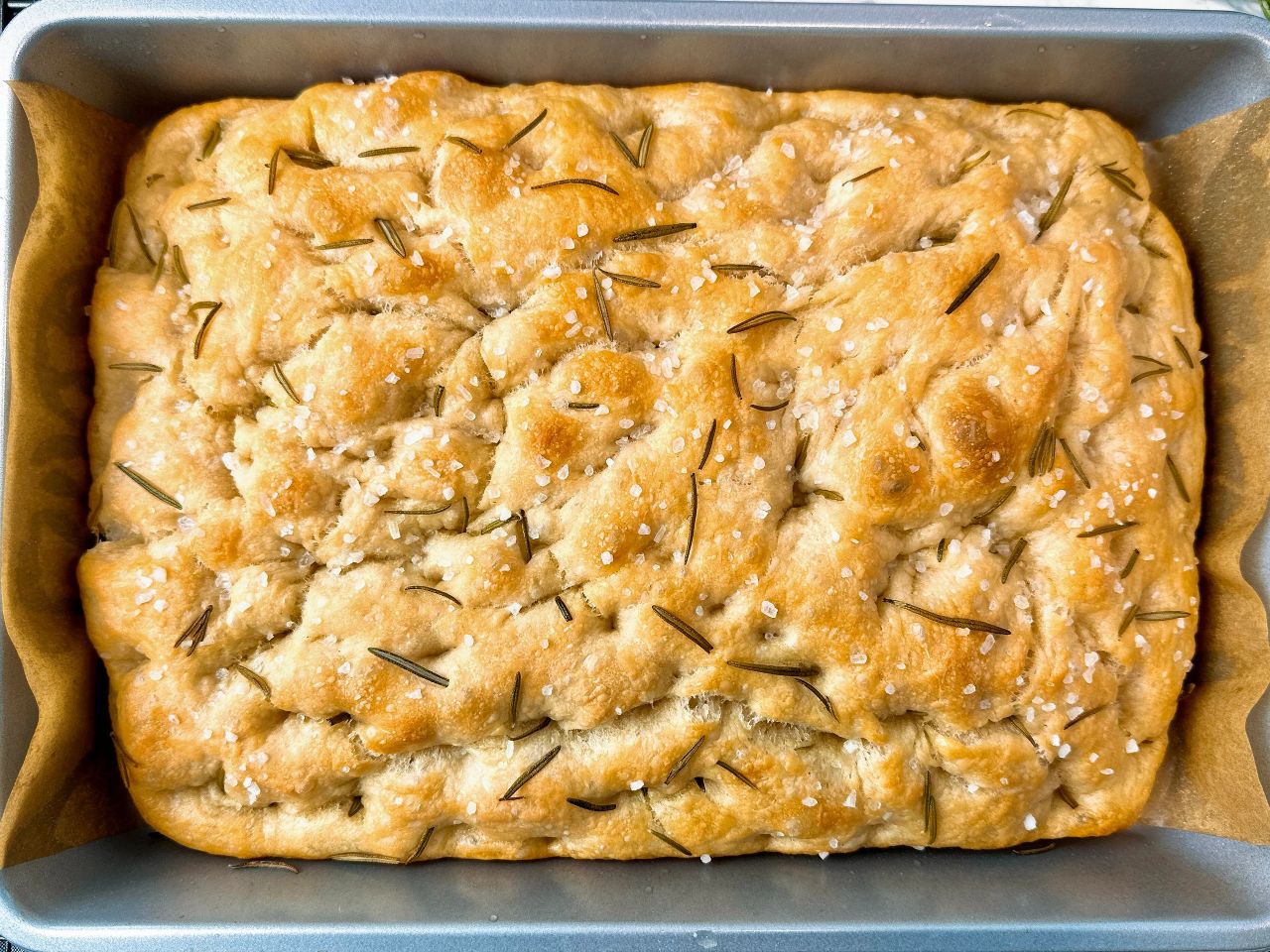
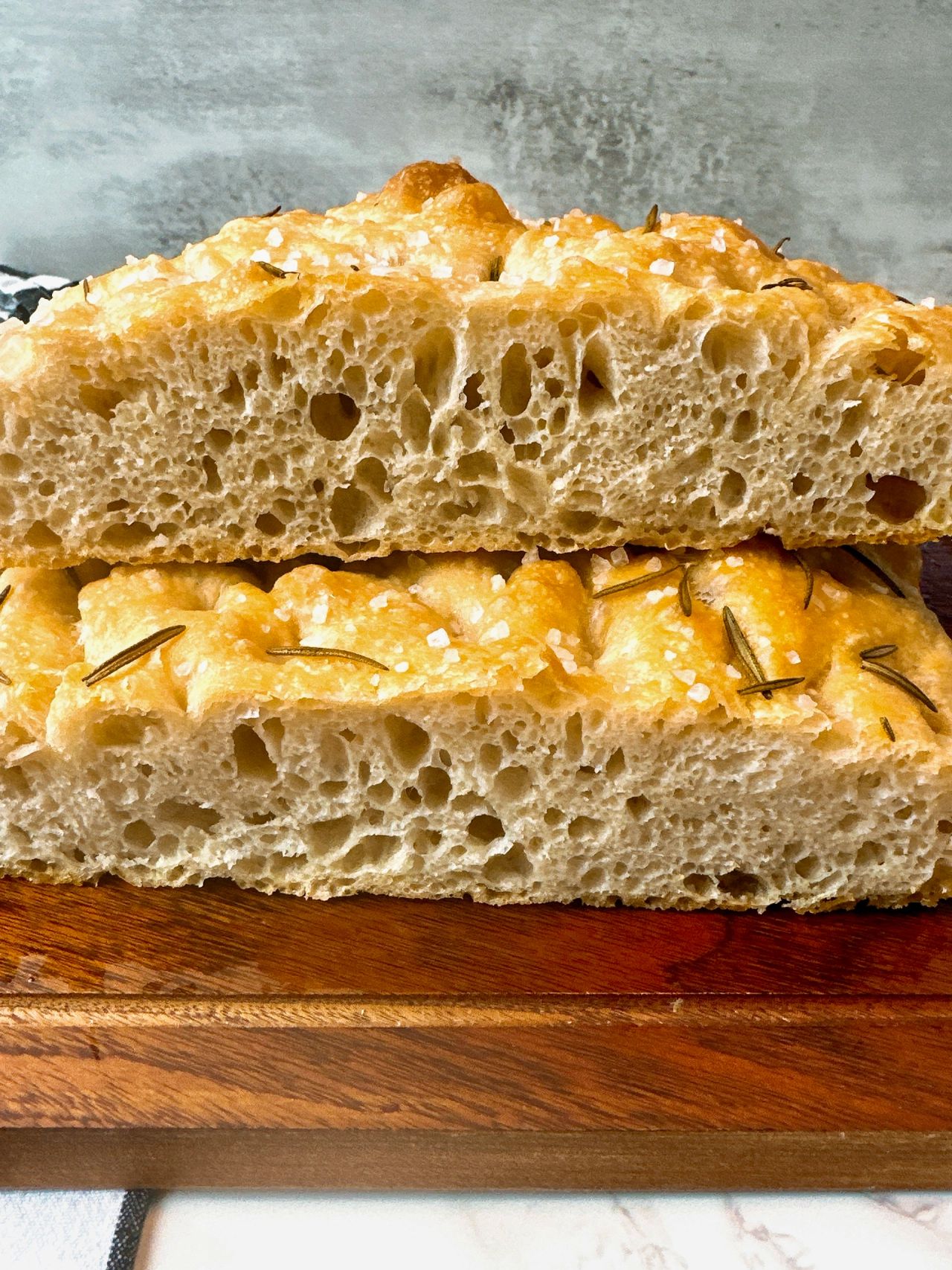
- Bake for 20 to 25 minutes, until puffed up, golden brown on top, and the edges have just started to pull away from the sides of the pan.
- Cool the focaccia, in the pan, on a wire rack for 5 minutes before slicing. Serve warm.