


Skillet Cornbread
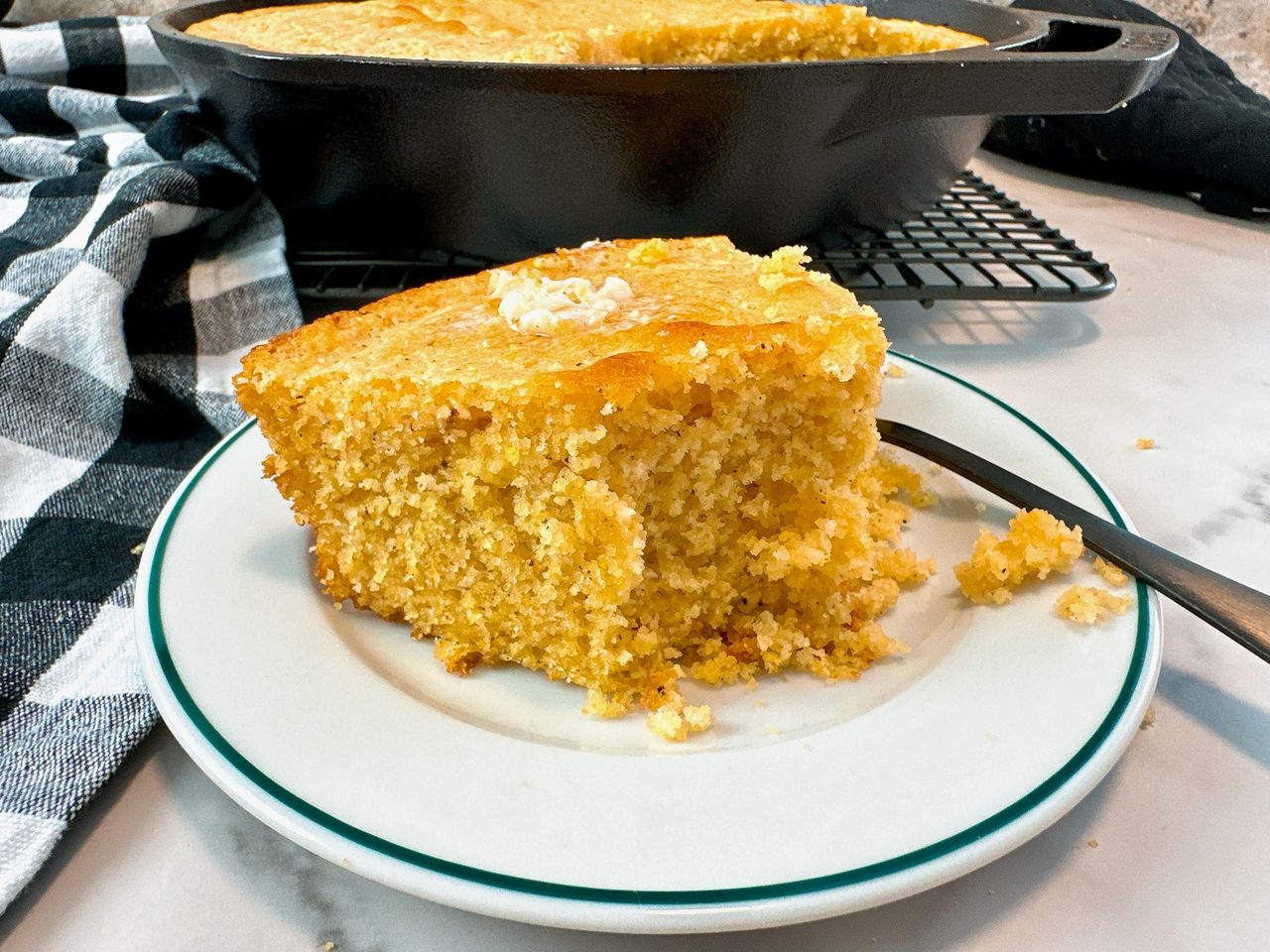
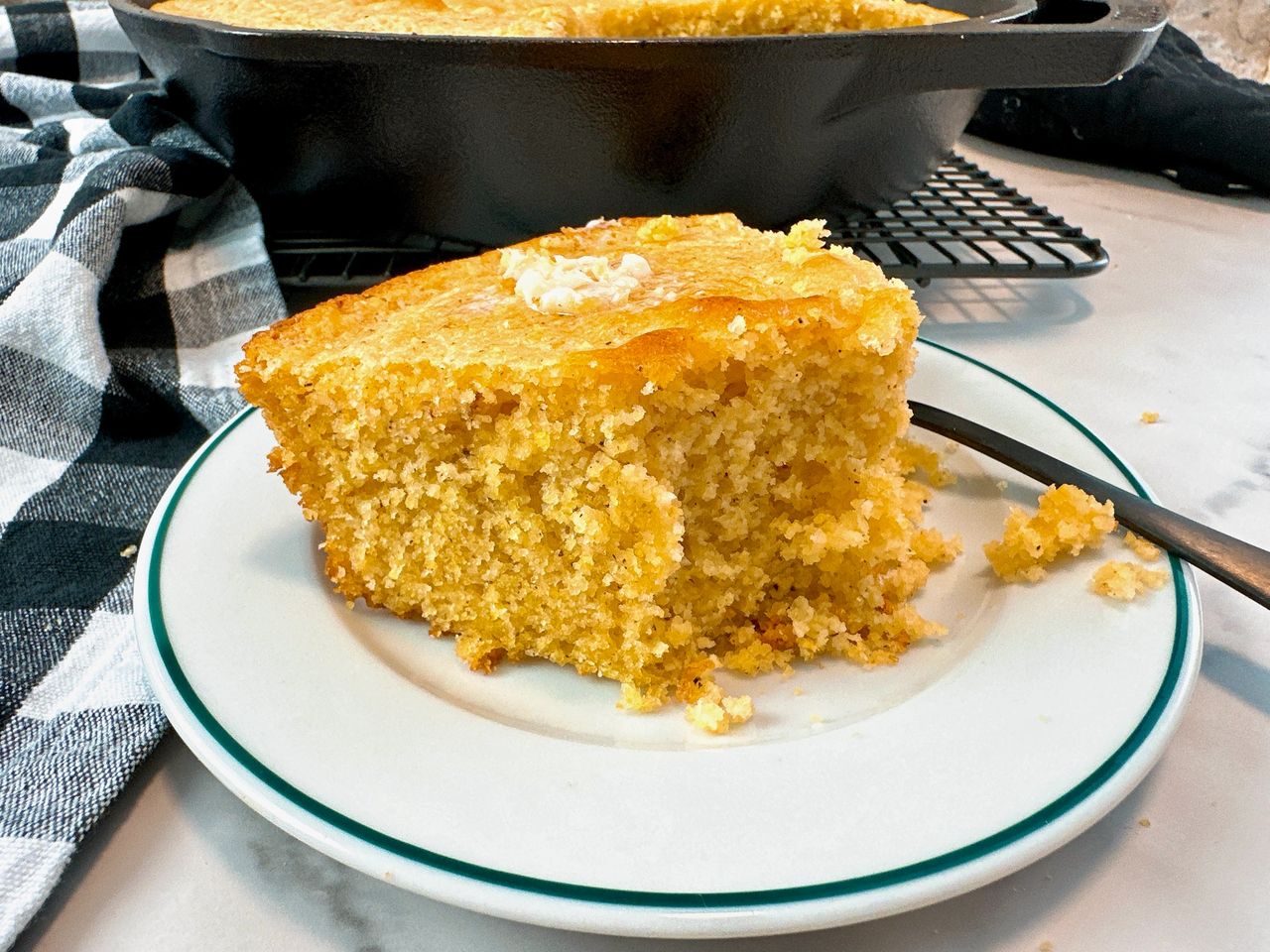
This buttery cornbread boasts crispy golden crust, fluffy center, and perfectly tender crumb. Say goodbye to dry, dense cornbread, this moist, mildly sweet version will rock your world.
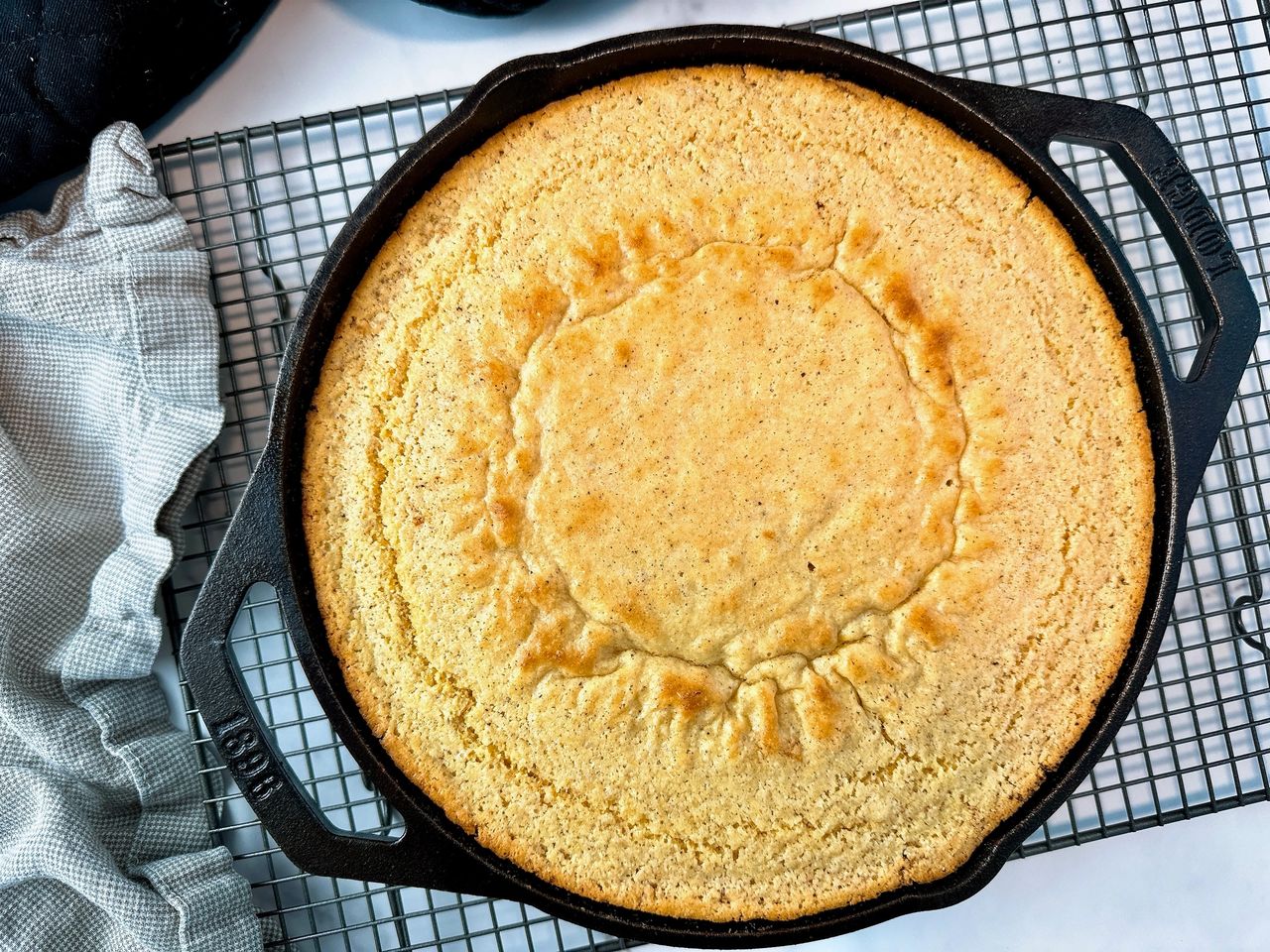
This recipe was written for the Arizona Republic.
I cracked the cornbread code! If you’re a fan of cornbread, you’ve likely had plenty of dry, tasteless versions; crumbly bites that are more akin to gravel than cornbread. Making flawless cornbread isn’t rocket science, but, when it comes to the ingredients and their measurements, there’s a definitive sweet spot. Use the ideal ratio of cornmeal to flour, and you’ll create a wonderfully light bread with the coveted, tender-yet-grainy crumb.
There’s also a favored level of sweetness; cornbread that’s not overly sugary is the perfect partner for any dish, on any occasion.
Brown butter changes everything! The first step in this recipe involves transforming a stick of churned cream into a pool of brown butter. Why? When you cook butter slightly past the melting point, to the point where it turns brown, you’re toasting the milk solids. Those little brown specks are distinctly nutty and much more flavorful than regular melted butter. This sweet, savory, caramel-like nuance adds tremendous depth to this cornbread. Pro tip: Butter browns quickly, so watch closely and stop cooking as soon as the butter turns brown.
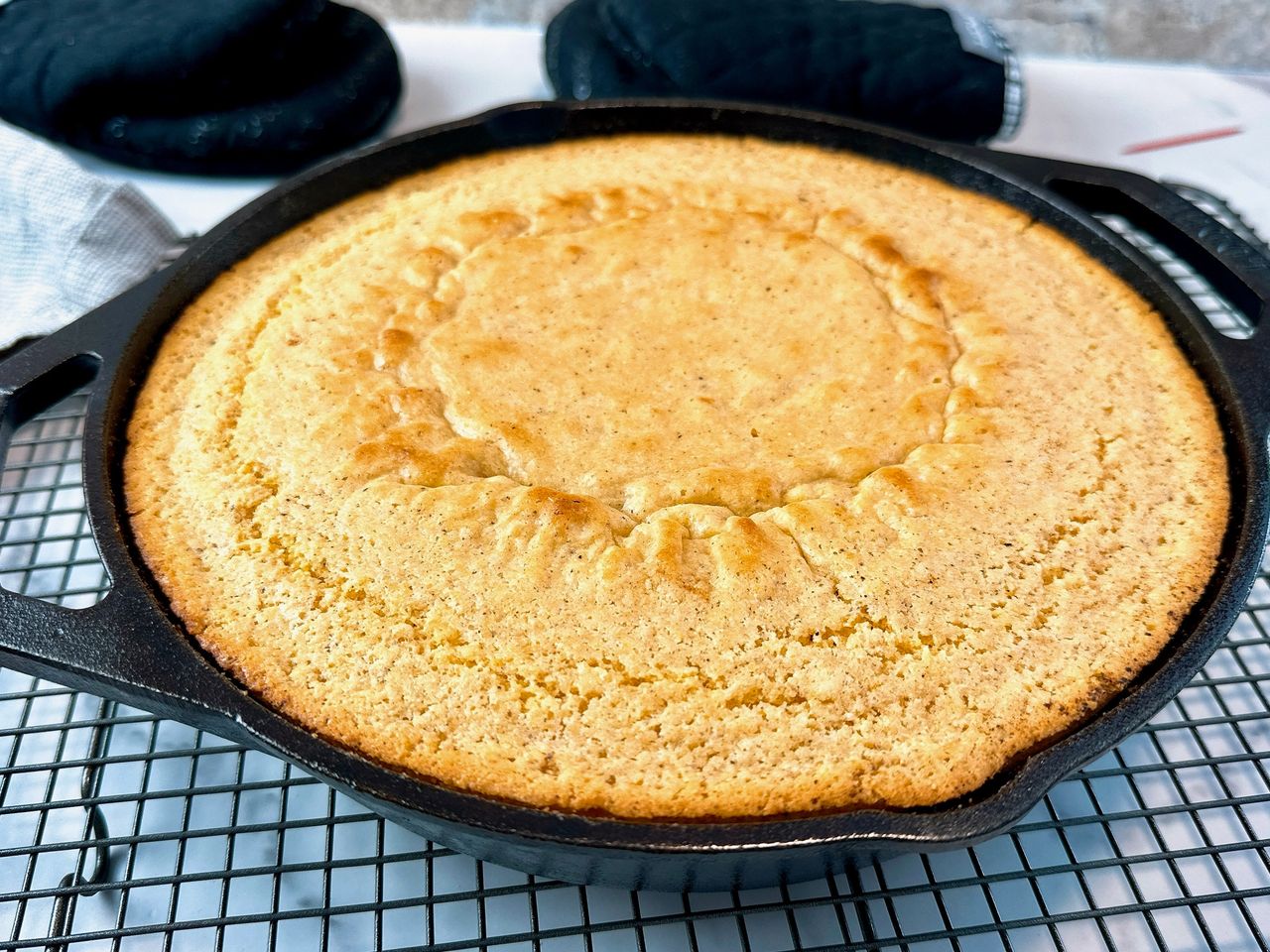
- Flour and Cornmeal. As mentioned above, there’s an ideal ratio when it comes to the cornmeal and flour measurements. Many recipes call for equal parts of each (1:1 flour and cornmeal), but I’ve found that adding slightly more cornmeal (1/4 cup) creates a light, tasty bread with the distinct flavor of corn.
- Butter. I strongly suggest you use unsalted butter. When you brown salted butter, much of the salt gets concentrated in the milk solids and changes the flavor. For that cherished nutty-sweet flavor, use unsalted butter.
- Buttermilk. Buttermilk is the key to moist cornbread and yields the best texture. If you don’t have buttermilk, you can use sour cream or Greek yogurt. If you want to make your own buttermilk, combine 2 1/4 cups of regular milk and 4 teaspoons white vinegar. Let the mixture stand for 5 to 10 minutes before adding it to the batter.
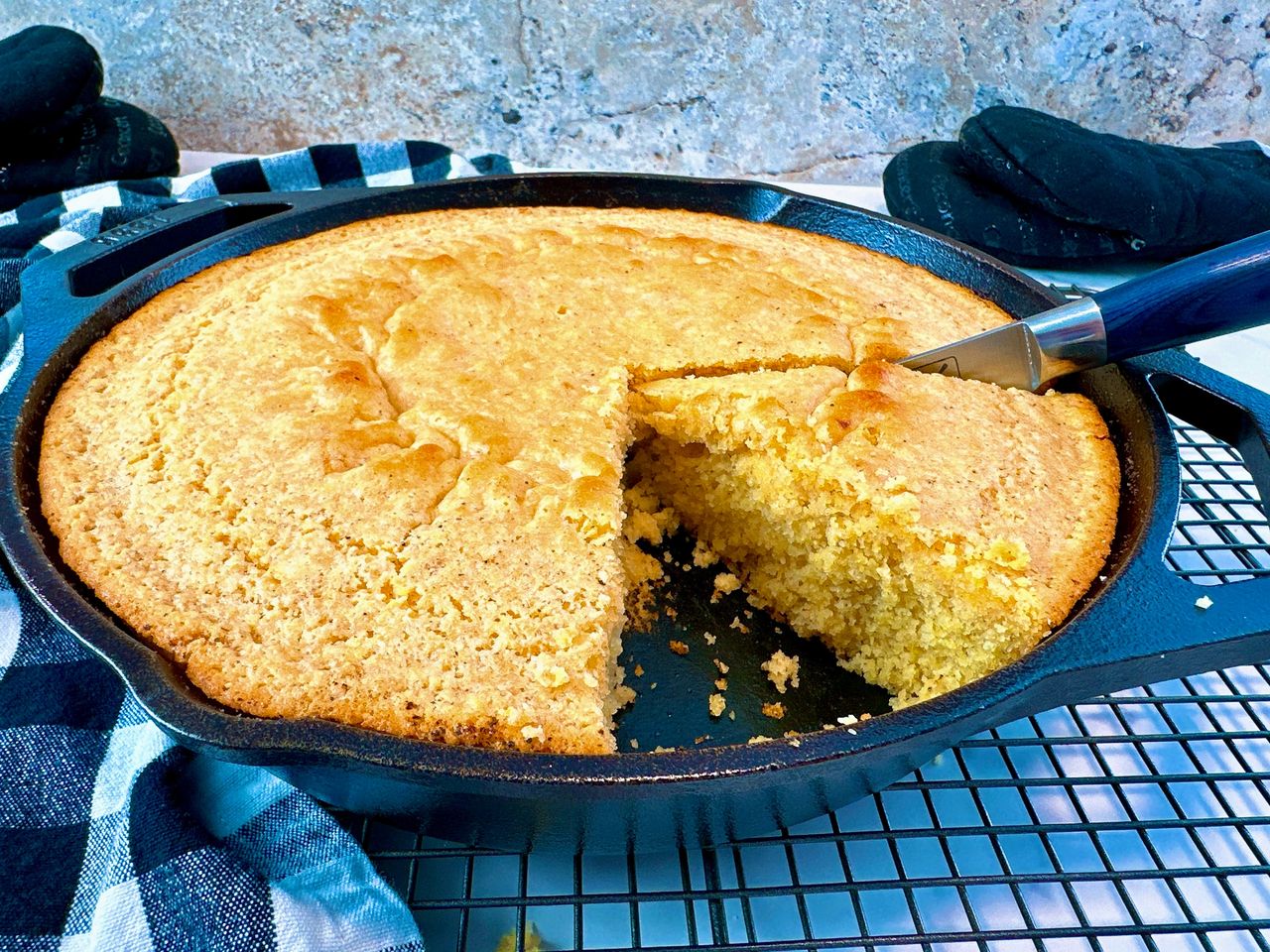
- Eggs. Some cornbread recipes skip the eggs but trust me, their addition is imperative. Eggs add moisture and structure, creating cornbread that’s light and fluffy, not dry and compact.
- Granulated sugar. This recipe calls for 1/4 cup of granulated sugar, an amount that adds subtle sweetness to every bite. If you like your cornbread on the sweeter side, use 1/3 to 1/2 cup.
- Baking powder and baking soda. Yes, this recipe calls for both leavening agents because, thanks to the acidity of the buttermilk, baking soda alone can’t lift the volume of the batter. We add baking powder to ensure the cornbread rises effortlessly.
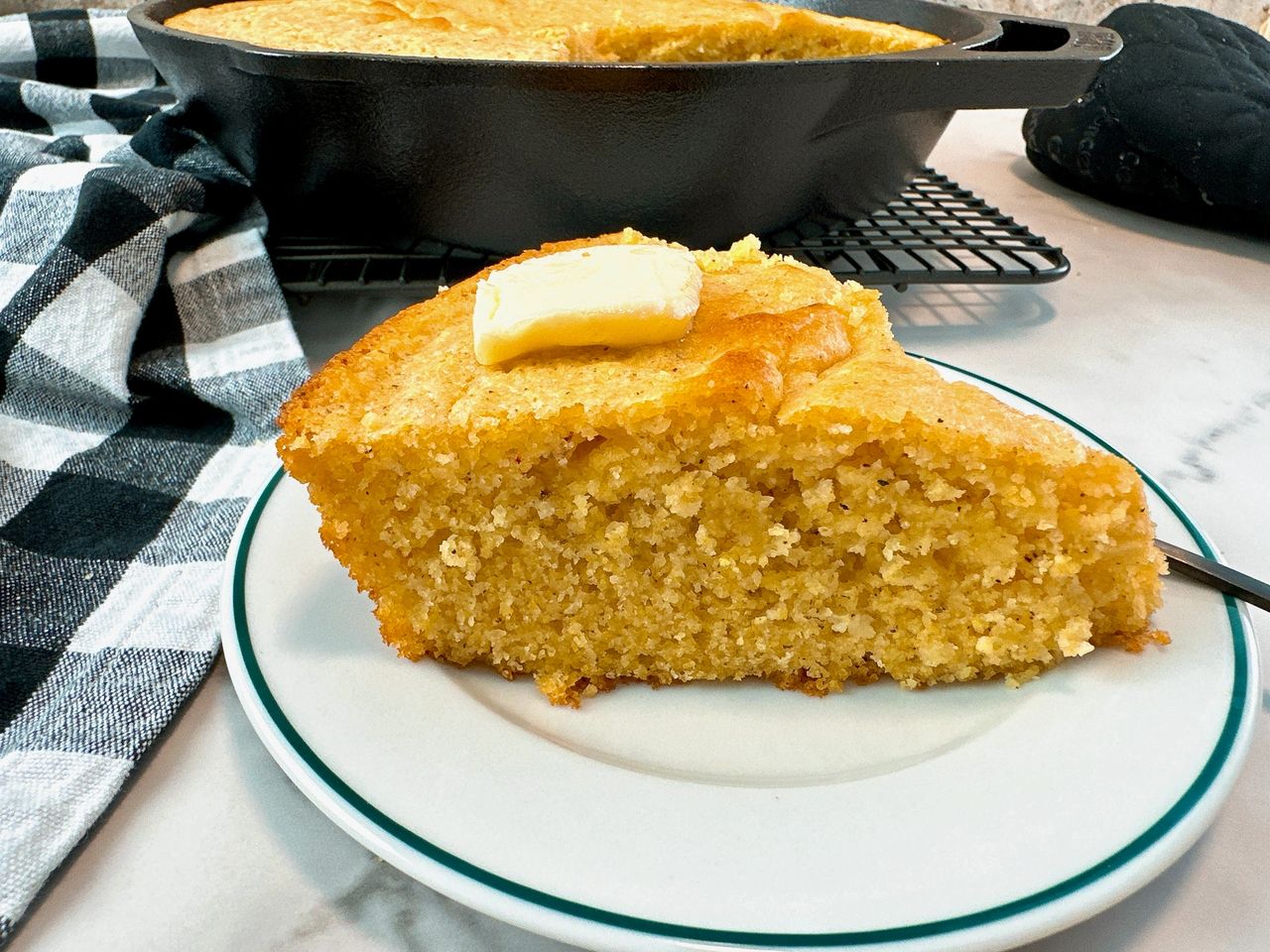
- Pre-measure your ingredients. This might sound unnecessary, but it’s not. The goal is to pour your batter into a hot skillet, soon after browning the butter. If your ingredients are pre-measured, you can quickly add them to the browned butter, and then transfer the finished batter back to the hot pan. It’s the pre-heated pan that creates the signature, dark golden, crispy bottom crust.
- Don’t over-mix the batter. When combining the ingredients for the batter, stop blending as soon as the flour is incorporated. When the flour meets the liquid ingredients, the gluten proteins are activated. Over-mixing will over-work the gluten and the result will be cornbread that’s tough and dense.
- Bake in a hot skillet. If possible, use a cast iron skillet. Iron is heavy and retains heat, which yields a darker, caramelized crust, and caramelization equals flavor.
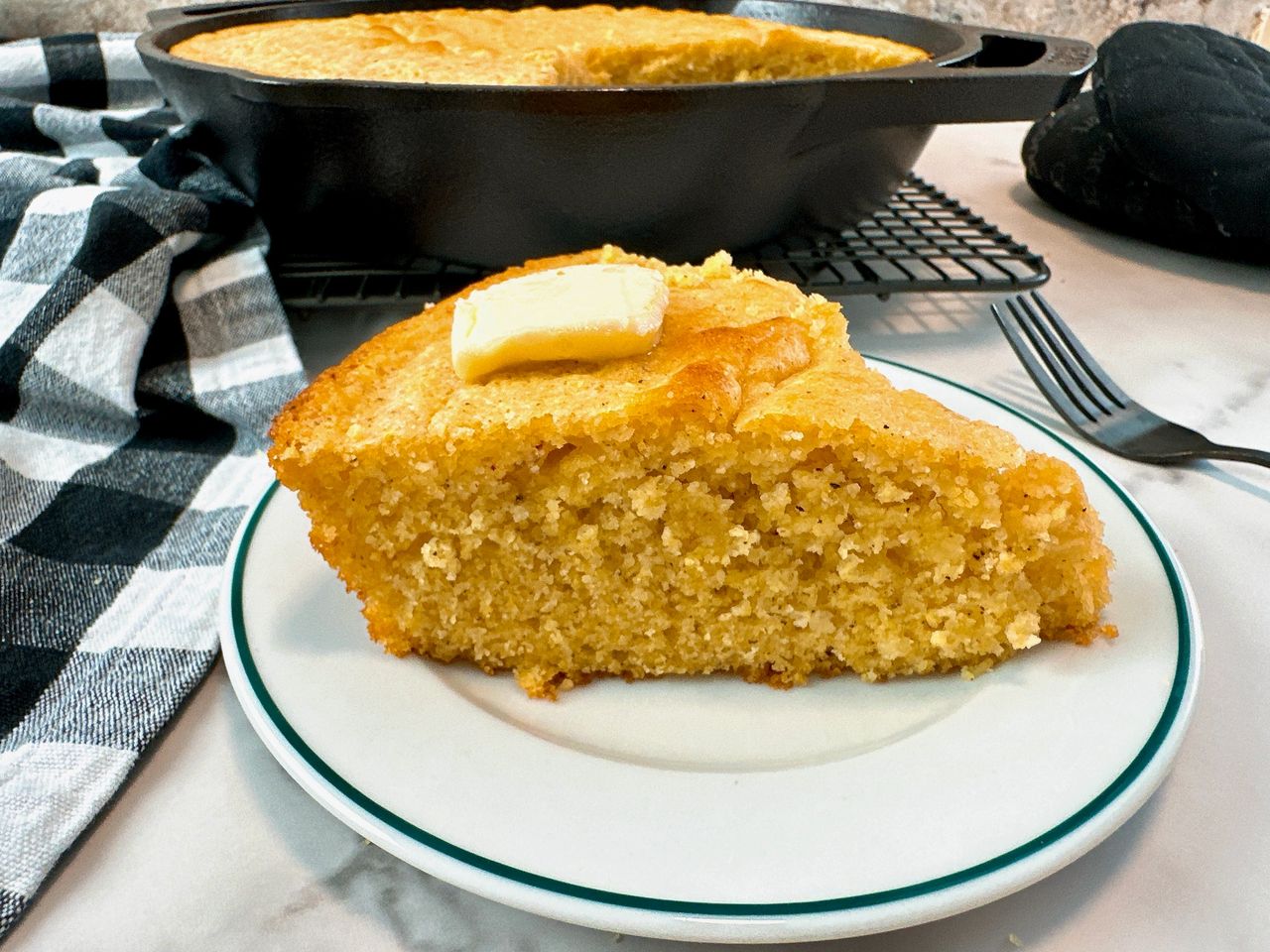
No cast iron pan? No problem. If you don’t have a cast iron pan, use a large, ovenproof skillet (10- to 12 -inches in diameter). You can also use a 9×13-inch baking pan. NOTE: If you’re using a baking pan, still make the brown butter. It’s the toasty, caramelized butter than creates the ultimate cornbread with a nutty, buttery crumb.
You can also use a muffin tin. If you’d rather make cornbread muffins, pour the batter into regular or mini muffin cups, and reduce the cooking time by 10 to 15 minutes (until a wooden pick comes out clean or with little moist bits clinging to it). NOTE: If you’re using a muffin tin, still make the brown butter first.
Skillet Cornbread
Ingredients
- 1 stick, 8 tablespoons unsalted butter
- 2 1/4 cups buttermilk
- 2 large eggs
- 1 1/4 cups yellow cornmeal, fine or medium-coarse grind
- 1 cup all-purpose flour
- 1/4 cup granulated sugar, or more to taste
- 1 tablespoon baking powder
- 1 teaspoon kosher salt
- 1/2 teaspoon baking soda
Instructions
- Preheat the oven to 375 degrees.
- Melt the butter in an 11- to 12-inch skillet over medium heat (choose a pan that’s ovenproof and preferably cast-iron). As the butter melts, swirl the pan to lightly coat sides and bottom. Cook until the buttery “foam” diminishes, and the butter turns a deep brown (stay close and watch carefully to make sure the butter doesn’t burn).
- Transfer the butter to a large bowl; do not wipe out the skillet.
- Whisk the buttermilk into the butter. If the mixture is cool to the touch, whisk in the eggs. If not, let the butter cool before whisking in the eggs.
- Once the eggs are incorporated, whisk in the cornmeal, flour, sugar, baking powder, salt, and baking soda. Mix just until ingredients are incorporated; do not overmix.
- Pour the batter into the buttered skillet.
- Bake for 25 to 30 minutes, until the top is golden brown, and a wooden pick inserted near the center comes out clean or with little moist bits clinging to it. Transfer the pan to a wire rack to cool. Cool the cornbread, in the skillet, for 10 minutes before slicing.