


Ultimate Spaghetti Squash
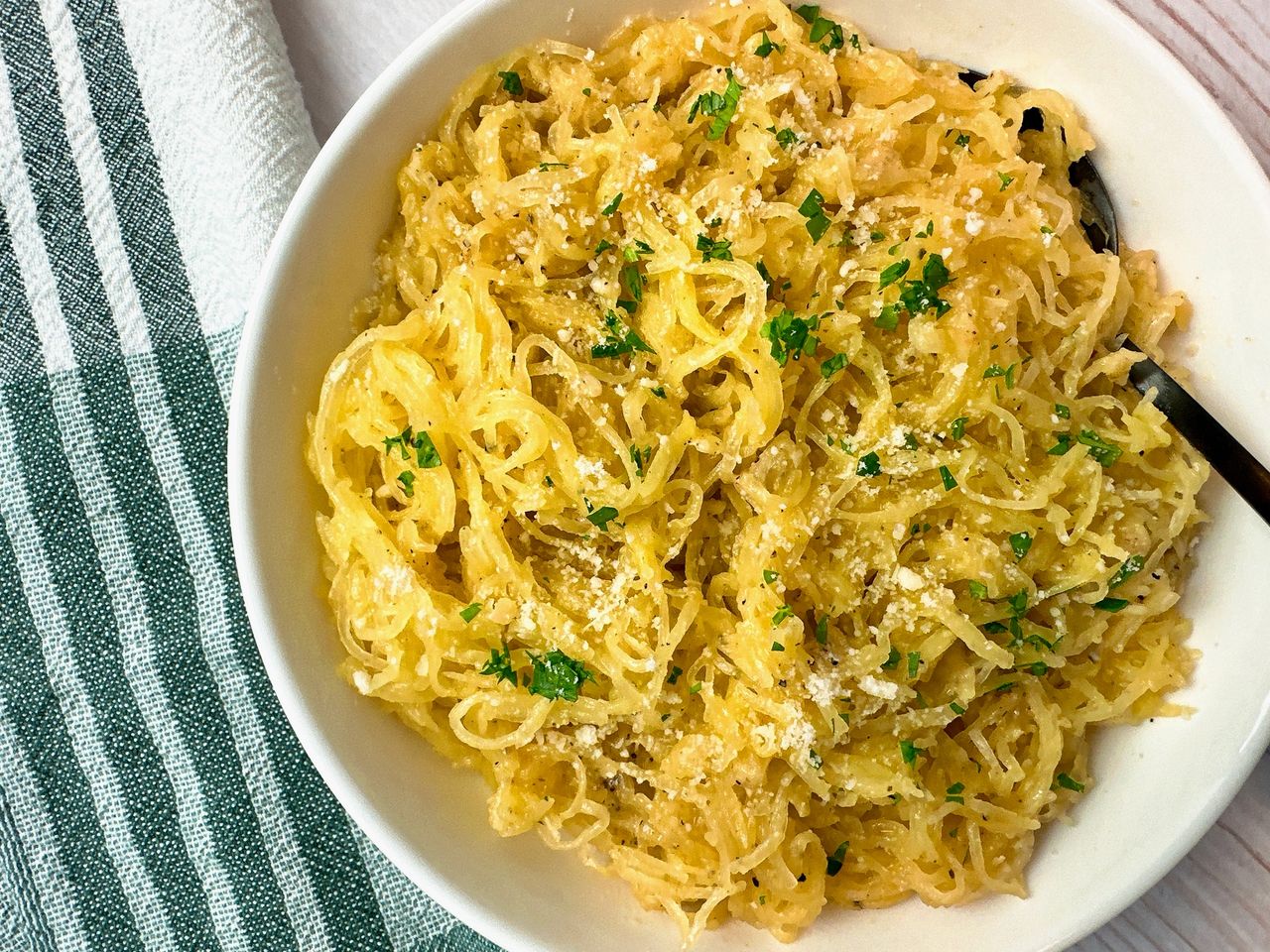
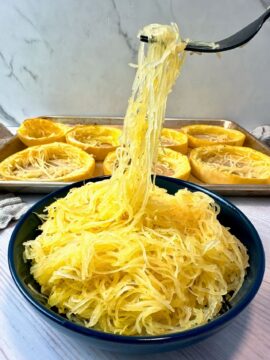
This perfectly cooked spaghetti squash yields tender, pasta-like strands of squash that boast a delicate taste and texture. When cooked properly, this winter vegetable delivers the definitive canvas for a variety of sauces, add-ins, and toppings; and you don’t need the calendar to mark “winter” to enjoy it. My promise to you: this is the only spaghetti squash recipe you will ever need.
This recipe was written for the Arizona Republic.
Spaghetti squash is wholesome, versatile, and gluten-free. Low-calorie, low-carb spaghetti squash is crammed with essential vitamins and minerals, powerful antioxidants, and heart-healthy soluble fiber. With only 31 calories, 7g carbs, and <1g fat per cooked cup, spaghetti squash is an excellent alternative to pasta and other carbohydrates. Consider swapping spaghetti squash in for pasta or rice and you’ll be loading up on important nutrients while enjoying a satisfyingly delicious vegetable.
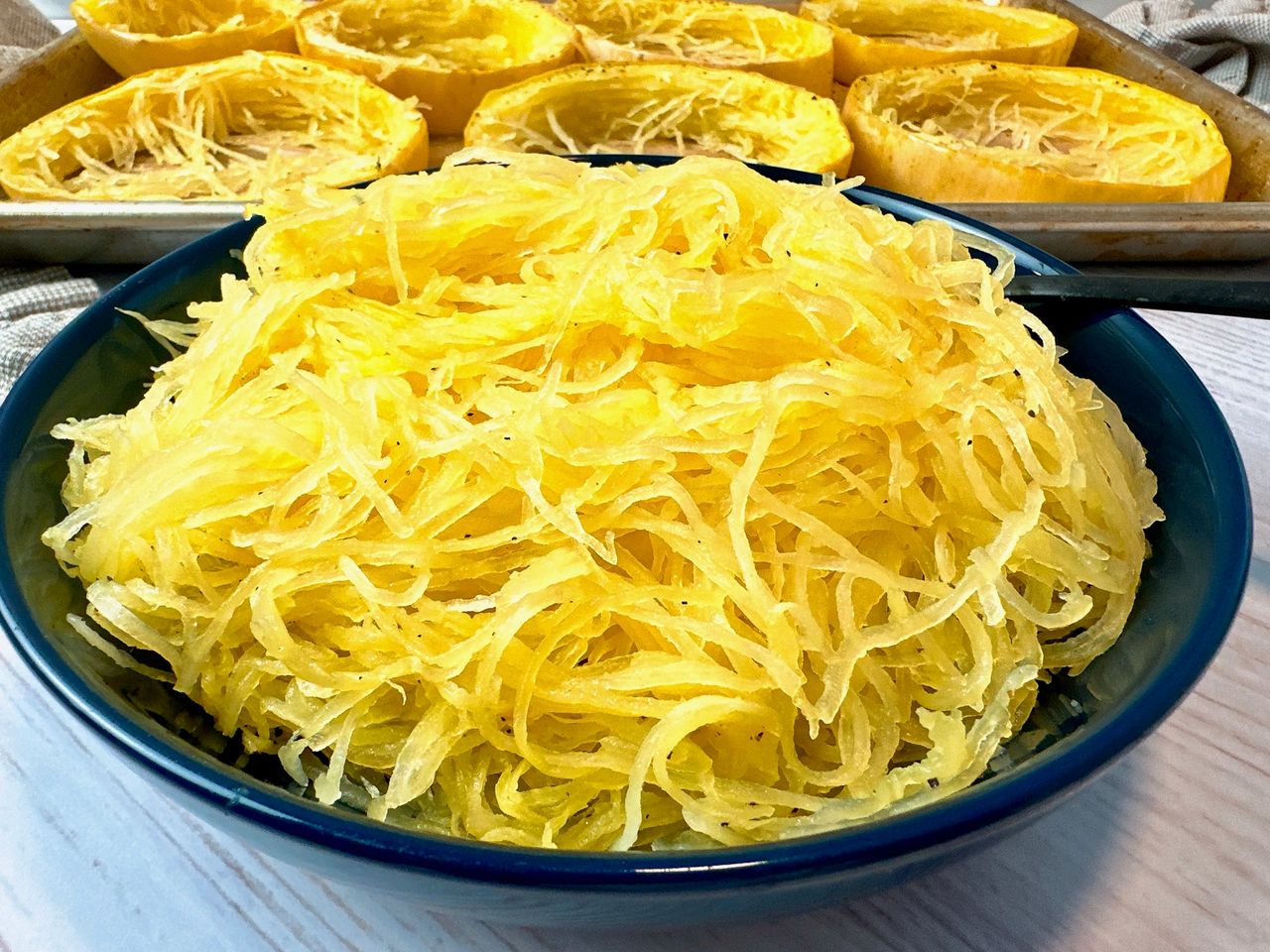
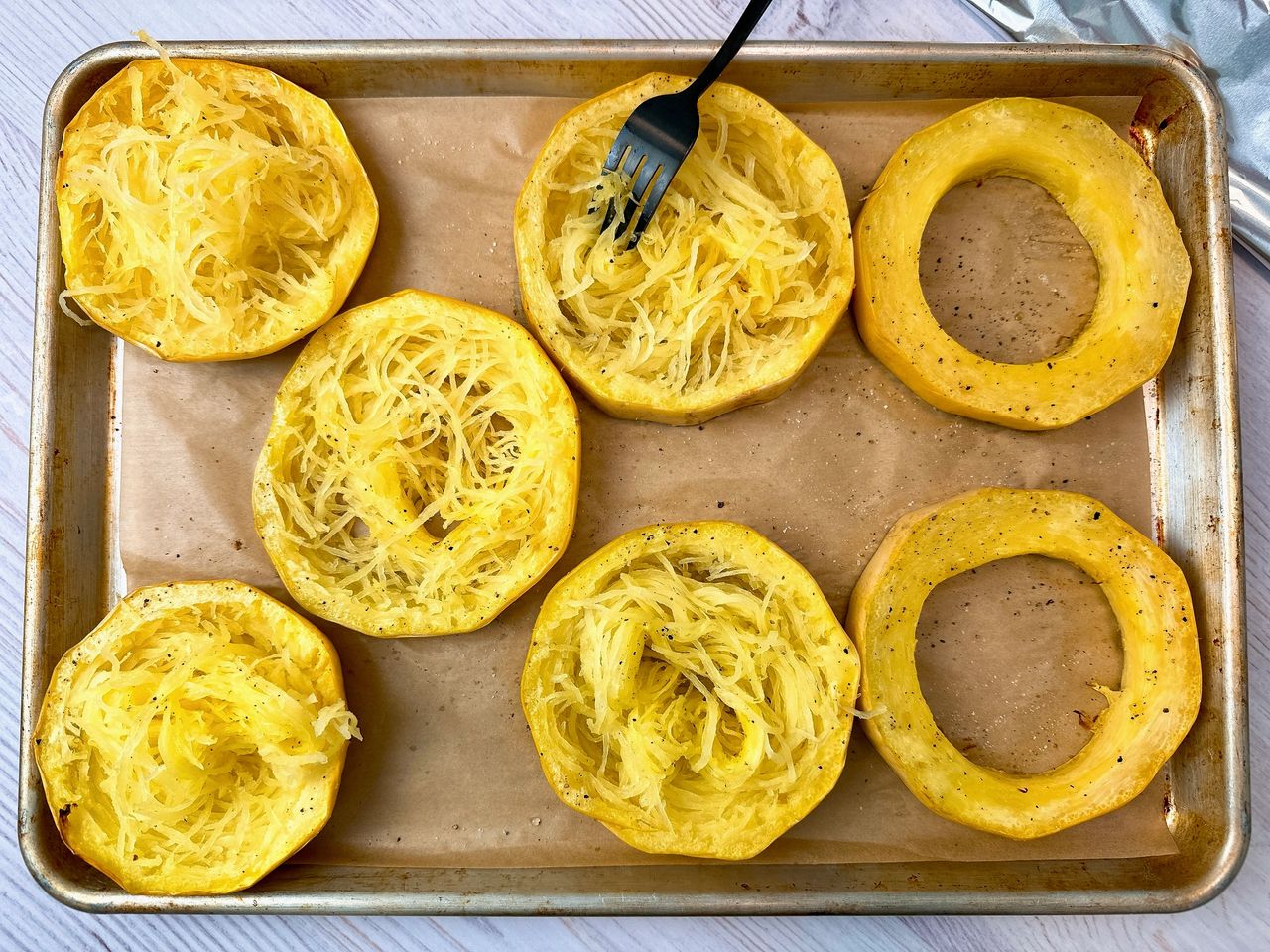
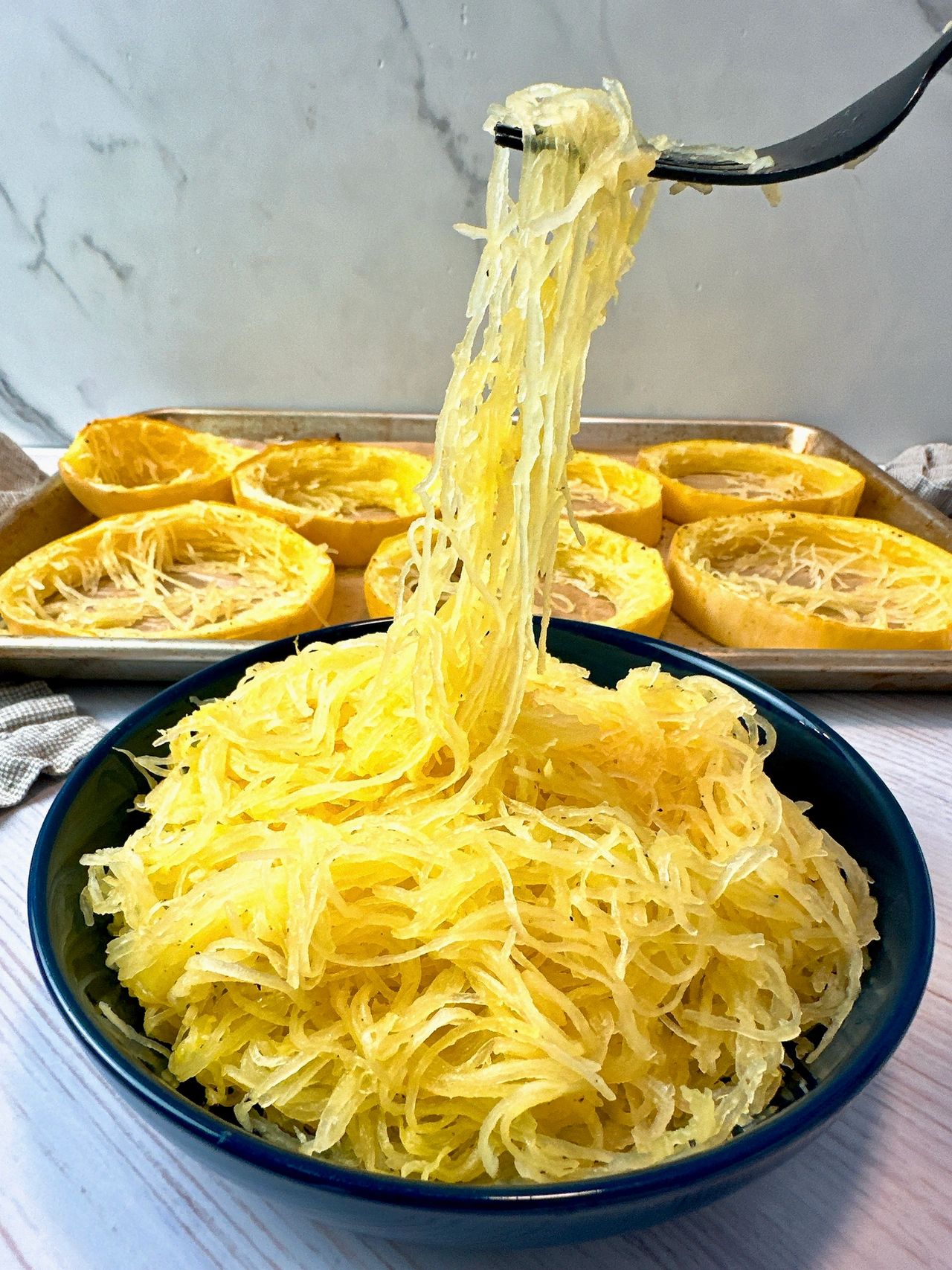
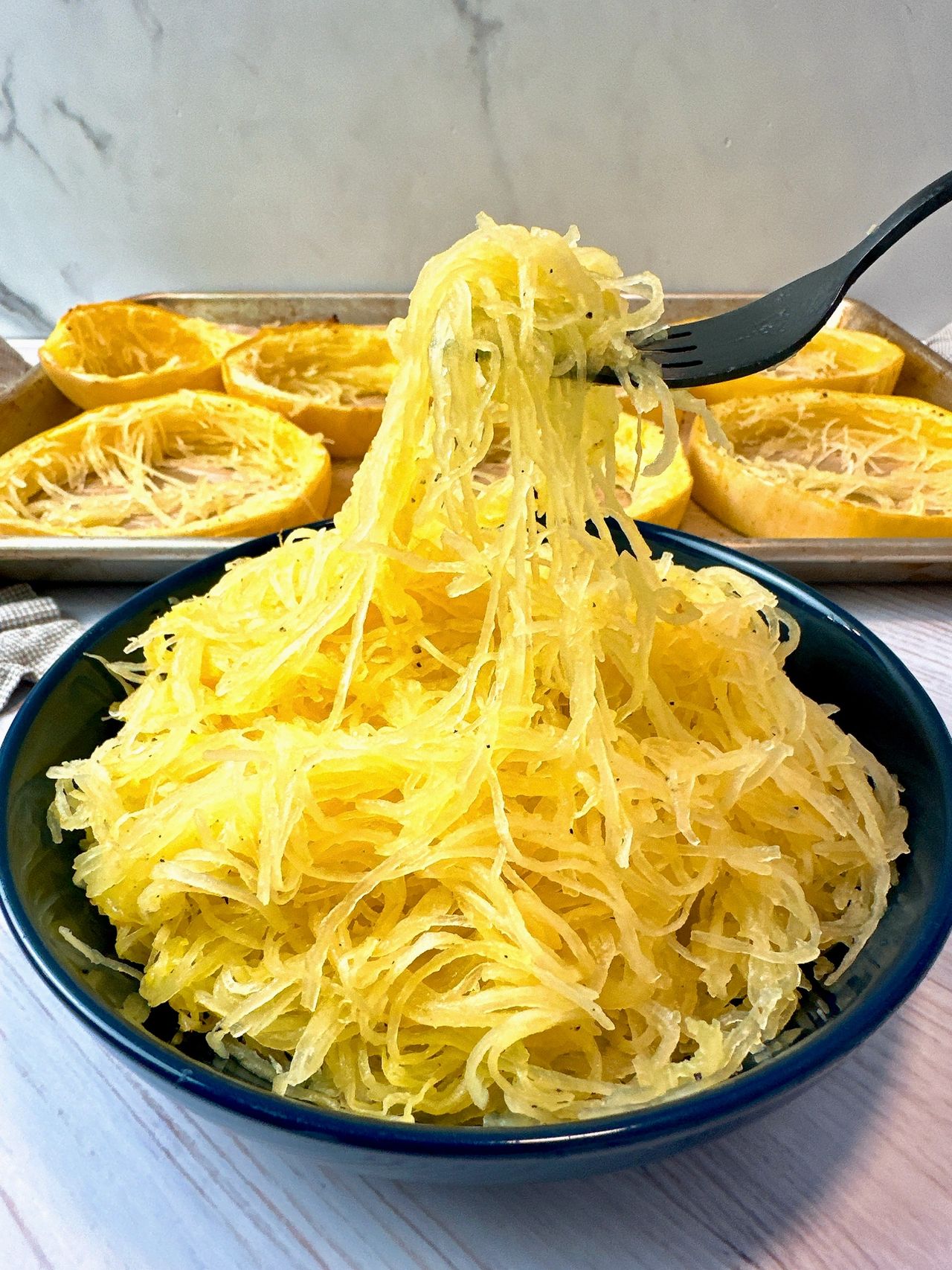
Ignore all other recipes for roasted spaghetti squash! Most recipes for spaghetti squash suggest roasting the vegetable halved (and sometimes whole). The problem with that is you’re not guaranteed those treasured, long, al dente strands of squash. In fact, many times the vegetable ends up mushy because it’s overcooked; mushy squash doesn’t yield noodle-like strands. My trick for those beloved strands is cutting the squash into rings before roasting; a simple technique that shortens the cooking time and ensures the squash is flawless every time.
Is your squash too hard to cut? First and foremost, always use a sharp knife and stable, hard surface when cutting winter squash. If your squash is too hard to cut, you can soften it in the microwave. To prep your spaghetti squash for the microwave, pierce the exterior all over with a fork and transfer the squash to a microwave-safe plate. Microwave on high for 60 seconds, or until the exterior is slightly softened and easier to cut. This microwaving step isn’t necessary; but helpful if you’re struggling with slicing the squash.
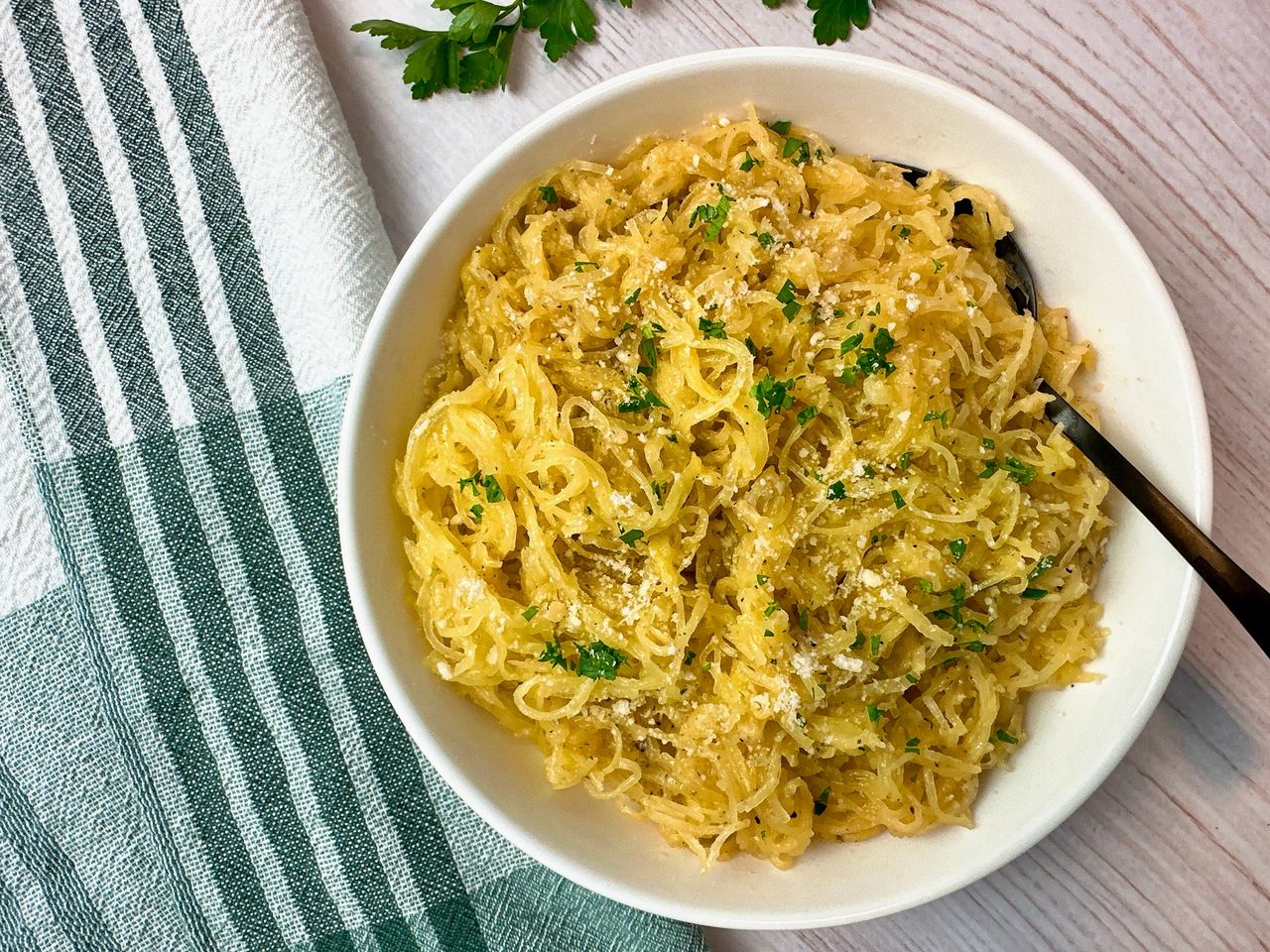
Don’t overcook your spaghetti squash. The best roasted spaghetti squash is al dente, or firm-yet-tender. The vegetable doesn’t need to be incredibly soft to create spaghetti-like strands. In fact, over-cooked squash will produce strands that break and turn to mush. The exact timing will depend on the size of your squash, so start checking for doneness at the beginning of the suggested cooking time below.
How to prevent watery, mushy spaghetti squash. Adding too much oil and/or salt can yield watery squash, so stick to a light coating of oil and light sprinkling of salt. Overly salted squash will pull moisture from the vegetable, and you’ll be left with mushy strands.
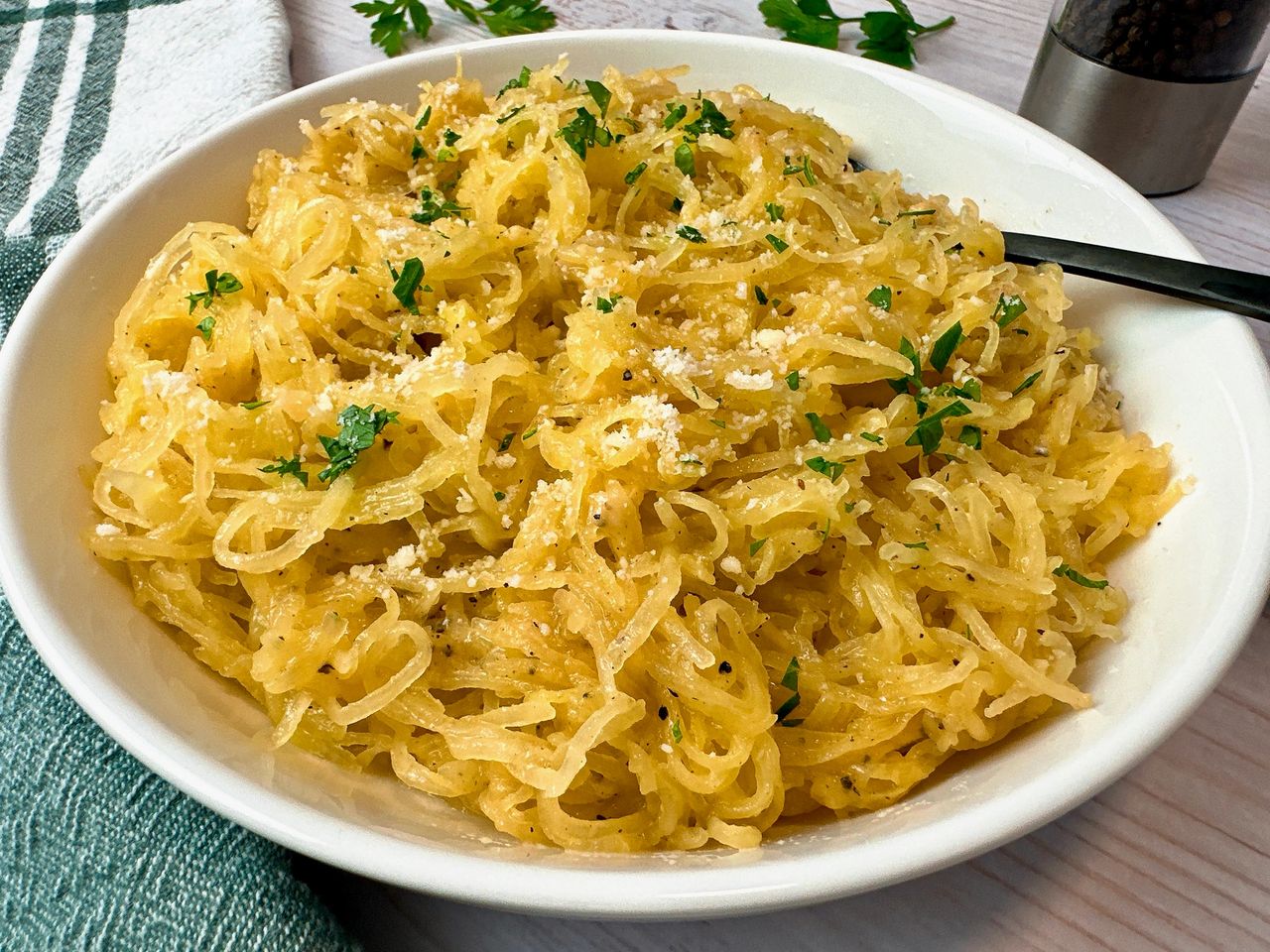
What should you do with cooked spaghetti squash?
- Make spaghetti squash cacio e pepe, as directed below.
- Top with your favorite Bolognese or marinara sauce and grated parmesan cheese.
- Fold in roasted cherry tomatoes, crumbled feta, and fresh herbs.
- Top with homemade or store-bought bechamel or alfredo sauce.
- Pile on other roasted vegetables (roast them at the same time as the squash rings). Great options include asparagus, mushrooms, cherry/grape tomatoes, and broccolini.
- Toss with basil pesto.
- Top with mushroom gravy.
- Use in place of pasta for shrimp scampi and linguine with clams.
- Top with homemade or store-bought roasted red pepper sauce (known as ajvar or romesco sauce).
- Toss with salsa, black beans, and Mexican cheese.
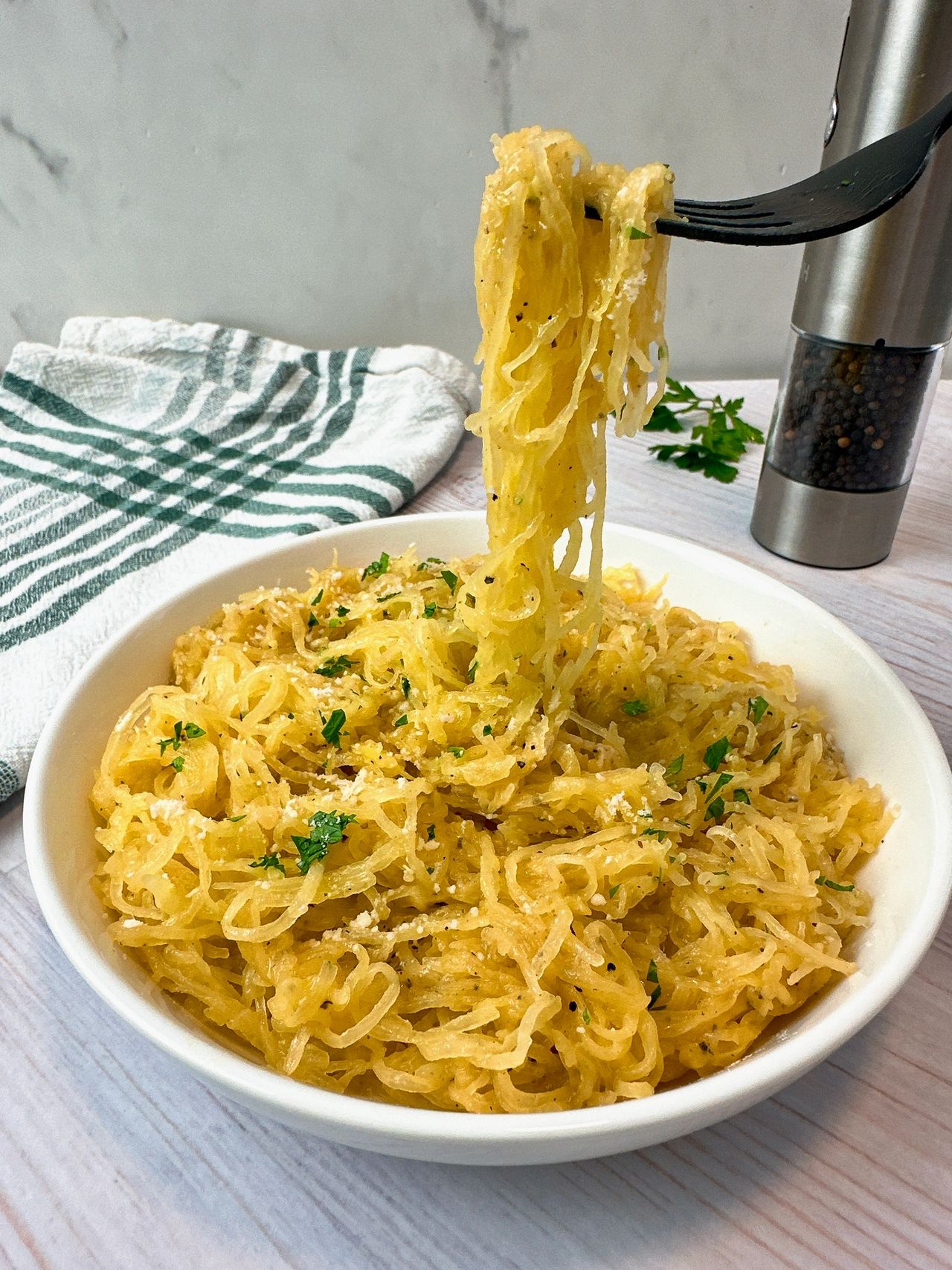
What to do with leftover spaghetti squash. Allow leftover roasted spaghetti squash to cool to room temperature before storing. Transfer to an airtight container and refrigerate for up to 5 days. I do not recommend freezing cooked spaghetti squash because, once thawed, the texture won’t be great.
Ultimate Spaghetti Squash
Ingredients
- 1 spaghetti squash, any size
- Olive oil
- Salt and freshly ground black pepper
Instructions
- Preheat the oven to 400 degrees. Line a large baking sheet with parchment paper or aluminum foil.
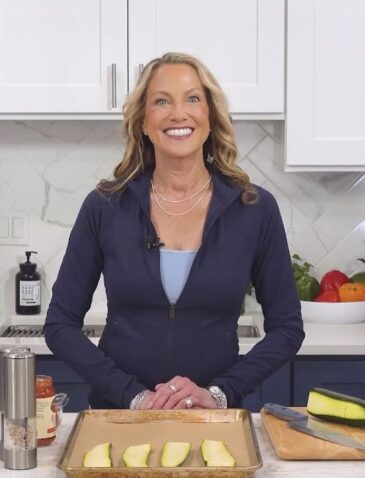
- Cut the spaghetti squash crosswise into 1-inch-thick rounds (this doesn’t have to be precise; somewhere close 1-inch-thick is ideal). Note: If your squash is too hard to cut, pierce the exterior all over with a fork and transfer the squash to a microwave-safe plate. Microwave on high for 60 seconds, or until the exterior is slightly softened and easier to cut.
- Once sliced into rings, use a spoon to remove the seeds and associated “strings” attached to the seeds (as if carving a pumpkin).
- Arrange the rings on the prepared pan and brush the top lightly with olive oil. Season with a light sprinkling of salt and black pepper. Roast for 30 to 40 minutes, until the flesh is fork-tender (the skin might still be quite firm and that’s OK). Timing will depend on the size of your squash.
- Remove the pan from the oven and cover it with aluminum foil for 5 minutes; this allows the squash to steam.
- When cool enough to handle, use a fork to pull strands of squash from the skin. Serve as desired.
Video
Notes
1 teaspoon freshly ground black pepper
3 tablespoons unsalted butter, divided
2 tablespoons olive oil
1 clove garlic, grated or finely minced
1/3 cup grated parmesan cheese
Salt
Chopped fresh parsley for serving, optional INSTRUCTIONS
Place the ground pepper in a large, dry skillet. Set the pan over medium heat and cook until the pepper is fragrant, shaking the pan frequently. The pepper should be toasted and aromatic in about 30 seconds. Add 2 tablespoons of the butter, olive oil, and garlic, and cook until the butter melts, about 1 minute.
Add the cooked spaghetti squash, parmesan cheese, and remaining tablespoon of butter and toss gently to coat. Season with salt.
Garnish with parsley (if using) and serve.